Franschhoek Wine Tram Guide: Lines, Prices And How It Works
The Franschhoek Wine Tram is the Cape Winelands' best-known hop-on-hop-off experience: five color-coded lines, roughly 30 estates, and a R350 adult ticket that covers the riding while tastings stay extra.
Short answer
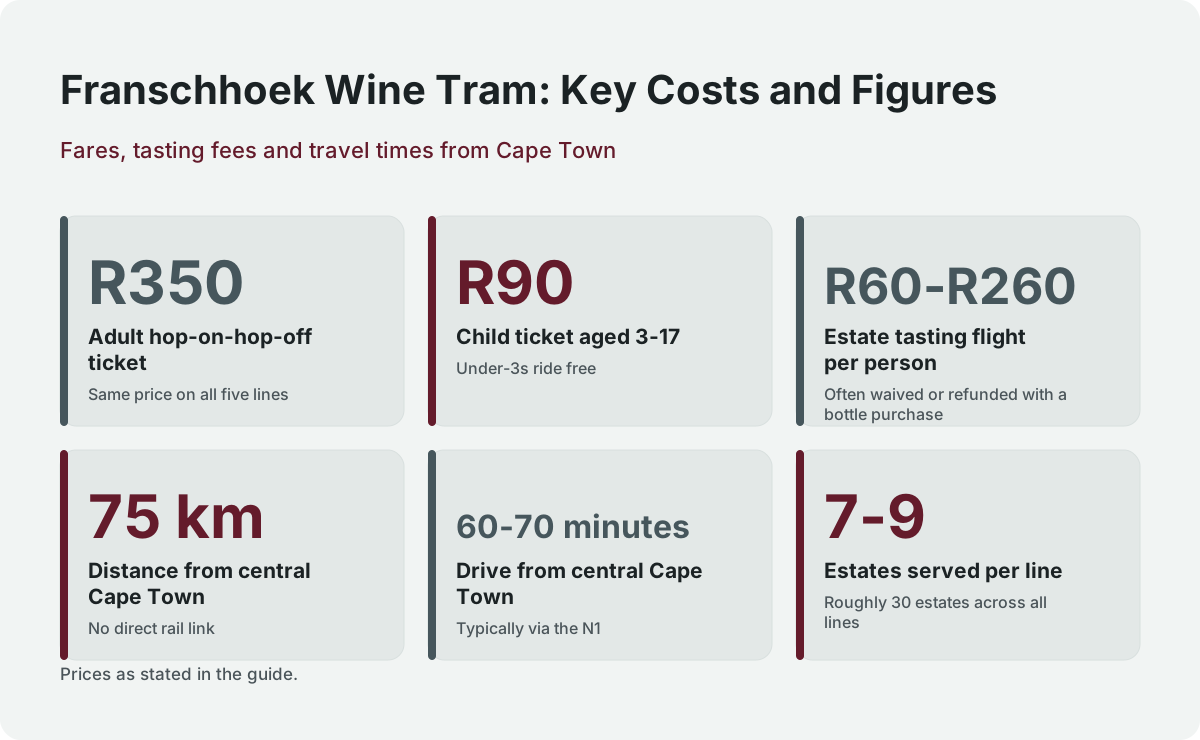
The Franschhoek Wine Tram is a hop-on-hop-off wine tour in the Franschhoek Valley, about an hour's drive from central Cape Town. Tickets cost R350 per adult, R90 per child aged 3-17, with under-3s free. Tastings at estates cost roughly R60-R260 extra per person.
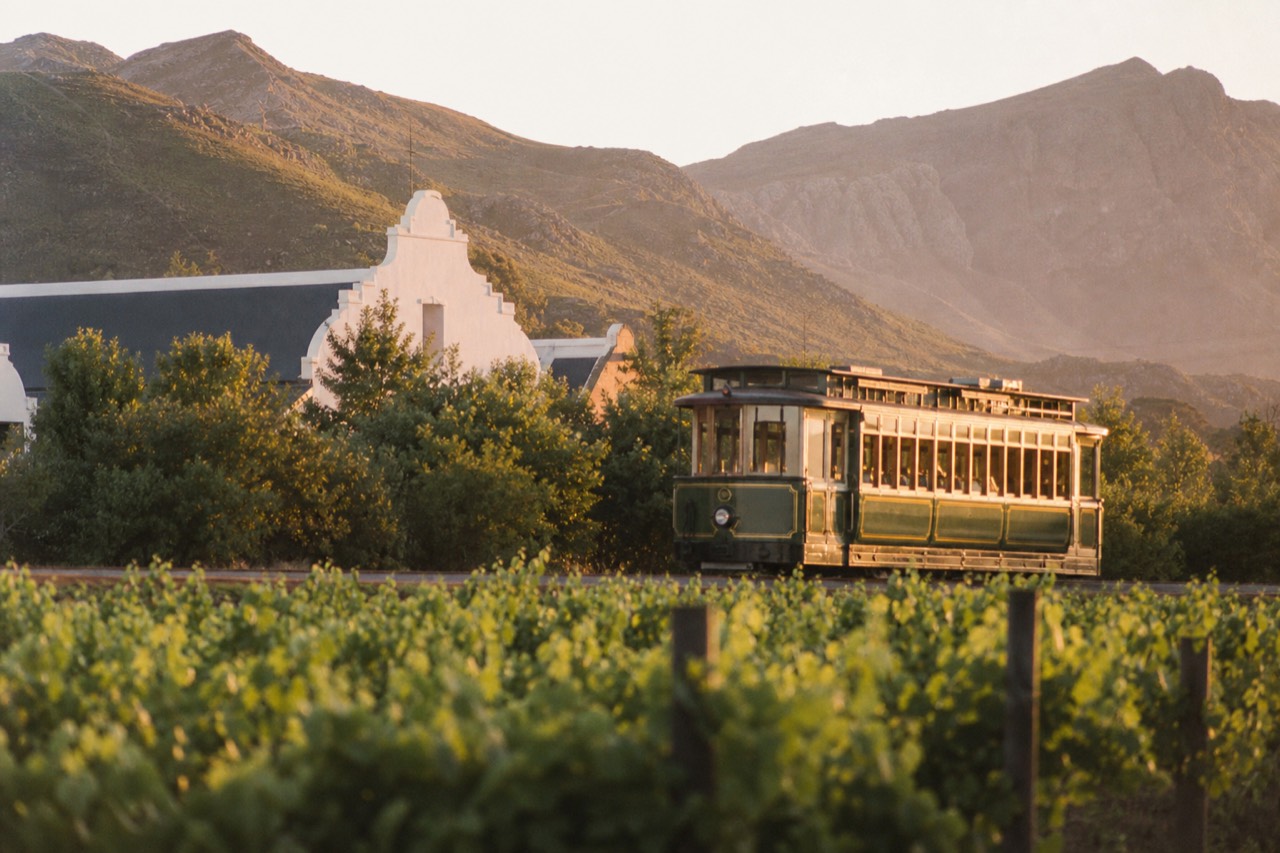
Groot Constantia was granted to Simon van der Stel on 13 July 1685, and the Cape has been building wine tourism ever since, but no single product pulls visitors the way the Franschhoek Wine Tram does. It is a hop-on-hop-off service running through the Franschhoek Valley on five color-coded lines, using a mix of vintage-style trams on narrow-gauge track and open-air tram-buses, stopping at roughly 30 estates in total. One point worth clearing up immediately: there is no literal "Cape Town Wine Tram." The real product is the Franschhoek Wine Tram, based in Franschhoek itself, roughly an hour's drive from central Cape Town, and often sold bundled with a coach transfer from the city.
This guide, one of the anchor pieces on Cape Town Wine Tours, covers the whole product: what the ticket costs, what tastings cost on top, how the lines and loops work, which line suits which kind of visitor, when it runs, and how a self-guided tram ticket stacks up against a guided tour that bundles the tram with cellar visits.
What Is The Franschhoek Wine Tram And How Does It Work?
The Franschhoek Wine Tram is a hop-on-hop-off wine tour operating in the Franschhoek Valley, roughly a one-hour drive from central Cape Town. It runs five color-coded lines on hourly loops, each serving 7-9 estates, with tickets covering the ride only; tastings and meals are paid separately at each estate.
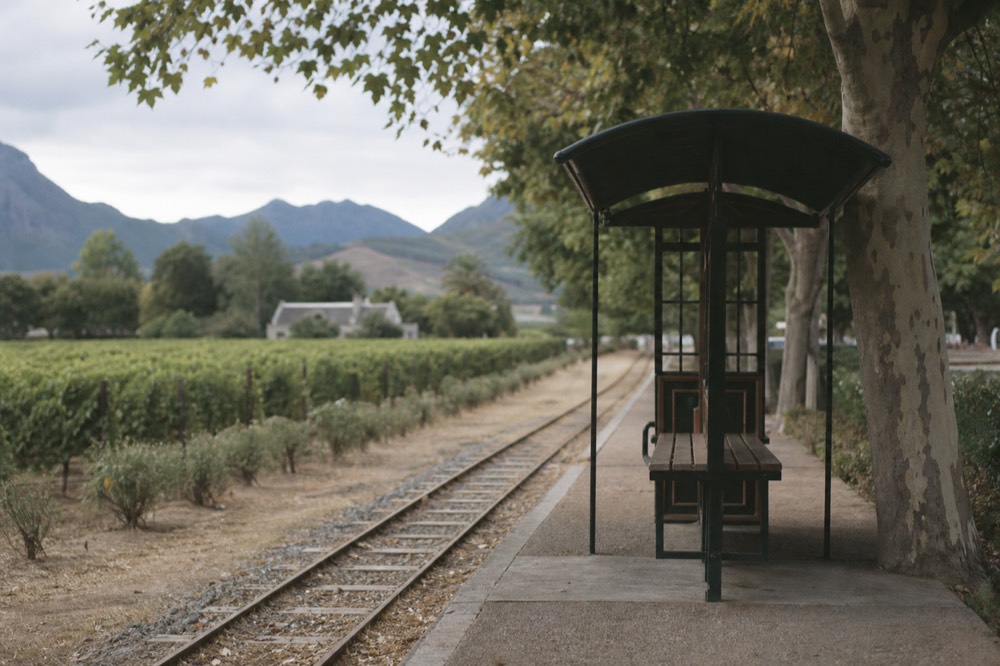
The mechanics are simple once you see them in practice. You pick a line when you book, board at the Franschhoek terminal in the Cabriere Street area (or at Groot Drakenstein, depending on the line), and the tram or tram-bus circles its loop roughly once an hour. When it stops at an estate you like, you hop off. Taste, eat, wander the grounds, then board a later departure on the same line and continue. The ride includes narration about the valley’s history and wine growing, but you plan your own estate visits; the timetable at each estate tells you when the next service passes.
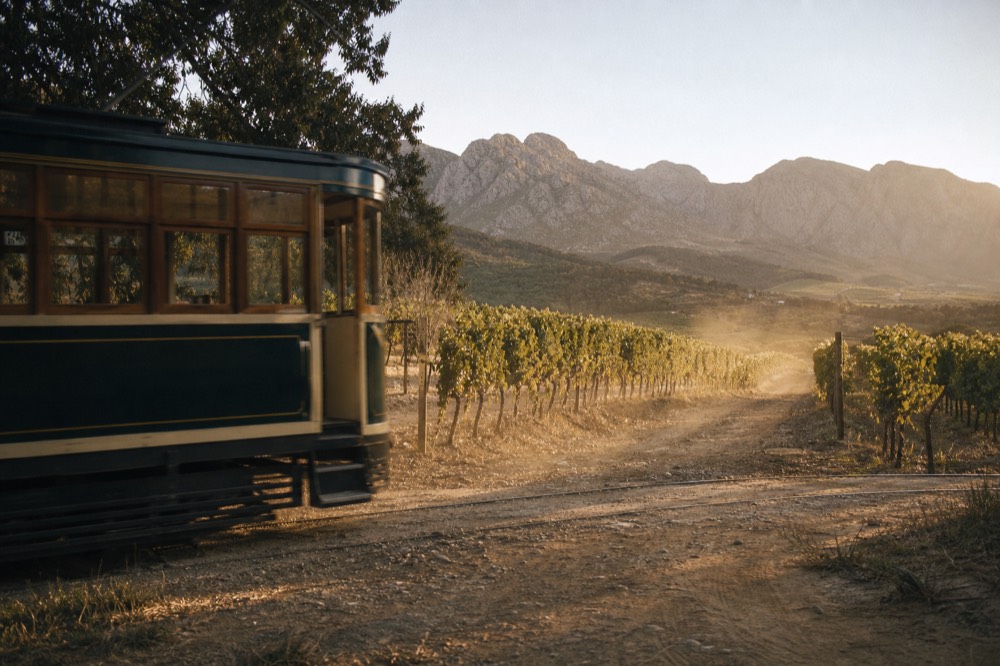
The fleet is part of the appeal. Some lines use genuine vintage-style Brill trams on narrow-gauge track, others use open-air tram-buses that look the part but run on roads. Both do the same job: short, scenic hops between estates with the valley's mountains on either side. Because the loops are hourly, most riders manage three or four estates in a day, which is about the right pace once you factor in a long lunch at one of them.
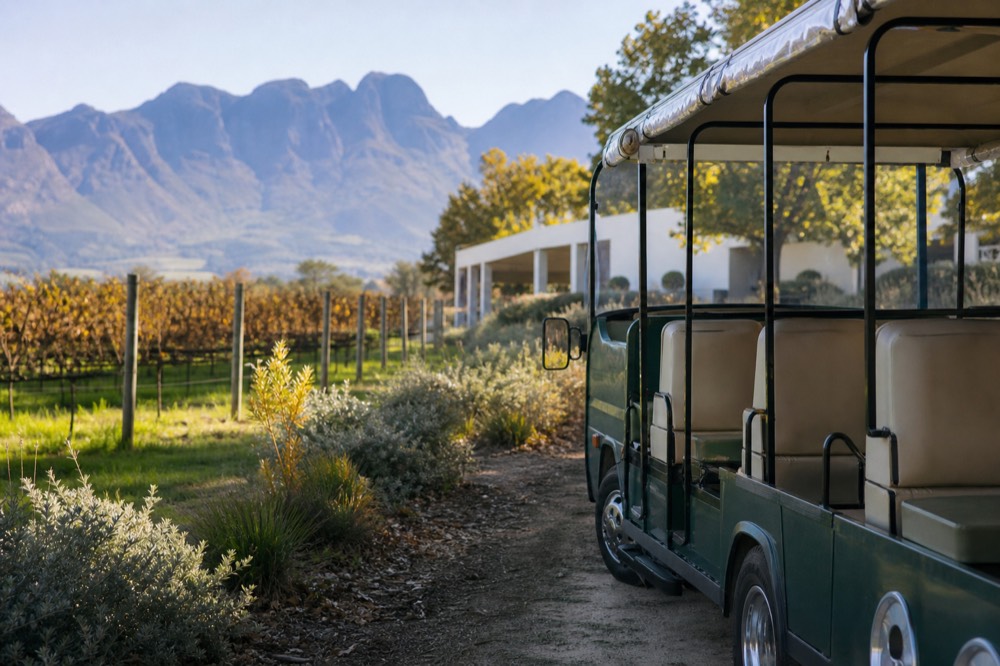
One thing the tram is not: a wine-tasting ticket. Your fare buys the transport loop. Every tasting, meal, or pairing at every estate is bought separately on site, which is why budgeting for the day needs both numbers, the fare and the tasting fees. The next two sections give both.
How Much Does The Wine Tram Cost?
A hop-on-hop-off Wine Tram ticket costs R350 per adult, R90 per child aged 3-17, and nothing for children under 3. Tastings at the estates are extra, typically R60-R260 per person per estate, and a long lunch adds more, so budget for the fare plus two or three tasting fees per adult.
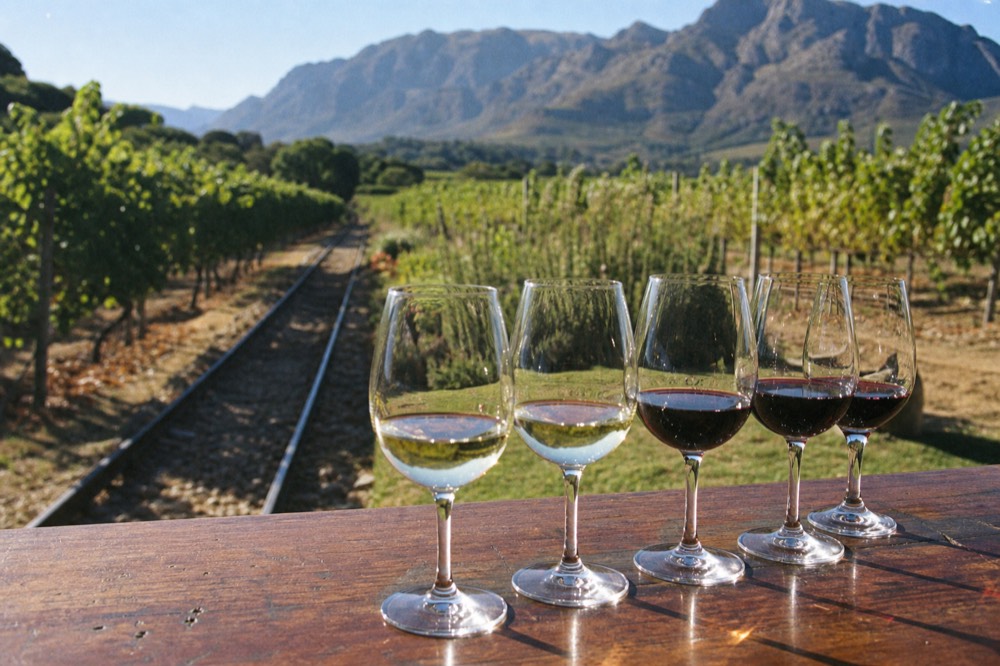
The fare is the same across all five lines, so choosing a line is about the estates, not the price. What varies is what you spend once you are off the tram. Estate tasting fees in the valley typically run R60-R260 per person for a standard flight, with premium and paired tastings at the higher end; many estates waive or refund the fee if you buy bottles, so it is worth asking at the counter before you pay. The official operator site, winetram.co.za, lists the current fare and line schedules.
| Cost item | Typical price | Notes |
|---|---|---|
| Adult hop-on-hop-off ticket | R350 | Same price on all five lines |
| Child ticket (3-17) | R90 | Under-3s ride free |
| Estate tasting flight | R60-R260 pp | Often waived or refunded with a bottle purchase |
| Lunch at an estate restaurant | Varies by estate | Boschendal and Grande Provence both sit on tram lines |
| Transfer from Cape Town | Sold separately or bundled | Coach-and-tram packages exist from the city |
If you are joining from Cape Town without a car, the transfer is the missing piece. The tram itself starts in Franschhoek, roughly 75 km and 60-70 minutes from central Cape Town, so most visitors either rent a car, arrange a private transfer, or buy a package that bundles a round-trip coach transfer with the tram ticket. That bundle question, self-guided ticket versus a full guided day, is worth a section of its own further down.
For now, the short version: the bare ticket plus two tastings and lunch is still cheaper than most guided full-day tours, but the gap narrows once you add the transfer.
Which Wine Tram Line Should You Choose?
Pick your line by the estates you want, not by scenery or schedule: all five run the same hourly loop mechanics and cost the same R350. Lines each serve 7-9 estates from a collective pool of roughly 30, so the choice comes down to whether you want big-name farms like Boschendal, or quieter, food-led stops.
The five lines are color-coded: Red, Blue, Pink, Orange and Green in the operator’s current route navigation, and each loops a different slice of the valley. Between them they reach roughly 30 estates, including familiar names like Rickety Bridge, Grande Provence, Boschendal, Vrede en Lust, Plaisir de Merle, Allee Bleue, Haute Cabriere, Mont Rochelle and La Bri. Because each line only touches 7-9 of those, choosing well matters more than it first appears: plan around the line you book rather than assuming you can change lines during the day.
A practical way to choose: name the two estates you most want to visit, find which lines serve both, and book that line. If your two must-visits sit on different lines, pick the line with the stronger supporting cast and save the other estate for a return trip or a private-driver day. We break the lines down stop by stop, with the trade-offs for each, in which Wine Tram line is best.
| Line character | What it suits | Typical trade-off |
|---|---|---|
| Lines serving Boschendal and Grande Provence | First-timers wanting the famous names | Busier stops in peak season |
| Lines reaching Plaisir de Merle and Vrede en Lust | Longer loops, more valley scenery | Fewer stops per day at hourly frequency |
| Lines centered on the village end | Visitors pairing the tram with lunch in town | Shorter hops, less sense of a journey |
| Lines toward Groot Drakenstein | Quieter, spread-out estates | Needs tighter watch on the timetable |
First-timers with no must-visit list usually do best on a line that mixes one landmark estate, one strong lunch stop, and one or two smaller cellars. Repeat visitors tend to go the other way, hunting the quieter lines where the tasting rooms thin out. Either way, book the line in advance: seats on popular lines sell out in the December-to-February peak, and the tram does not hold space for walk-ups.
Wine Tram Ticket Or Guided Tour From Cape Town: Which Is Better?
Buy the bare tram ticket if you are already staying in Franschhoek or have a transfer sorted and want to self-direct the day. Choose a guided tour from Cape Town if you need the transport solved, want cellar tastings pre-arranged, or prefer a set itinerary; guided days bundle the tram or equivalent estate visits with a driver and host, at a higher price.
The honest comparison is not "tram versus tour" as rivals, because many guided tours from Cape Town include the tram ticket inside them. The real question is what the extra money buys. On the tram alone, you get flexibility and low cost, but you also get the logistics: getting to Franschhoek, choosing a line, watching the clock at each stop, and no one explaining what is in the glass. On a guided day, the transfer, the route and usually several tastings are handled, and a dedicated guide can give more detailed tasting context than the tram’s onboard narration.
| Factor | Self-guided tram ticket | Guided tour from Cape Town |
|---|---|---|
| Ticket cost | R350 adult | Higher; price on the live listing |
| Transport from Cape Town | Arrange separately | Included |
| Estate choice | You pick the line | Operator sets the itinerary |
| Tastings | Paid per estate, R60-R260 | Typically several included |
| Pacing | Hourly loops, self-timed | Fixed schedule, no timetable anxiety |
| Wine context | Onboard valley narration; self-arranged tastings | Guide or hosted cellar visits |
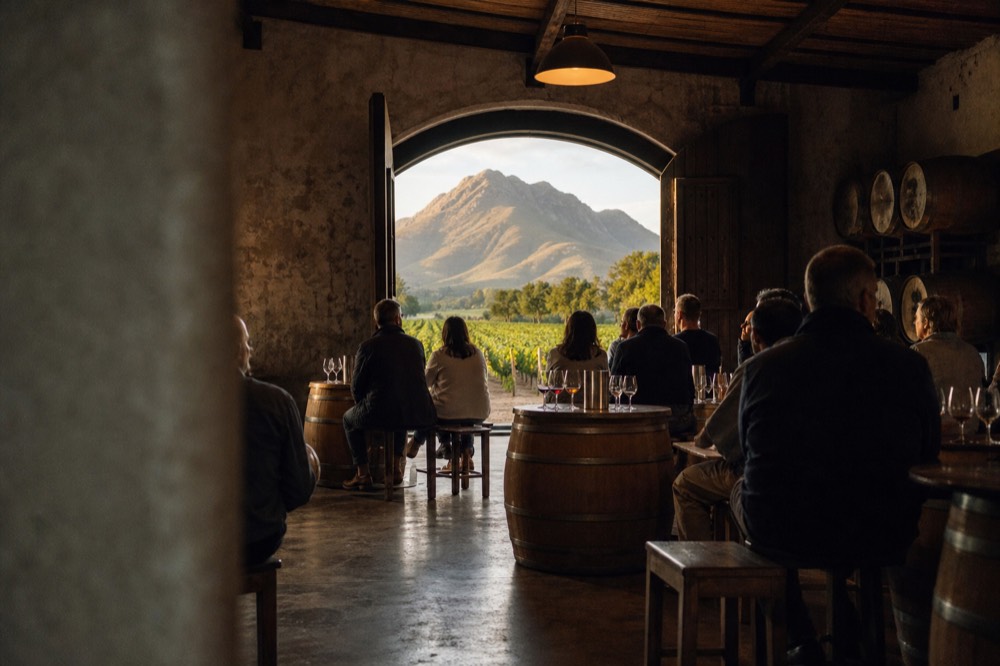
There is also a legal angle most comparison articles miss. South Africa runs a two-tier drink-drive limit under the National Road Traffic Act: 0.05 g per 100 ml of blood for ordinary drivers, but a stricter 0.02 g per 100 ml for professional drivers, a category that covers many tour and shuttle drivers holding a PrDP permit. In plain terms, the person driving you is held to a tighter standard than you would be holding the rental keys yourself, which is a genuine, if rarely stated, argument for letting someone else do the winelands driving. Spitting buckets are standard at Cape tasting rooms for exactly this reason, and staff expect you to use them.
Not sure yet whether the tram style suits you at all? The wider question, tram versus private driver versus fully guided tour, is laid out across all three formats in Wine Tram vs guided tour vs private driver.
What Time Does The Wine Tram Start, And When Does It Run?
The Wine Tram runs daily except major holidays, closing on 24-25 December and 31 December-1 January. Loops run hourly through the day; the practical start for most visitors is a morning boarding at the Franschhoek terminal, with the last available stops determined by your line’s timetable.
Because each line circles roughly once an hour, your effective day is bounded by the loop, not by a single departure time. Board early and you can fit four estates; board after lunch and two is realistic. Most riders aim to be at the terminal for a morning start, especially in peak season when popular estates queue for tastings by early afternoon. Timetable details for each line, including first and last departures, are published on the operator's official site, and the question of exact start times comes up often enough that we treat it in full in what time does the Wine Tram start.
Seasonality matters more than most first-time visitors expect. The valley's peak crowding runs December through February and into early March, coinciding with school holidays and the tram's busiest weeks; book lines well ahead for those dates. The shoulder windows, September to November and post-harvest March to April, bring thinner crowds and greener or gold-tinted vines depending on the month. Harvest itself, the crush, typically runs late January through April, which adds cellar energy to a February or March ride at the cost of more visitors.
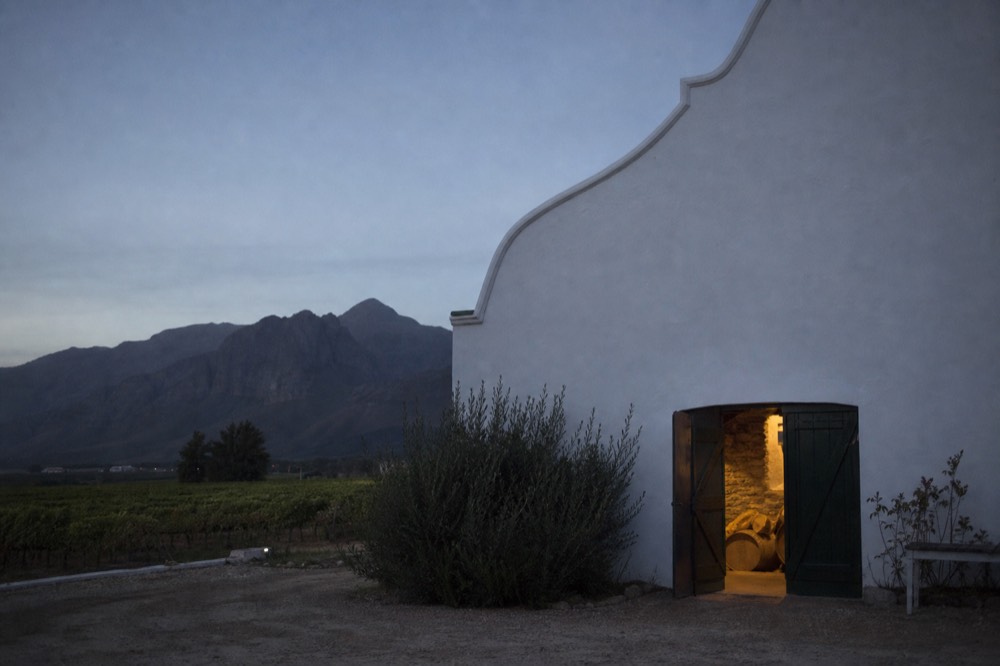
One weather note that belongs here rather than anywhere else: the "Cape Doctor," the strong south-easterly wind that blows from September to March. It keeps the valley cool and dry, which is good for the grapes, but on an open-air tram-bus it can feel brisk. Bring a layer even on a hot day.
How Do You Get From Cape Town To The Wine Tram?
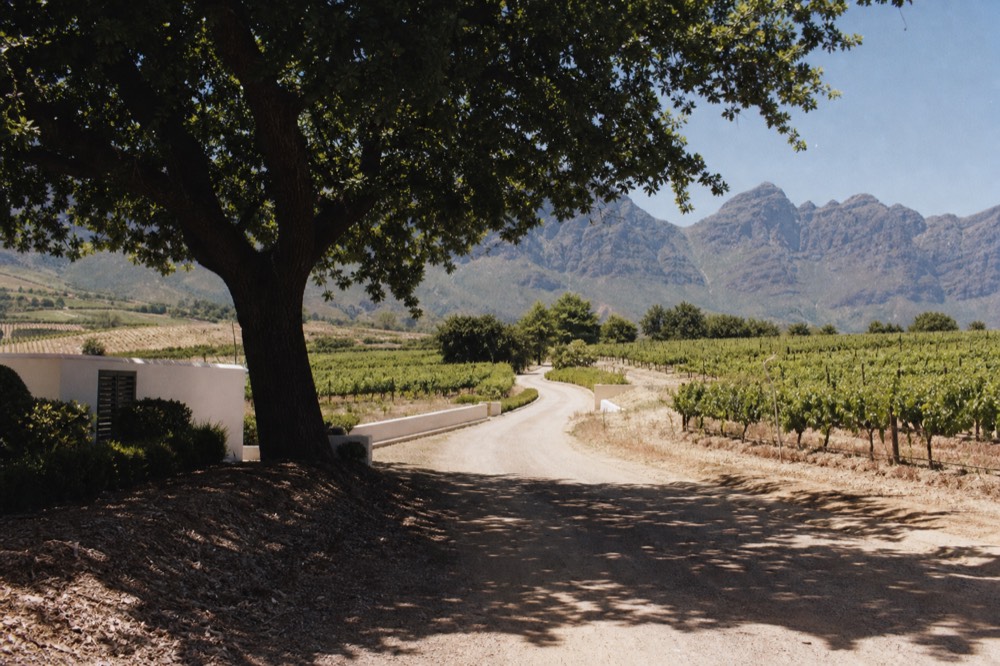
Franschhoek sits roughly 75 km from central Cape Town, a 60-70 minute drive, either via the N1 through Paarl or via the N2/R310 through Stellenbosch and the scenic Helshoogte Pass. Options are rental car, private transfer, or a bundled coach-plus-tram package; there is no direct rail link.
The drive itself is half the reason people come. The last stretch, whether you come past Stellenbosch on the Helshoogte Pass or over from Paarl, is mountain-and-vineyard scenery the whole way, and most visitors stop at least once for photographs. If you plan to drink at the estates, arrange a non-drinking driver or return transport before starting the day.
The bundled-transfer alternative is the package route: experiences that bundle a round-trip coach from Cape Town, usually from the V&A Waterfront or hotel pickups, with the tram ticket itself. These solve the whole day in one booking and are the format most first-time visitors end up choosing, simply because they remove the car question entirely. The full drive-time breakdown, route options and stop ideas are in Cape Town to Franschhoek.
For a fuller Winelands day, some visitors pair the tram with a stop in Stellenbosch, about 30 minutes closer to Cape Town along the way. Splitting a day between the two towns trades depth for breadth, and it works best when the tram is trimmed to two or three estates rather than treated as a full-day loop.
What Is A Wine Tram Day Actually Like?
A typical tram day means boarding in the morning, riding to a first estate for a mid-morning tasting, hopping to a second for a long lunch, then one or two more stops before the loops wind down in the late afternoon. Expect three to four estates, a couple of hours of pure riding time, and a day that ends around 17:00-18:00.
The rhythm suits a certain kind of traveler: one who wants variety without logistics, and who is happy to self-direct. The hourly frequency is the hidden constraint. Every extra half hour at an estate pushes everything after it back one loop, so the disciplined move is to set an alarm for the next departure and treat lunch as the one stop where you deliberately let a loop or two pass. Regulars also suggest front-loading the smaller cellars and saving the big-name estate for lunch, when its grounds and restaurant justify a long stay.
A few practicalities make the day smoother. Book your line for the earliest boarding slot available. Carry cash or a card for tasting fees, since each estate bills separately. Reserve lunch in advance at whichever estate restaurant you plan to anchor the day around; the well-known ones fill up in peak season. And keep an eye on the timetable board at each stop, because the last loops of the afternoon run thinner than the morning ones.
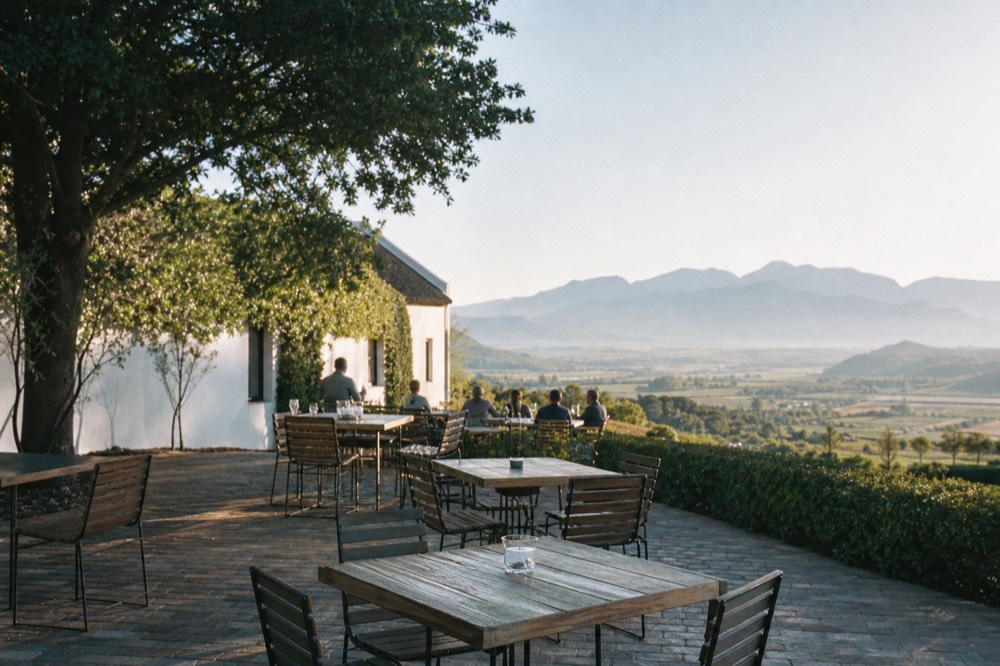
Families manage fine on the tram too, within limits. Children aged 3-17 pay R90, under-3s ride free, and the open-air ride itself entertains younger kids between stops. The constraint is the tasting rooms: South Africa's legal purchase and drinking age is 18 nationwide, and tasting rooms are required to ask for ID from anyone who looks under 18 before serving. Some estates lean family-friendly with lawns and food; others are quiet adult spaces. Check the estate list for your line before booking if you are bringing children.
Is The Franschhoek Wine Tram Worth It?
For most first-time visitors, yes: the tram delivers the valley's headline estates for R350 plus tastings, with no driving and no route-planning. It is weakest for travelers who dislike timetables, want deep wine education, or are basing themselves far from Franschhoek without a transfer plan; those visitors do better with a private driver or guided day.
The value case rests on what the alternative costs. A private driver for the day buys total flexibility and no clock-watching, at a meaningfully higher price. A self-drive day requires a non-drinking driver if your group plans to drink at the estates. The tram sits in the middle: cheap, safe, scenic, and structured enough that you never plan a route, at the cost of hourly-loop discipline and no guided wine context.
The verdict also depends on where the Winelands sits in your trip. If this is your one wine day from Cape Town and you want breadth, a guided tour that covers Paarl, Franschhoek and Stellenbosch in a single loop shows you all three towns' characters in one booking, with the tram's home valley as the centerpiece. If you are already sleeping in Franschhoek, the bare tram ticket is close to a default: walk to the terminal, pick a line, ride.
Whatever you choose, book before you travel. Lines and guided days both tighten up from December through February, and the tram's holiday closures, 24-25 December and 31 December-1 January, catch a few unplanning visitors every year. Cancellation terms vary by product and option; check the terms attached to your chosen date before paying.
The questions below are the ones travelers ask most about the tram before booking: the exact ticket and tasting costs, which line to pick, start times, operating days, what the fare includes, and whether children can ride. Each answer sticks to the verified figures in this guide, so you can plan the day with numbers you can trust.
Common Questions About The Franschhoek Wine Tram
How much does the Franschhoek Wine Tram cost?
The hop-on-hop-off ticket costs R350 per adult and R90 per child aged 3-17, with under-3s free. Tastings at the estates are extra, typically R60-R260 per person per estate, and are often waived or refunded with a bottle purchase.
Which Wine Tram line is best?
All five lines cost the same and use the same hourly loop mechanics, so the best line is the one that reaches your must-visit estates. Each line serves 7-9 estates from a collective pool of roughly 30, including Boschendal, Grande Provence, Rickety Bridge and Haute Cabriere. Pick your two priority estates first, then book the line that serves both.
What time does the Wine Tram start?
Loops run hourly through the day from the Franschhoek terminal or Groot Drakenstein, depending on the line. The operator lists starting slots between 08:45 and 13:00, depending on the line; arrive at least 15 minutes before your booked departure. An early start leaves time for three or four estates.
Does the Wine Tram run every day?
It runs daily except major holidays, closing on 24-25 December and 31 December-1 January. Book ahead for the December-to-February peak, when popular lines sell out.
Are tastings included in the Wine Tram ticket?
No. The ticket covers the hop-on-hop-off transport only. Tastings, meals and pairings at each estate are bought separately on site, typically R60-R260 per person for a standard flight.
Can children ride the Wine Tram?
Yes. Children aged 3-17 pay R90 and under-3s ride free. Note that South Africa's legal drinking age is 18 and tasting rooms must request ID from anyone who appears under 18, so the experience for kids is the ride and the grounds rather than the cellar.
Plan Your Wine Day
Starting recommendation. Adjust the choice below.
Cape Town Transfer And Franschhoek Wine Tram
Have a travel date in mind? Check it before arranging the rest of your day. Combine the return Cape Town coach with the Franschhoek hop-on-hop-off tram.
Full day, allow 8.5 hours; city collection points. Tastings and lunch extra; not wheelchair accessible.
Choose a date to see scheduled departures.
Published schedule, not confirmed seats. Availability and final price are confirmed on Viator.
Check Dates For Cape Town Transfer And Franschhoek Wine TramCompare options and your costs
- Cape Town Transfer And Franschhoek Wine Tram
- Combine the return Cape Town coach with the Franschhoek hop-on-hop-off tram. Full day, allow 8.5 hours; city collection points. Tastings and lunch extra; not wheelchair accessible.
- Franschhoek Tram And Stellenbosch Guided Day
- Visit Stellenbosch and Franschhoek with a hosted itinerary and tram ride. 9 hours; central Cape Town pickup area. Tastings and meals depend on option; confirm terms, including cancellation.
- African Story Guided Wine Day
- Taste across four wine farms with a guide and lunch included. 8 hours; Cape Town pickup areas. Adults 18+ only; not wheelchair accessible. Estate choices may change.
This matches format and time, not personal suitability. Confirm the meeting point, language, ages and access arrangements for your party on the booking page.