Constantia Wine Tour Guide: Cape Town's Oldest Vineyards, 25 Minutes From Town
Constantia is the only Cape wine region inside the city itself, roughly 20 to 25 minutes from the City Bowl via the M3, and it holds the oldest wine-producing estate in South Africa along with a 2025 world top-ten vineyard. Here is how to plan a day there.
Short answer
Constantia sits inside Cape Town's southern suburbs, about 20 to 25 minutes from the City Bowl via the M3, so no long Winelands drive is needed. Groot Constantia, granted in 1685, is South Africa's oldest wine-producing estate, and Klein Constantia ranked number 6 in the World's 50 Best Vineyards 2025. Tastings usually run R80 to R250 per person.
Constantia does something no other Cape wine region can: it puts centuries-old vineyards inside the city limits. The valley lies in Cape Town's southern suburbs, roughly 20 to 25 minutes from the City Bowl via the M3, which means a tasting day here does not eat the two hours of driving that a Stellenbosch or Franschhoek round trip demands. The trade-off is scale. Constantia is a compact valley of a handful of historic estates rather than a full wine country, and knowing that difference is the key to planning the right day.
The valley's credentials are unusually strong for somewhere this close to a city center. Groot Constantia was granted to Simon van der Stel on 13 July 1685 and has produced wine continuously since, making it widely described as South Africa's oldest wine-producing estate. In November 2025, Klein Constantia was ranked number 6 in the World's 50 Best Vineyards, named Best Vineyard in Africa. Few wine valleys anywhere can pair a 340-year-old founding story with a current world ranking, and this guide walks through how to actually experience both in a single day.
This guide covers the practical questions travelers ask most: how far Constantia is from central Cape Town, which estates deserve your time, what a tasting day costs, whether a hop-on bus or a private tour suits you better, and the rules worth knowing before you go, from the 18-year drinking age to the two-tier drink-driving limits that make organized tours genuinely safer than self-driving.
Why Choose Constantia Over Stellenbosch Or Franschhoek?
Constantia is the right choice when you want world-class wine without surrendering a full day: the valley is 20 to 25 minutes from the City Bowl via the M3, inside the city limits. Stellenbosch and Franschhoek both demand 45 to 70 minutes of driving each way, plus a driver or careful planning around alcohol. If your Cape Town itinerary is short, Constantia is the low-effort, high-quality option.
The honest framing is this: Constantia trades breadth for convenience. Stellenbosch has the highest density of wine estates in the country and a lively university town around them, while Franschhoek is a polished, food-driven gourmet village with the famous Wine Tram. Constantia has neither of those scenes. What it has is a small cluster of estates with deep history and serious international standing, all within about 20 to 25 minutes of the City Bowl via the M3, inside Cape Town's own suburbs.
That proximity changes what a wine day looks like. A Stellenbosch or Franschhoek trip is usually a full-day commitment, with roughly 45 to 55 minutes of driving to Stellenbosch, about 60 to 70 minutes to Franschhoek, and the same again coming home. A Constantia morning can start at 10:00 and finish over a long estate lunch, leaving the afternoon free for Table Mountain, the V&A Waterfront, or the beaches. For visitors on a three or four day Cape Town trip, that flexibility is often worth more than another two estates.
It also changes who the region suits. Constantia works well for travelers who are lukewarm about wine but curious about history, because the estates here carry stories that predate almost everything else in South African winemaking. It suits families, since several estates have wide lawns, restaurants and space to roam. And it suits anyone who would rather not think about drink-driving limits at all, which we cover in detail later in this guide.
If you are still weighing the regions against each other, our wine region comparison guide breaks down all four valleys side by side, and the overall Cape Town wine tour guide covers the full-day options.
How Far Is Constantia From Central Cape Town?
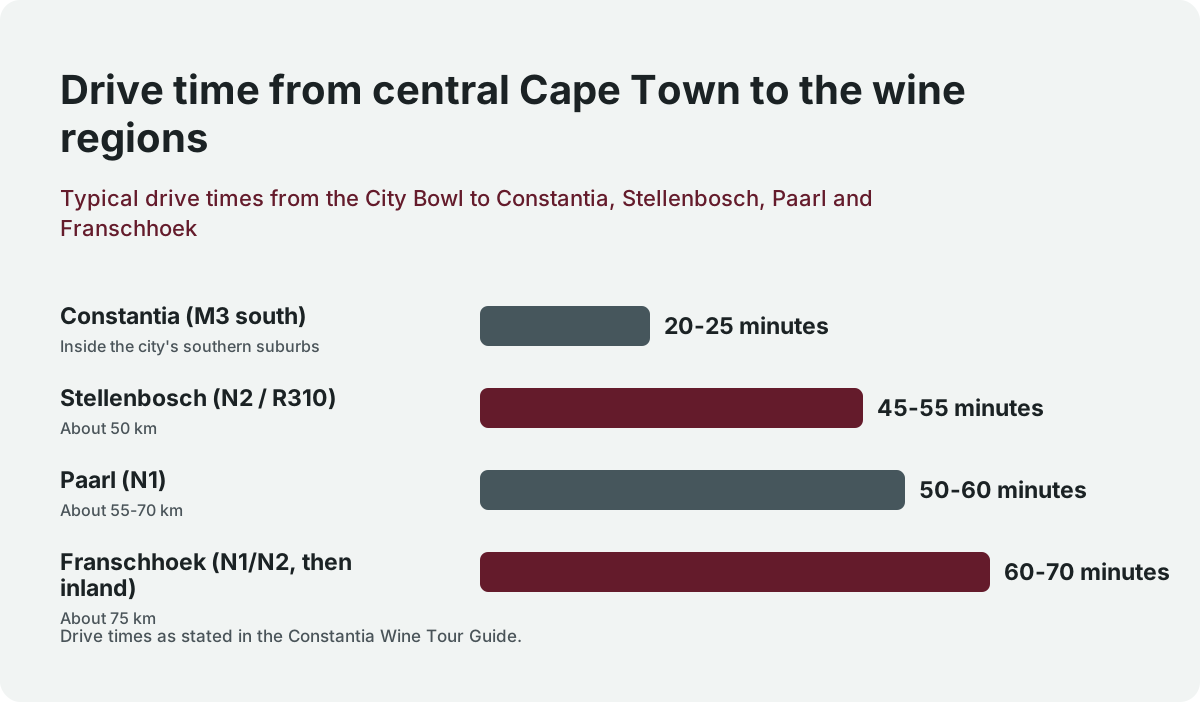
Constantia is roughly 20 to 25 minutes' drive from the City Bowl via the M3 south, making it the only major Cape wine region inside the metropolitan area. There is no long Winelands drive, no mountain pass, and no need to plan a full day around travel. By comparison, Stellenbosch is about 50 km and 45 to 55 minutes via the N2, Franschhoek about 75 km and 60 to 70 minutes, and Paarl 50 to 60 minutes via the N1.
The M3 is the spine of the route. It runs south from the City Bowl, and the Constantia estates sit just off its southern end, spread along the valley between Tokai and the Constantia Nek side of Table Mountain. Because the whole valley is close together, you can comfortably visit three estates in a half day without ever spending more than ten minutes in a car between stops.
| Destination | Distance from central Cape Town | Typical drive time | Route |
|---|---|---|---|
| Constantia | Inside the city's southern suburbs | 20-25 minutes | M3 south |
| Stellenbosch | ~50 km | 45-55 minutes | N2 / R310 |
| Paarl | ~55-70 km | 50-60 minutes | N1 |
| Franschhoek | ~75 km | 60-70 minutes | N1/N2, then inland via Helshoogte |
Traffic matters more than distance here. The M3 carries heavy commuter traffic in both directions on weekday mornings and late afternoons, so a 10:00 start after the morning peak can save you ten frustrating minutes each way. Weekends are lighter, though Saturday midday around the estates themselves gets busy in high season, roughly November through March.
One practical note on taxis and rideshares: because the estates are inside the city, ride-hailing apps work well and the return trip to town is short and cheap compared with getting back from Stellenbosch or Franschhoek. That said, hopping between estates by rideshare means repeated waits, which is exactly the friction a hop-on tour removes. The tour formats compared later in this guide cover that choice in detail.
Which Estates Should You Visit On A Constantia Wine Tour?
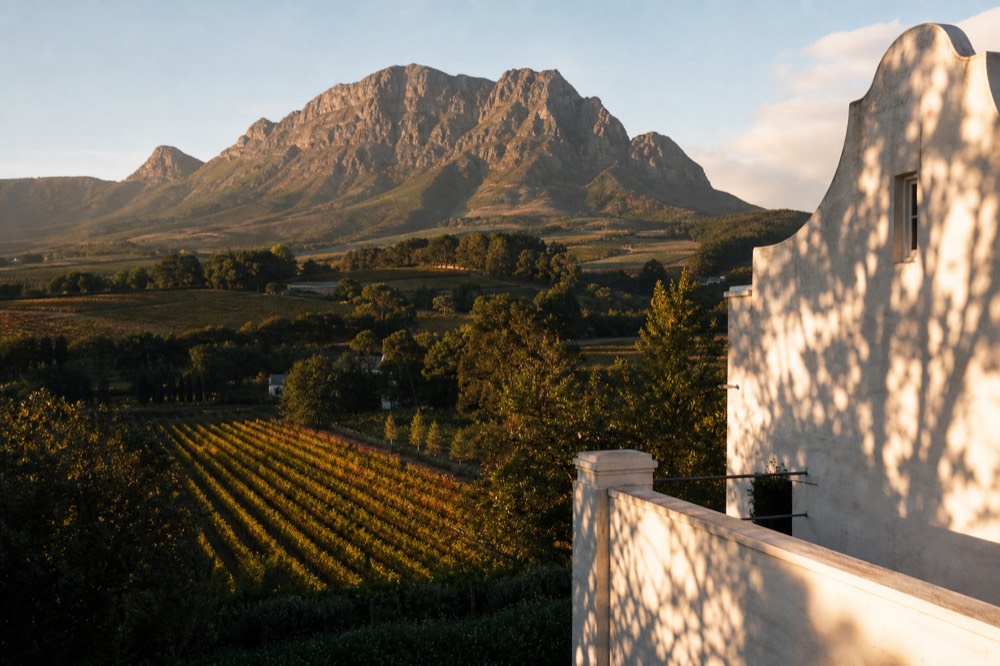
The core stops are Groot Constantia, Klein Constantia, Steenberg, Buitenverwachting, Constantia Glen and Beau Constantia, with Eagles' Nest and Silvermist as strong smaller additions. Groot Constantia delivers the history and the crowds, Klein Constantia the world-ranked wines, Steenberg the oldest land grant and a strong restaurant, and Buitenverwachting and Constantia Glen quieter, food-friendly tastings. Three or four estates is a realistic full day; two is a relaxed half day.
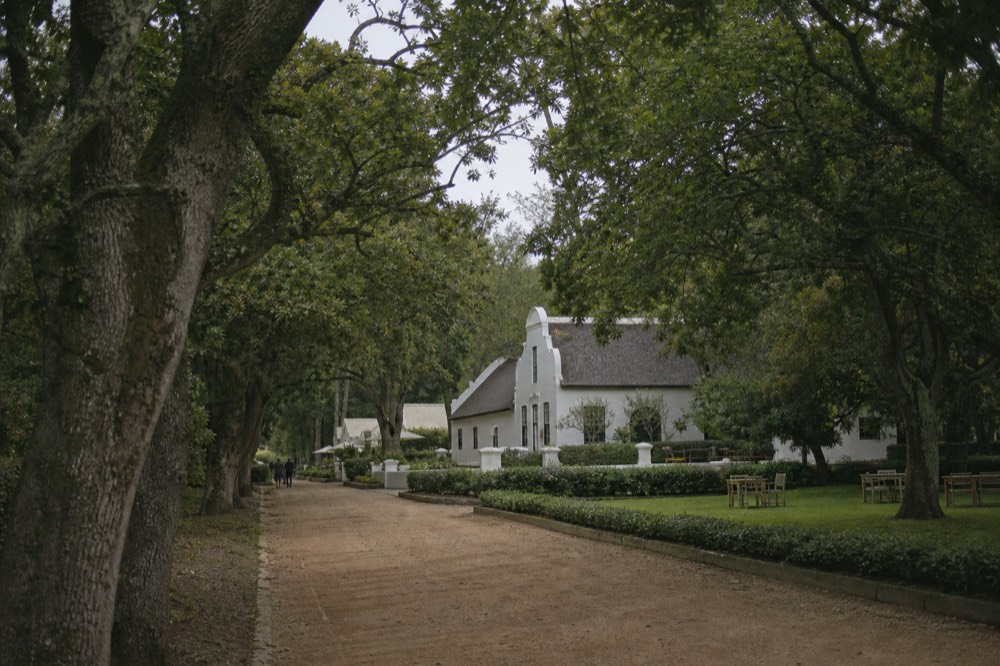
Groot Constantia is the anchor for most first visits, and deservedly so. The estate was granted to Simon van der Stel on 13 July 1685 and has produced wine continuously since, a claim no other South African estate can make. The Cape Dutch manor house, wine museum and landscaped grounds are as much of the attraction as the tasting room, and its flagship sweet wine, Grand Constance, earned a gold medal at the Muscats du Monde competition in Burgundy in July 2025 and recognition among the world's top 10 Muscats. Expect company: one 2025 article referenced the estate receiving over 450,000 visitors annually, so arrive early or book ahead.
Klein Constantia is the valley's current international star. In November 2025 it was ranked number 6 in the World's 50 Best Vineyards list, announced in Margaret River, Australia, named Best Vineyard in Africa, and awarded Highest Climber after rising 35 places from 2024. The estate is famous above all for Vin de Constance, the historic sweet wine that predates the estate's split from its parent farm, and a tasting here is a chance to try one of the world's genuinely iconic bottles.
Steenberg carries the valley's most surprising historical fact. The farm was granted in 1682 to Catharina Ras, the first recorded female landowner at the Cape under the Dutch East India Company, which means it actually predates Groot Constantia's 1685 grant, even though Groot Constantia holds the "oldest wine-producing estate" title because of its unbroken production. Steenberg pairs that history with a serious restaurant and a golf estate setting. You can verify the details on Steenberg's own history page.
| Estate | Claim to fame | Best for |
|---|---|---|
| Groot Constantia | 1685 grant, oldest wine-producing estate, Grand Constance gold at Muscats du Monde 2025 | History, first-timers, grounds |
| Klein Constantia | World's 50 Best Vineyards 2025 number 6, Best Vineyard in Africa | Iconic wines, serious tasters |
| Steenberg | 1682 grant, predates Groot Constantia, first female landowner at the Cape | History buffs, long lunches |
| Buitenverwachting | Historic farm, celebrated restaurant | Quiet food-led visits |
| Constantia Glen | Boutique estate, al fresco tastings | Relaxed afternoon sessions |
| Beau Constantia | Modern architecture, panoramic views | Views and photography |
A sensible pattern for a day: start at Groot Constantia when it opens to beat the crowds, move to Klein Constantia for a mid-morning tasting, then finish with a long lunch at Steenberg, Buitenverwachting or Beau Constantia. Trying to do more than four estates in a day turns the visit into a checklist rather than an experience, and the valley's pleasure is partly its pace.
For a deeper look at the individual properties, our best vineyards near Cape Town rundown covers the estates worth building a day around.
Groot Constantia Or Steenberg: Which Estate Is Actually Older?
Steenberg's land grant dates to 1682, three years before Groot Constantia's 1685 grant, so Steenberg is the older farm. Groot Constantia nevertheless holds the "South Africa's oldest wine-producing estate" title because it has produced wine continuously since 1685, while Steenberg's early decades were not as a continuously operating wine estate. Both claims are true; they measure different things, and honest guides should state both.
The details matter here because the valley's marketing often flattens them. Groot Constantia was granted to Simon van der Stel, the Cape's first governor of the settlement era, on 13 July 1685, and the estate's own history page documents continuous wine production from that date, which is the basis of its famous title. You can read the primary account on Groot Constantia's about page.
Steenberg's grant came first, in 1682, awarded to Catharina Ras, a widow who became the first recorded female landowner at the Cape under the Dutch East India Company. Her story is remarkable in its own right: she arrived at the Cape as an indentured servant and died as one of its prominent landowners, surviving multiple husbands and, by several accounts, a leopard that invaded her farm. The farm's name, "mountain of stone," is often traced to that early frontier era.
For a visitor, the practical difference between the two is atmosphere. Groot Constantia is a grand, museum-grade property with tour groups, a wine museum and a wide tasting operation. Steenberg feels more like a contemporary wine and lifestyle estate, with a luxury hotel, a celebrated restaurant and a quieter cellar door. If your day only has room for one historic estate, Groot Constantia is the canonical stop; if you have already done it, Steenberg rewards the second visit more than a repeat.
How Does Constantia Rank On The World Stage?
Constantia punches far above its size in international rankings: Klein Constantia was ranked number 6 in the World's 50 Best Vineyards 2025, announced in November 2025, and named Best Vineyard in Africa, while Groot Constantia's Grand Constance won gold at the Muscats du Monde competition in July 2025. For a valley of fewer than ten estates inside a city suburb, that is a concentration of global recognition most full wine regions never achieve.
The World's 50 Best Vineyards list, announced on 19 November 2025 in Margaret River, Australia, placed Klein Constantia at number 6, up 35 places from 2024, which earned it the Highest Climber award alongside the Best Vineyard in Africa title. The same 2025 list also recognized other Cape estates: Tokara at number 71 and Delaire Graff at number 79 in Stellenbosch, and La Motte at number 94 in Franschhoek. But the highest-ranked of them all, in the global top ten, sits in Constantia.
The valley's second international signal came from Burgundy in July 2025, where Groot Constantia's Grand Constance took a gold medal at the Muscats du Monde International Wine Competition and was recognized among the world's top 10 Muscats. Grand Constance is the modern revival of the Constantia sweet wine that was shipped to European courts in the 18th and 19th centuries, so the medal is both a current win and a continuation of a 300-year reputation.
Domestic recognition has followed. Constantia Wine Route members picked up multiple Five Star ratings and category wins in the 2026 Platter's South African Wine Guide, and two valley restaurants, Chefs Warehouse at Beau Constantia and one at Buitenverwachting, were highlighted in the JHP Gourmet Guide 2026. The valley also hosted the national Wine Harvest Commemorative Event at Groot Constantia in early February 2026.
For travelers, the practical takeaway is simple: the wines you will taste in Constantia are not regional curiosities. They are the bottles currently being ranked alongside the world's most famous estates, and the tasting fees, covered below, remain far below what a comparable tasting in Burgundy or Napa would cost.
Hop-On Bus Tour Or Private Cape Point Combination: Which Format Fits You?
The hop-on bus-and-tasting package suits independent visitors who want city sightseeing transport and a Groot Constantia visit. A private Cape Point and Constantia tour combines peninsula scenery with a cellar visit and tasting at the same estate. Choose the bus for independent sightseeing or the private vehicle for a planned full-day peninsula route.
The bus package is a one-day sightseeing pass with a Groot Constantia experience. Start at the Aquarium ticket office, change to the Purple Wine Bus at Constantia Nek and follow the published timetable. The included estate visit covers five selected wines, the Manor House and Cloete Cellar, with a self-guided audio experience. It is not a timed guided circuit of several wineries.
The private combination tour takes a different approach entirely. It pairs Constantia's vineyards with Cape Point, the peninsula's southern tip, in a single chauffeured day, typically running the scenic coastal route through Chapman's Peak or the Atlantic seaboard and including a Groot Constantia cellar visit and tasting. It is the right format when your traveling group mixes wine lovers with scenery lovers, or when Cape Town time is short and you want two headline experiences in one day.
| Format | Best for | Pace | Typical scope |
|---|---|---|---|
| Hop-on bus and tasting package | Independent visitors wanting Groot Constantia with bus transport | Bus timetable | Groot Constantia estate experience; other stops depend on the bus route |
| Private Cape Point + Constantia tour | Mixed-interest groups, photographers | Private vehicle on a planned full-day route | Peninsula sights plus Groot Constantia |
| Self-drive or rideshare | Confident independent planners | Your own | Any estates, no tastings structured for you |
There is also a middle path worth naming: a half-day Stellenbosch wine tour. If you have already seen Constantia, or you want the fuller Winelands experience with the oak-lined streets and estate density that Constantia lacks, a half-day format delivers Stellenbosch, about 45 to 55 minutes from the city, without committing your whole day.
What Does A Constantia Wine Tour Cost?
A standard wine tasting at Constantia costs roughly R80 to R250 per person, with premium flights priced higher, and fees are often waived or refunded when you buy bottles. Meals at valley restaurants vary by venue, while tour prices range from budget-friendly hop-on options to pricier private combinations, so confirm current rates with each operator or estate listing before you go.
Tasting fees across the Cape follow a consistent norm rather than a fixed rule, and Constantia sits squarely inside it. A standard flight of five or six wines usually runs R80 to R250 per person, with reserve-level or food-pairing tastings above that. Most estates waive or refund the fee against a bottle purchase, which effectively makes the tasting free if you were buying wine anyway, always confirm the policy at the cellar door since it is set estate by estate.
| Cost item | Typical range | Notes |
|---|---|---|
| Standard tasting flight | R80-R250 pp | Often waived with bottle purchase, ask at the cellar door |
| Premium or paired tasting | Above standard, varies by estate | Check each estate's listing |
| Restaurant meal | Varies by venue, check the room or the estate's listing | Valley restaurants set their own menus |
| Tour price | On the operator's live listing | Varies by format and group size |
For context against the wider Winelands: the Franschhoek Wine Tram's hop-on-hop-off ticket costs R350 per adult, R90 for children aged 3 to 17, with under-3s free, and tastings at estates there typically add R60 to R260 per person on top of the ticket. Constantia's hop-on formats are priced on their own listings, and because the valley is inside the city, there is no long transfer cost baked in the way Cape Town-to-Franschhoek packages must carry.
Two money-saving patterns are worth planning around. First, tasting at three estates and buying a bottle at each often costs less overall than four tastings and no purchases, once fee waivers kick in. Second, a long lunch at one estate plus two tastings is a better day than four rushed tastings, and it is usually cheaper too.
What Rules Should You Know Before A Constantia Tasting Day?
South Africa's drinking age is 18 nationwide, and tasting rooms are legally required to check ID for anyone who appears under 18, so carry a passport or driver's licence. The drink-driving limit is 0.05 g per 100 ml of blood for ordinary drivers but a stricter 0.02 for professional drivers, including tour and shuttle drivers. Book ahead where you can, especially from November to March, since smaller estates often require reservations and peak season fills the valley.
The ID rule is not a formality. Under the National Liquor Norms and Standards, licensees including winery tasting rooms must request ID, a passport or a driver's licence from anyone who appears under 18, and refusal to produce it means the person is treated as under 18 and denied service. The legal purchase and drinking age of 18 comes from the Liquor Act 59 of 2003 and applies at any licensed premises in the country.
The drink-driving limits are the genuinely useful fact for wine travelers. Under the National Road Traffic Act, ordinary drivers are held to 0.05 g of alcohol per 100 ml of blood, but professional drivers, a category that includes many tour and shuttle drivers holding a Professional Driving Permit, are held to 0.02. A zero-tolerance limit has been signed into law but was not yet in force as of September 2026. The practical reading: your tour driver is legally held to a stricter standard than you would be holding yourself, which is a real argument for letting someone else do the driving between tastings.
Booking etiquette is the third piece. There is no uniform legal requirement to reserve tastings, but advance booking is widely recommended or required in practice across the Cape, especially at smaller and boutique estates and during peak season, roughly November to March. Larger, more commercial estates often accommodate walk-ins during published hours when capacity allows, while some named estates explicitly require booking. If your heart is set on a specific cellar door, reserve it.
Spitting is standard and encouraged at Cape cellar doors, particularly if anyone in your group is driving afterward, and the buckets are there without stigma. Water is usually poured alongside the flight; drink it.
When Is The Best Time Of Year For A Constantia Wine Tour?
September through November is the sweet spot for most visitors: spring brings warming days of roughly 18 to 24 degrees, blooming landscapes and noticeably fewer crowds than the December-to-February peak. Harvest season runs from late January through April and adds festive energy and hands-on events, while winter, June through August, is cool and wet but quiet and cheap. Avoid mid-December to early January if you dislike queues.
The Cape's Mediterranean climate shapes the calendar. Summers are hot and dry, with February highs around 28 degrees and almost no rain in January and February, while winters are cool and wet, with June the peak rainfall month. The "Cape Doctor," the strong south-easterly wind, blows from September through March; it cools the vineyards and clears the air but can interrupt an outdoor tasting, and several Constantia cellar doors have both covered and open seating for exactly this reason.
Harvest, the "crush," typically runs from late January through April across the Cape Winelands, with the 2026 season running early: De Grendel's harvest report noted the first Pinot Noir fruit arriving on 8 January, about two weeks ahead of normal, and the regional harvest completed nearly two weeks earlier than the long-term norm under hot, dry conditions. Visiting during harvest means activity in the cellars and, in some years, hands-on events, though in Constantia specifically these are concentrated at Groot Constantia's commemorative event in early February rather than week-long festivals.
Peak crowding runs December through February and into early March, coinciding with school holidays and the summer high season. Shoulder periods, September to November and post-harvest March to April, balance crowds, weather and activity. A September 2026 visit lands squarely in that spring window: warming days, wildflowers on the peninsula, and cellar doors you can walk into without a reservation arms race.
If Constantia whets your appetite for the fuller Winelands, a half-day Stellenbosch format is the natural next step, pairing the valley's compact history with South Africa's second-oldest town and its dense concentration of estates.
For everything else the region offers beyond a single valley, Cape Town Wine Tours covers the full spread of tours, formats and day trips from the city.
The questions below are the ones Constantia visitors ask most often: drive time from the city, which estate is truly oldest, what a tasting costs, whether the valley justifies a day on a short itinerary, booking requirements, and the alcohol rules that shape the day. Each answer is drawn from the same verified facts as the guide above.
Common Questions About Constantia Wine Tours
How far is Constantia from central Cape Town?
Constantia lies inside Cape Town's southern suburbs, roughly 20 to 25 minutes' drive from the City Bowl via the M3. No long Winelands drive is required, unlike Stellenbosch (45-55 minutes) or Franschhoek (60-70 minutes).
Which is the oldest wine estate in Constantia?
Steenberg's land grant dates to 1682, predating Groot Constantia's 1685 grant. However, Groot Constantia is described as South Africa's oldest wine-producing estate because it has produced wine continuously since 1685.
How much do Constantia wine tastings cost?
Standard tasting flights usually run R80 to R250 per person, with premium tastings higher. Fees are commonly waived or refunded with a bottle purchase, but each estate sets its own policy, so confirm at the cellar door.
Is Constantia worth visiting if I only have one day in Cape Town?
Yes, if wine or history is a priority. Because the valley is only 20 to 25 minutes from the city center, you can do a morning of tastings and still have the afternoon for Table Mountain or the Waterfront. A private Cape Point and Constantia combination packs both into one day.
Do I need to book Constantia tastings in advance?
There is no uniform legal requirement, but advance booking is widely recommended or required in practice, especially at smaller estates and during peak season from November to March. Larger estates often take walk-ins during published hours when capacity allows.
What is the drinking age and drink-driving limit in South Africa?
The drinking and purchase age is 18 nationwide, and tasting rooms must check ID for anyone who appears under 18. The blood-alcohol limit is 0.05 g per 100 ml for ordinary drivers and a stricter 0.02 g for professional drivers, including tour and shuttle drivers.
Plan Your Wine Day
Starting recommendation. Adjust the choice below.
City Bus And Groot Constantia Tasting
Have a travel date in mind? Check it before arranging the rest of your day. Use the city bus network and taste five wines at Groot Constantia, with museum and cellar access.
One-day pass, not a fixed half-day tour. Aquarium ticket office; change buses at Constantia Nek. Lunch extra; tastings 18+.
If the calendar does not load, use the booking link to select your date on GetYourGuide.
Check Dates For City Bus And Groot Constantia TastingCompare options and your costs
- City Bus And Groot Constantia Tasting
- Use the city bus network and taste five wines at Groot Constantia, with museum and cellar access. One-day pass, not a fixed half-day tour. Aquarium ticket office; change buses at Constantia Nek. Lunch extra; tastings 18+.
- Private Cape Point And Constantia Day
- Combine Cape Point scenery with a Groot Constantia cellar visit and tasting. Full day; private vehicle, English guide. Confirm pickup area and optional entry fees; estate activities may be shared.
This matches format and time, not personal suitability. Confirm the meeting point, language, ages and access arrangements for your party on the booking page.