Stellenbosch, Franschhoek, Paarl Or Constantia: Which Wine Region Is Right For Your Trip?
Four wine regions sit within about an hour of Cape Town, and each suits a different kind of traveller. This guide compares Stellenbosch, Franschhoek, Paarl and Constantia on drive time, character, price and best-for-whom, then gives you a simple framework for choosing.
Short answer
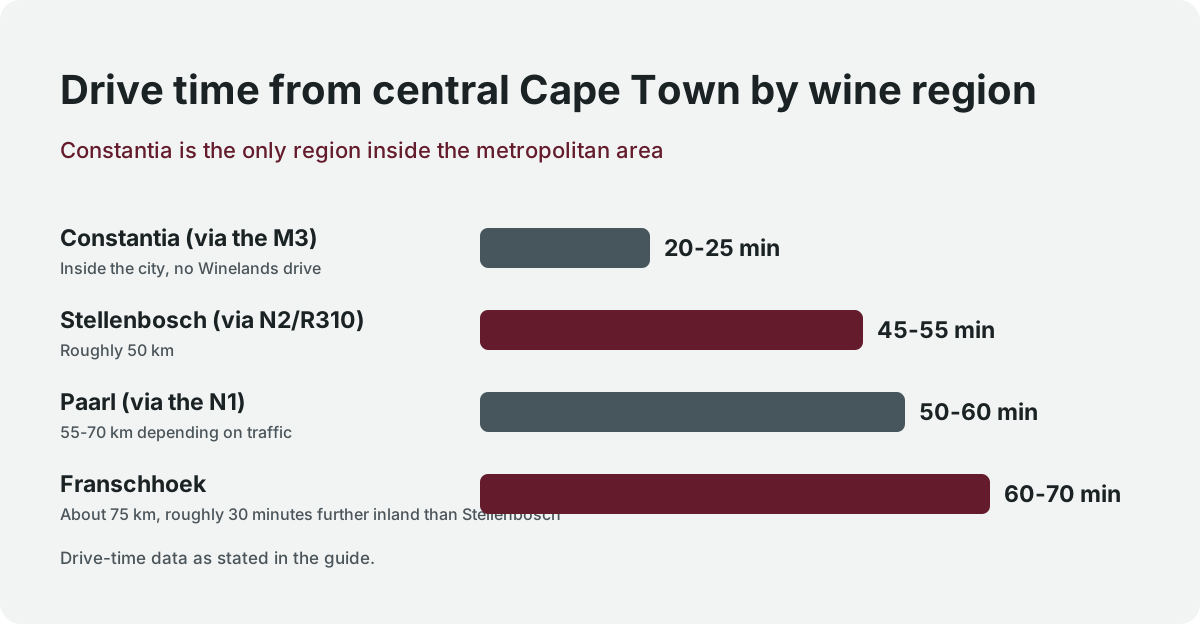
Stellenbosch is roughly 50 km and 45-55 minutes from central Cape Town, Franschhoek about 75 km and 60-70 minutes, Paarl 50-60 minutes via the N1, and Constantia just 20-25 minutes inside the city's southern suburbs. Pick Stellenbosch for density and energy, Franschhoek for food, Paarl for value and quiet, Constantia for a short half-day.
Four wine regions sit within about an hour's drive of central Cape Town, and travellers agonise over the choice far more than the geography justifies. Stellenbosch, Franschhoek, Paarl and Constantia are close enough that a bad decision costs you a morning, not a holiday. But they are genuinely different places: a student town with the country's densest cluster of estates, a French-founded gourmet village, a working agricultural valley, and a historic suburb you can reach without ever leaving the city limits.
This guide puts the four side by side, then works through the practical questions that actually decide it for most people: how much time you have, what you want to spend, and whether you would rather taste six wines at one estate or hop between five. The comparison draws on current drive-time data, 2025 and 2026 award results, and the practical realities of tasting fees and booking policies across the regions.
Which Cape Wine Region Should You Choose: Stellenbosch, Franschhoek, Paarl Or Constantia?
The short answer is that Stellenbosch suits first-time visitors who want the most estates in the least time, Franschhoek suits food-led travellers and couples, Paarl suits anyone chasing value and elbow room, and Constantia suits anyone short on time who still wants world-class wine, since it sits just 20-25 minutes from the City Bowl via the M3 rather than an hour out in the Winelands.
Here is the side-by-side view. Drive times are measured from central Cape Town in normal traffic; tasting fees are planning ranges, so check the room when you arrive, since fees change seasonally and are often waived with a bottle purchase.
| Region | Drive from central Cape Town | Character | Typical tasting fee | Best for |
|---|---|---|---|---|
| Stellenbosch | ~50 km, 45-55 min via N2/R310 | Historic university town, oak streets, highest density of estates | R80-R250 pp | First-timers, variety, walkable town |
| Franschhoek | ~75 km, 60-70 min | Small French-heritage gourmet village, curated and romantic | R80-R250 pp, often higher at premium estates | Food and wine pairing, couples, tram riders |
| Paarl | ~55-70 km, 50-60 min via N1 | Big, quiet, working agricultural town, broad valleys | R80-R250 pp, often at the lower end | Value seekers, bigger reds, avoiding queues |
| Constantia | 20-25 min via the M3, inside the city | Historic suburban valley, oldest estates in the country | R80-R250 pp | Half-days, tight schedules, non-drinkers in the group |
A few things stand out immediately. Constantia is the outlier on distance: it is not a Winelands day trip at all, but a suburb of Cape Town where wine has been made since 1682. The other three all demand most of a day once you account for the drive, lunch and two or three tastings.
The award lists also skew the picture. In the World's 50 Best Vineyards 2025 list, announced in November 2025, Stellenbosch placed Tokara at #71 and Delaire Graff at #79, Franschhoek's La Motte entered at #94, and Constantia's Klein Constantia ranked #6 overall and was named Best Vineyard in Africa. Paarl had no entry in that list, which tells you something about its profile: less polished, less photographed, and often better value as a result.
What Is Each Wine Region Actually Like Once You Arrive?
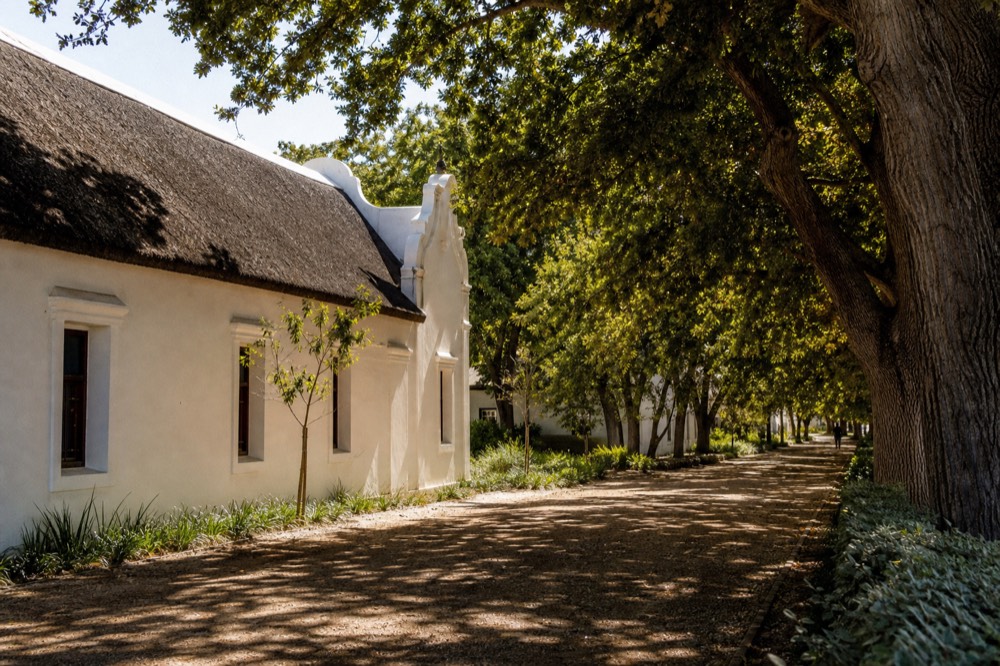
Stellenbosch is South Africa's second-oldest town and feels like it: oak-lined streets, museums, a large student population and the highest concentration of wine estates of any region here, while Franschhoek is smaller and more curated, a French Huguenot village of boutiques and serious restaurants, Paarl is a bigger, quieter working farm town with wider valleys, and Constantia is a leafy suburb with a handful of historic estates rather than a town built around wine.
Stellenbosch works for people who like density. Because the estates sit close together on the town's edges and along the Helshoogte and R310 corridors, you can visit three or four in a day without long stretches in the car. The town itself is walkable, with a restaurant and nightlife scene that exists for its large student population rather than for tourists, which keeps prices and hours honest. The 2026 Platter's Wine Guide, released around November 2025, was strong for the area, with wines of the year including an Oldenburg Per Se 2022 Cabernet Sauvignon and a Tokara Limited Release Pinotage 2023.
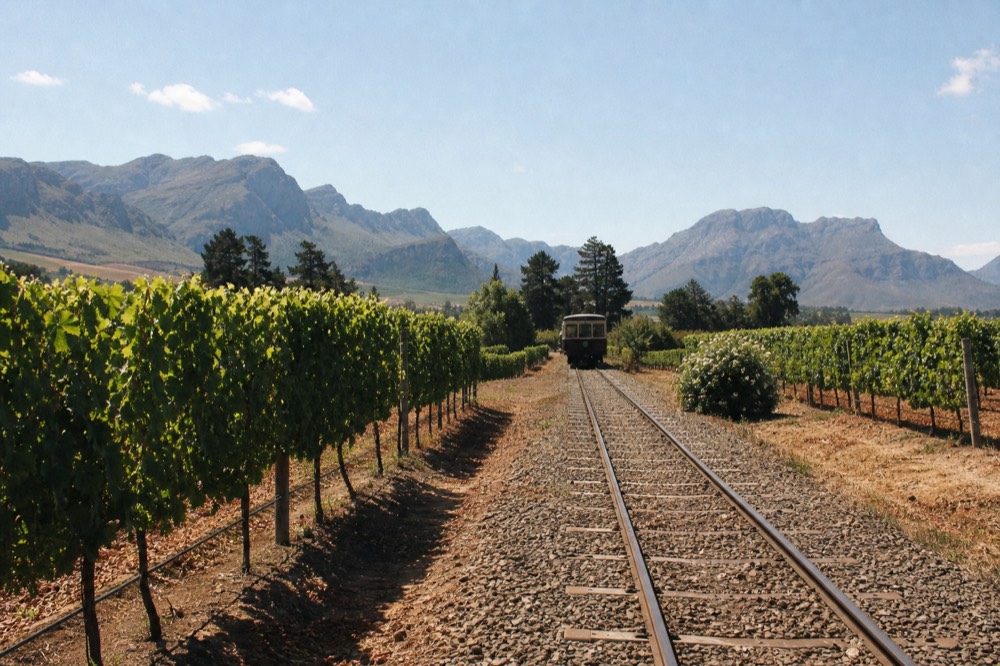
Franschhoek trades density for polish. The village centre is a few compact blocks of galleries, delis and some of the country's most decorated kitchens; the 2025 Eat Out Awards, announced in March 2025, gave one-star mentions to several Franschhoek tables including Chefs Warehouse at Maison, Le coin Français and Orangerie at Le Lude. It is also home of the Franschhoek Wine Tram, the hop-on-hop-off vintage-style tram and tram-bus system that loops through the valley, which shapes the whole feel of the place in high season.
Paarl is the one travellers underestimate. It is the largest of the three Winelands towns by population, but it reads as a working agricultural centre: bigger estates, broader views of the granite Paarl Rock massif, shorter queues and a leaning toward bigger reds and fortified styles. New openings keep arriving, including the fire-centric Smeul restaurant at Zomerlust Boutique Hotel, announced in May 2026, but the town has nothing like Franschhoek's boutique density.
Constantia is different in kind. Groot Constantia was granted to Simon van der Stel on 13 July 1685 and is widely described as the country's oldest wine-producing estate, and Steenberg Farm actually predates it, granted in 1682 to Catharina Ras, the first recorded female landowner at the Cape. You are tasting in a suburb, between the M3 and the mountains, with eight or so estates rather than dozens.
How Far Is Each Wine Region From Cape Town, Really?
Stellenbosch is roughly 50 km and 45-55 minutes from central Cape Town via the N2 and R310, Franschhoek is about 75 km and 60-70 minutes, sitting roughly 30 minutes further inland than Stellenbosch via scenic passes like Helshoogte, Paarl is 55-70 km and 50-60 minutes via the N1 depending on traffic, and Constantia is only 20-25 minutes away on the M3 without ever leaving the metropolitan area.
These drive times are the single most underrated input in the decision. A "one hour" drive to Franschhoek is an honest hour in mid-morning traffic, and the return at the end of a tasting day can stretch longer. Add a lunch stop and three estates, and a Franschhoek day comfortably fills nine or ten hours door to door.
The geography also creates a natural chain. Paarl sits on the N1, Stellenbosch branches off the N2, and Franschhoek lies about 30 minutes inland from Stellenbosch through the Helshoogte Pass. That is why so many organised itineraries run Cape Town to Stellenbosch to Franschhoek and back: the towns line up along a loop that adds only modest driving. Paarl can be folded into the same loop via the N1 back to town, though it more often earns its own day.
Constantia's 20-25 minute drive changes the calculus entirely. You can do a Constantia morning, with two estates and a long lunch, and still be back at your hotel by mid-afternoon. No other region on this list offers that, which is why the advice in most real traveller discussions comes down to logistics first: how many days do you have, and how much of them do you want to spend in a car? Our Cape Town wine tour guide covers the timing question in more depth, including the seasonal factors.
How Much Does A Day In Each Region Cost?
Budget roughly R80 to R250 per person per tasting flight across all four regions, with premium and paired tastings running higher, plus lunch, plus transport, while the Franschhoek Wine Tram hop-on-hop-off ticket alone costs R350 per adult, so a self-drive day with three tastings and a casual lunch is a mid-range outing per person before wine purchases, and guided and private options sit well above that.
The tasting fee range is the honest baseline. Standard flights at Cape estates typically run R80 to R250 per person, premium tastings go higher, and fees are commonly waived or refunded when you buy a bottle, so serious buyers often end up paying less than the sticker suggests. Spitting is standard and encouraged, particularly if anyone in your group is driving afterward.
The tram is the one fixed number worth knowing. The Franschhoek Wine Tram's hop-on-hop-off ticket costs R350 per adult, R90 for children aged 3-17, and under-3s ride free; tastings and meals at the estates are extra, typically R60-R260 per person. It runs daily except major holidays such as 24-25 December and 31 December-1 January, on five colour-coded lines covering roughly 30 estates between them, with 7-9 estates per line.
| Cost line | Constantia | Stellenbosch | Franschhoek | Paarl |
|---|---|---|---|---|
| Tasting fee range | R80-R250 pp | R80-R250 pp | R80-R250 pp, premium higher | R80-R250 pp, lower end common |
| Transport approach | Uber or short hop-on tour | Self-drive, shuttle or tour | Tram (R350 adult, transfer or tour | Self-drive or tour |
| Lunch tier | Mid to high | Broad range, student-friendly options | Highest, destination restaurants | Mid, best value of the four |
| Typical full-day spend per person | Lowest, half-day format | Mid | Highest | Mid to low |
One legal point that quietly favours organised tours: South Africa runs a two-tier drink-driving limit under the National Road Traffic Act. Ordinary drivers are limited to 0.05 g of alcohol per 100 ml of blood, but professional drivers, a category that covers many tour and shuttle drivers holding a PrDP permit, are held to a stricter 0.02 g limit. A zero-tolerance limit has been signed into law but was not yet in force as of this research date. In plain terms, the person driving your group is legally held to a tighter standard than you would be driving yourself, which is a real argument for booking a driver when a full day of tasting is the plan.
Which Region Should You Pick If You Only Have One Day?
With one day, choose a single region and resist the temptation to combine: Stellenbosch is the strongest single-day pick for first-timers because of estate density and the walkable town, Franschhoek is the pick if lunch is the centrepiece of your day, Paarl works if you want the same wine for less money and fewer queues, and Constantia is the pick if your one day is really only half a day.
The one-day mistake is trying to see all three Winelands towns. The drive times above make it technically possible and practically miserable: you will spend four hours in the car and average one rushed tasting per town. Real traveller discussions on this exact question, Stellenbosch or Franschhoek head to head, almost always resolve toward picking one and going deep, and the same logic applies here.
If you cannot decide between Stellenbosch and Franschhoek, a compromise exists: base the day in Stellenbosch, taste two or three estates on its edges, then drive the Helshoogte Pass into Franschhoek for a late lunch and one final tasting before the hour drive home. You will not have "done" either town, but you will have seen the two most photogenic valleys in a single loop.
For a deeper look at each side of that specific trade-off, see Stellenbosch or Franschhoek: which should you visit?, and for the town-by-town practicalities, our Stellenbosch wine tours from Cape Town guide breaks down itineraries estate by estate.
When Does Constantia Beat A Full Winelands Day Trip?
Constantia wins whenever your available time is under about six hours, whenever you have a late flight or an early dinner in the city, or whenever non-drinkers or children are in the group and a full day in the Winelands would lose them, because the valley's estates sit just 20-25 minutes from the City Bowl and include Klein Constantia, ranked #6 in the World's 50 Best Vineyards 2025.
The valley's credentials are not suburban filler. Groot Constantia's Grand Constance won a gold medal at the Muscats du Monde competition in Burgundy on 10 July 2025 and was recognised among the world's top 10 Muscats. Groot Constantia is also reported to receive over 450,000 visitors annually, so book the popular tasting slots ahead, particularly in the December-to-February peak.
Constantia also has the harvest calendar on its side for event-goers: the national Wine Harvest Commemorative Event was hosted at Groot Constantia in early February 2026, and the Pick n Pay Wine and Food Festival returned to the Constantia area on 25-26 April 2026. For a fuller treatment of the valley, see our Constantia wine tour guide.
Can You Combine Two Regions In One Day Without Rushing?
Yes, but only in pairs that sit close together: Stellenbosch plus Franschhoek works because Franschhoek is about 30 minutes inland from Stellenbosch via Helshoogte, Paarl plus Stellenbosch works because the N1 and N2 corridors meet quickly north of the city, and Constantia pairs with almost anything as a half-day add-on, while Paarl plus Franschhoek in one day is the pairing to avoid because it spends the most time in the car for the least time at the estates.
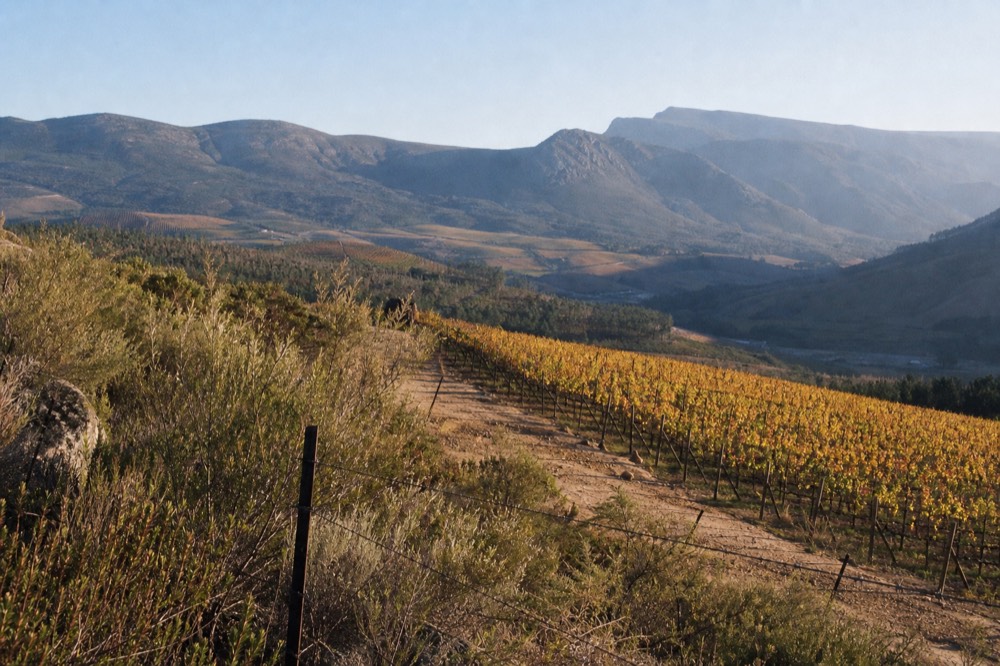
The practical version of a two-region day is a morning in Stellenbosch, two tastings before noon, then the pass road into Franschhoek for a 1pm lunch reservation and one afternoon tasting. Done. You are back in Cape Town by 6pm if the traffic behaves. The reverse order also works, though morning tastings in Franschhoek before the tram crowds build, then lunch in Stellenbosch, suits early risers better.
Booking discipline matters more on combined days. Advance reservations are widely recommended or required across all four regions, especially at smaller boutique estates and during the November-to-March peak, though larger commercial estates often take walk-ins during published hours when capacity allows. Some estates explicitly require booking, so check before you commit a route. On a two-region day you have no slack for a turned-away walk-in.
Which Region Suits Which Kind Of Traveller?
Pick Stellenbosch if you want variety and a lively town, Franschhoek if the trip is really about food and the tram experience, Paarl if you want quieter cellars and better value, and Constantia if time is the constraint, and if you have two or more days, do Constantia as a half-day plus one full Winelands day, which is the combination most returning travellers end up recommending.
| If you are... | Choose | Why |
|---|---|---|
| A first-time visitor with one full day | Stellenbosch | Most estates per driving minute, walkable town, easiest logistics |
| A couple on a food-focused trip | Franschhoek | Destination restaurants, Huguenot village charm, the tram |
| A value hunter or repeat visitor | Paarl | Lower fees, shorter queues, bigger reds and fortified styles |
| Short on time or on a layover | Constantia | 20-25 minutes from the City Bowl, historic estates, half-day format |
| Travelling with mixed interests | Constantia morning + Winelands afternoon | Wine for some, gardens and history for others |
| Two or more days available | One full Winelands day + Constantia half-day | Covers three regions without rushing any of them |
Timing within the year matters too. Harvest, the crush, typically runs from late January through April, and 2026 was early: De Grendel's first Pinot Noir arrived on 8 January and the overall harvest finished nearly two weeks ahead of the long-term norm under hot, dry conditions. Peak crowding lands in December through February and early March; the shoulder windows of September to November and post-harvest March to April balance crowds against activity. The "Cape Doctor" south-easterly wind blows from September to March and can gust through outdoor tastings on exposed estates, so a windier day favours valley-floor cellars over hilltop terraces.
A structured multi-region day is an alternative for travelers who value breadth over time in a single valley. It does not cover every wine region: read the actual itinerary before assuming Constantia is included.
The Franschhoek Wine Tram lets you choose stops within the selected route, but you still need to plan timing and any restaurant reservations. The official operator site at winetram.co.za publishes line maps and schedules.
Common Questions About Choosing A Cape Wine Region
Which is better, Stellenbosch or Franschhoek?
Stellenbosch has more estates, a walkable historic town and lower average costs; Franschhoek has better restaurants, a more romantic village feel and the Wine Tram. First-timers with one day usually get more from Stellenbosch; food-led travellers usually prefer Franschhoek.
Can you visit the Cape Winelands without a car?
Yes. The Franschhoek Wine Tram covers that valley on a hop-on-hop-off basis, transfers from Cape Town are sold as add-ons, and guided tours and private drivers cover all four regions. Ride-hailing works in Stellenbosch and Franschhoek but is thin in Paarl's outlying estates.
Is Constantia worth it if I'm also doing a Winelands day?
Yes, because they don't overlap. Constantia is 20-25 minutes from the City Bowl and works as a half-day, while the Winelands towns are a full-day commitment. Many travellers do Constantia on an arrival or departure day and save the Winelands for a full day.
How many wine estates can you visit in one day?
Three is the comfortable maximum in most regions, four if they sit close together in Stellenbosch. Tastings run 45 minutes to an hour each, plus travel and lunch, so a fifth estate usually means rushing the fourth.
Do you need to book wine tastings in advance?
Often, yes. Advance booking is widely recommended or required across all four regions, especially at boutique estates and from November to March. Larger estates frequently take walk-ins during published hours, but a confirmed route beats a hopeful one.
What is the cheapest wine region to visit from Cape Town?
Paarl, generally. Tasting fees across the regions overlap in the R80-R250 range, but Paarl's estates more often sit at the lower end, with shorter queues and better value lunches. Constantia can be cheapest overall because a half-day means fewer tastings and minimal transport cost.
Plan Your Wine Day
Starting recommendation. Adjust the choice below.
Private Wine Expert: Stellenbosch And Franschhoek
Have a travel date in mind? Check it before arranging the rest of your day. Request your preferred Winelands focus and taste at four estates with a specialist wine guide.
8 hours; Cape Town pickup area. Four tastings included; lunch extra. Ages 18–80, minimum two adults. Confirm requested estates before booking; private group.
Choose a date to see scheduled departures.
Published schedule, not confirmed seats. Availability and final price are confirmed on Viator.
Check Dates For Private Wine Expert: Stellenbosch And FranschhoekCompare options and your costs
- Private Wine Expert: Stellenbosch And Franschhoek
- Request your preferred Winelands focus and taste at four estates with a specialist wine guide. 8 hours; Cape Town pickup area. Four tastings included; lunch extra. Ages 18–80, minimum two adults. Confirm requested estates before booking; private group.
- Cape Town Transfer And Franschhoek Wine Tram
- Choose estate stops on the operating tram route, with the return city coach included. 8.5 hours; predefined Cape Town pickup points. Tastings and lunch extra. Not a tram-only ticket.
- Constantia Half-Day Tastings
- Visit Groot Constantia and another valley estate with tasting fees and city transport included. 5 hours; English guide and Cape Town pickup. Second estate may be Beau Constantia or Constantia Glen. Lunch extra.
- Three Regions And Three Wineries By Coach
- Taste 15 wines across Paarl, Franschhoek and Stellenbosch with a guided coach day. Full day, allow 8.5 hours; predefined Cape Town collection points. Tastings and pairings included; lunch extra. Shared coach.
This matches format and time, not personal suitability. Confirm the meeting point, language, ages and access arrangements for your party on the booking page.