Stellenbosch Wine Tours From Cape Town: How To Plan Your Day Trip
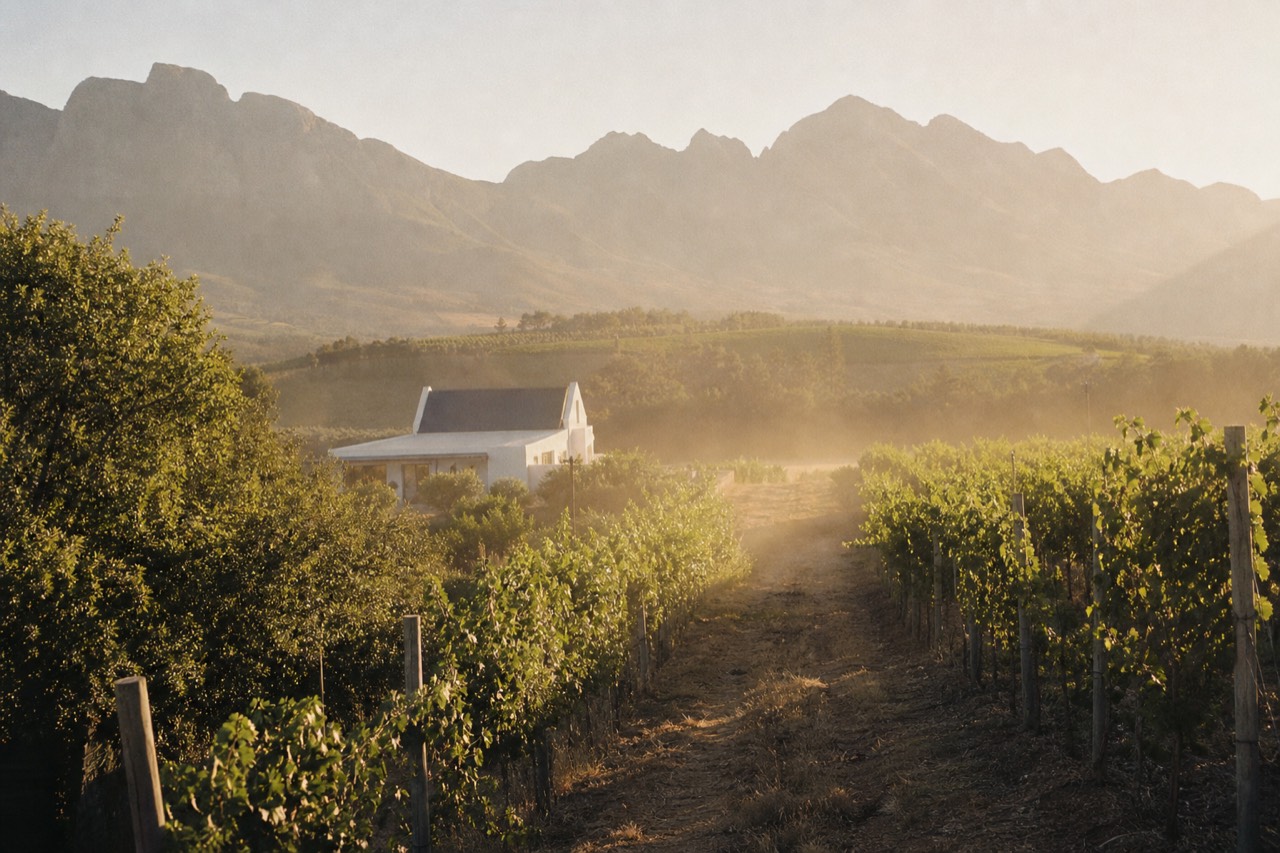
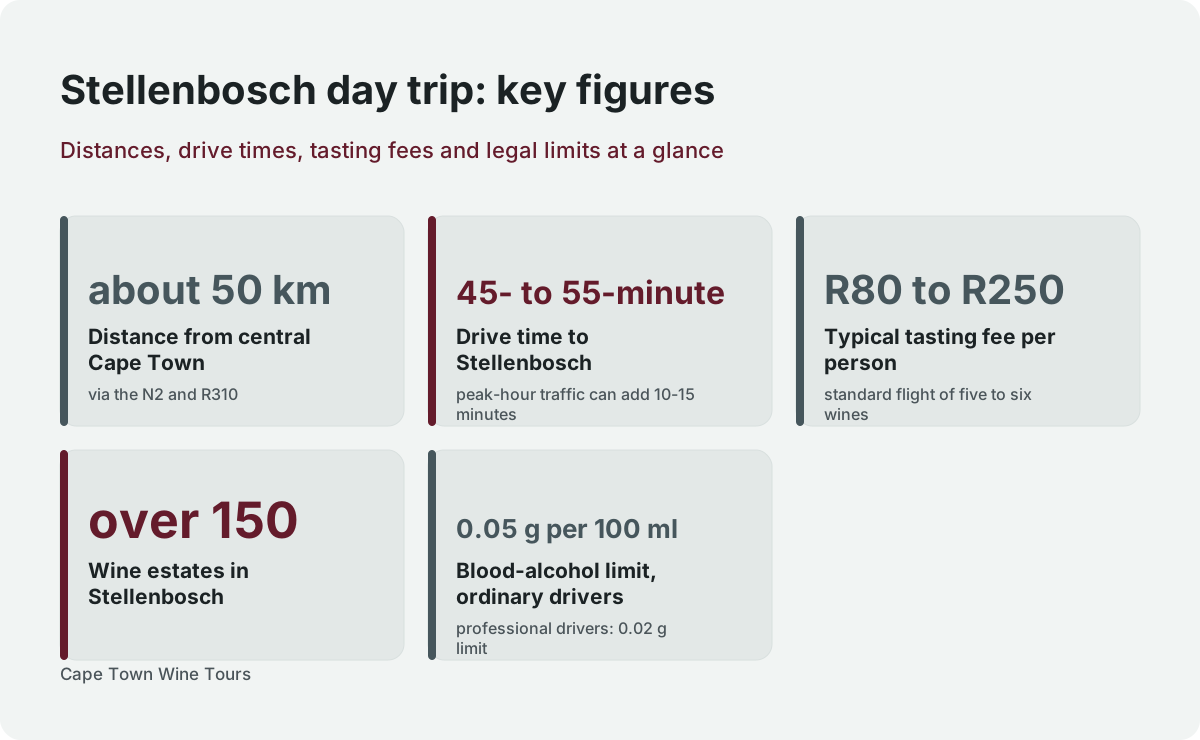
Stellenbosch sits roughly 50 km east of Cape Town, a 45- to 55-minute drive that opens into South Africa’s second-oldest town and its densest cluster of wine estates. The road takes you past mountain passes and into a walkable university town where oak-lined streets lead to tasting rooms, restaurants, and a wine culture that feels both historic and lived-in. Planning a day trip means sorting out how you’ll get there, whether you’ll drive yourself or join an organized tour, and which estates to visit in the time you have.
Short answer
Stellenbosch is about 50 km from central Cape Town, a 45–55 minute drive via the N2/R310. You can self-drive, take an Uber, or book an organized tour. Half-day tours typically cover 2–3 estates, while full-day tours visit 4–5 and include lunch. Tasting fees at Stellenbosch wineries usually run R80–R250 per person, and advance reservations are recommended at smaller estates.
Planning a Stellenbosch wine tour from Cape Town means sorting out the 45‑ to 55‑minute drive and choosing between self‑driving, an Uber, or an organized tour. Cape Town Wine Tours has gathered the practical details to help you decide, from road routes to reservation norms, so you can spend less time on logistics and more time in the tasting rooms.
How Far Is Stellenbosch From Cape Town And How Do I Get There?
Stellenbosch is about 50 km from central Cape Town, a 45‑ to 55‑minute drive via the N2 and R310. The route is well‑signposted and takes you through the Helderberg basin, with the option to return via the scenic Helshoogte Pass for a longer loop. There is no direct train service, so all visitors arrive by road.
The most common way to reach Stellenbosch is by car or hired vehicle. From the Cape Town city centre, you take the N2 east, then exit onto the R310 toward Stellenbosch. The drive is straightforward and takes roughly the same time whether you leave in the morning or mid‑afternoon, though peak‑hour traffic around the N2 can add 10–15 minutes. If you are staying in the southern suburbs or Constantia, you can pick up the M3 and join the N2 further east, shaving off a few kilometres.
Uber and Bolt both operate between Cape Town and Stellenbosch, and the fare is comparable to a rental car for a day. A ride‑share removes the responsibility of driving after tasting, which is a genuine advantage. Many visitors choose to ride‑share one way and then either return the same way or join an organized tour that includes round‑trip transport.
What Makes Stellenbosch Different From Other Cape Wine Regions?
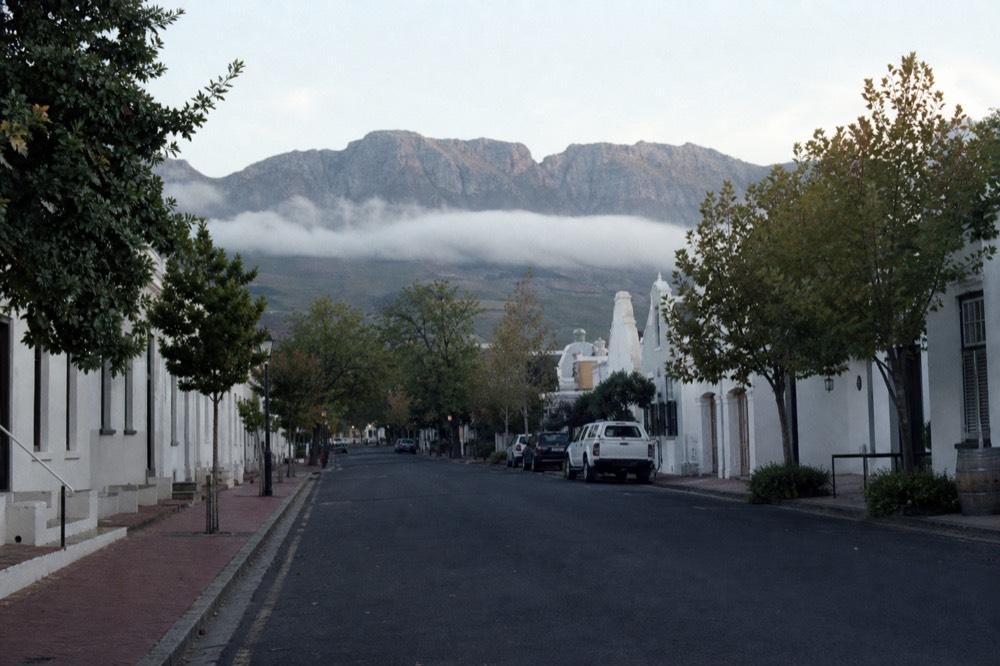
Stellenbosch is South Africa’s second‑oldest town and it packs the highest density of wine estates in the country into a compact, walkable centre. Unlike the more polished, food‑driven Franschhoek or the broader, working‑agricultural Paarl, Stellenbosch combines a lively university‑town energy with oak‑lined streets, historic Cape Dutch architecture, and a restaurant scene that stands on its own, independent of wine tourism.
The town itself is a destination. You can park once and walk to several tasting rooms, galleries, and cafes before you ever need to drive to an outlying estate. That walkability sets it apart from Franschhoek, where the valley is strung along a single road, and from Paarl, where the estates are spread across a much larger area. If you are still deciding which region to visit, our guide to choosing a Cape wine region walks through the trade‑offs in detail.
The wine styles reflect the varied terroir. The Helderberg and Simonsberg sub‑regions produce powerful reds, particularly Cabernet Sauvignon and Bordeaux blends, while the cooler slopes toward False Bay yield fresher whites. Because so many estates are clustered together, you can visit three or four in a single afternoon without spending half the day in the car, which is a genuine advantage over other regions.
Should I Book An Organized Stellenbosch Wine Tour From Cape Town?
An organized tour removes the need to drive, plan an itinerary, or make reservations at each estate. For a fixed price, you get round‑trip transport, a guide who knows the area, and a curated sequence of tastings. The trade‑off is less flexibility: you follow a set schedule and visit the estates the operator has chosen. Whether that trade‑off makes sense depends on how much you value a hassle‑free day versus the freedom to wander.
Self‑driving gives you complete control, but it also means someone in your group must stay sober enough to drive. South Africa’s legal blood‑alcohol limit for ordinary drivers is 0.05 g per 100 ml, while professional drivers, including tour drivers, are held to a stricter 0.02 g limit. Even if you stay under the ordinary limit, the safest choice is to have a dedicated driver who tastes nothing, which can feel like a waste of a wine‑region day. An organized tour sidesteps that entirely.
Uber and Bolt offer a middle ground: you can hire a ride to Stellenbosch and then move between estates by car or on foot. The challenge is that cell reception can be patchy on some farm roads, and you may wait longer for a ride at the end of a tasting. The Vine Hopper, a hop‑on‑hop‑off minibus service that operates within Stellenbosch itself, is another real alternative. It runs set routes with hourly pick‑ups and stops at estates like Boschendal, Lanzerac, and Kleine Zalze. It is not a product we feature, but it is a legitimate option if you want to explore independently without driving. You can find it on the operator’s own site.
Half-Day Vs Full-Day Stellenbosch Wine Tours: Which Is Right For You?
A half-day tour gives you a focused outing of about five hours; morning and afternoon departures have different return times. The recommended Stellenbosch option includes two winery tastings, pairings and time in town. A full-day tour allows a longer itinerary and lunch stop, with estate count and meal inclusions depending on the package.
Half‑day tours work well if you have other plans in Cape Town or if you are visiting with children who may not enjoy a full day of tastings. They tend to visit estates that are closer together, so you spend less time in transit. The downside is that you rarely have time to linger over a cheese pairing or explore the estate grounds beyond the tasting room. Our Stellenbosch half‑day wine tour visits two vineyards and includes a town stop, with morning and afternoon departures.
Full‑day tours give you a more relaxed pace. You can sit down for lunch at a wine estate restaurant, something that many half‑day tours skip, and you have time to visit a mix of large, well‑known estates and smaller, appointment‑only producers. The longer day also lets you reach estates on the Simonsberg or Helderberg slopes, where the views are dramatic and the wines often show more structure.
| Tour length | Estates visited | Transport | Typical start | Return to Cape Town | Best for |
|---|---|---|---|---|---|
| Half‑day | 2–3 | Round‑trip from Cape Town | 08:00–09:00 | 13:00–14:00 | First‑time visitors, families, tight schedules |
| Full‑day | 4–5 | Round‑trip from Cape Town | 09:00–10:00 | 17:00–18:00 | Enthusiasts, leisurely lunch, deeper exploration |
Tasting inclusions vary by product and package. The five-hour Stellenbosch tour linked here includes its two tasting pairings, while other tours may leave some estate fees to you. A typical tasting in Stellenbosch costs R80–R250 per person, and premium or reserve tastings can go higher.
Can I Visit Stellenbosch Wineries Without A Tour?
Yes, you can visit Stellenbosch wineries on your own by car, Uber, or the Vine Hopper minibus. Self‑driving is the most flexible method, but it requires a sober driver. The Vine Hopper offers a hop‑on‑hop‑off alternative that removes the driving responsibility while still letting you choose which estates to visit. In all cases, advance reservations are strongly recommended at smaller, boutique estates and during peak season.
If you drive yourself, pick a base in Stellenbosch town and walk to the handful of tasting rooms within the historic centre, such as those at Oude Libertas or the Stellenbosch Wine Bar. Then drive out to one or two estates in the surrounding valleys. The roads are well‑maintained, and most estates have ample parking. Remember that the professional driver limit of 0.02 g per 100 ml applies to anyone driving a hired vehicle for commercial purposes, but even as a private driver you are safest keeping consumption to a minimum.
The Vine Hopper runs two routes, the Eastern and Southern, with hourly departures from Stellenbosch town. It stops at estates like Boschendal, Zorgvliet, and Alto. You pay a flat fare for the hop‑on‑hop‑off service, and tastings are extra at each estate. Because it is a scheduled service, you do not need to worry about parking or finding your way, but you are limited to the estates on its route. It is a real product that operates independently; we mention it because it is a practical option for independent visitors, even though it is not a tour we currently offer.
What Are The Typical Tasting Fees And Reservation Rules In Stellenbosch?
Tasting fees at Stellenbosch wineries generally range from R80 to R250 per person for a standard flight of five to six wines. Premium tastings, reserve flights, or food pairings can cost R300 or more. Most larger, commercial estates accept walk‑ins during their published hours, but smaller, boutique producers often require advance booking, especially on weekends and during the November‑to‑March peak season.
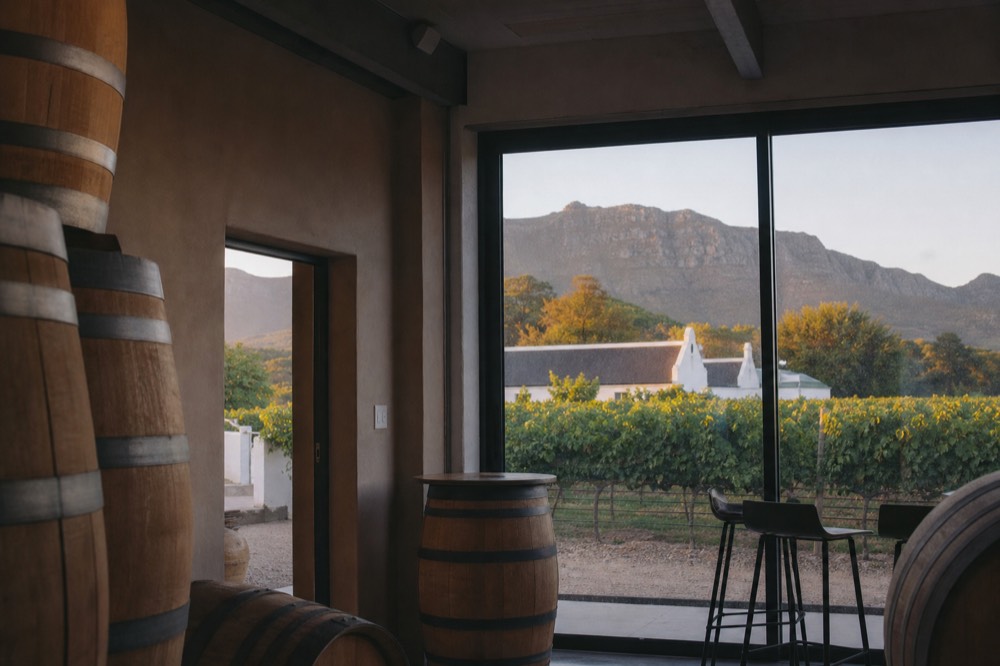
The fee is often waived or refunded if you purchase a bottle of wine, a practice that is common across the Cape Winelands but not guaranteed. It is worth asking when you arrive. Spitting buckets are standard on every tasting counter, and it is perfectly acceptable, even encouraged, to use them if you are visiting multiple estates in a day, particularly if you are driving afterward.
Reservations are not a legal requirement, but they have become the norm at many smaller estates in recent years. Some, like Jordan Wine Estate, explicitly state that bookings are essential. A quick phone call or online booking the day before can save you from being turned away. If you are on an organized tour, the operator handles reservations for you, which is one of the less obvious but real benefits of booking a tour.
| Estate type | Walk‑in policy | Typical tasting fee (standard flight) | Reservation recommended? |
|---|---|---|---|
| Large, commercial | Usually accepted | R80–R250 | Not essential, but advised on weekends |
| Boutique, appointment‑only | By booking only | R80–R250 | Yes, essential |
| Organic / small‑production | Often by appointment | R80–R250 | Yes, strongly recommended |
Fees and policies change, so check the estate’s own website or the live listing before you go. The figures above reflect what we found in September 2026.
Best Time Of Year For A Stellenbosch Wine Tour From Cape Town
The best time for a Stellenbosch wine tour depends on what you want: harvest energy and warm weather from January to March, quieter tasting rooms and lower prices from September to November, or crisp winter days with fireside reds from June to August. The Cape Doctor wind blows from September to March, which can affect outdoor tastings, while the rainy season peaks in June and July.
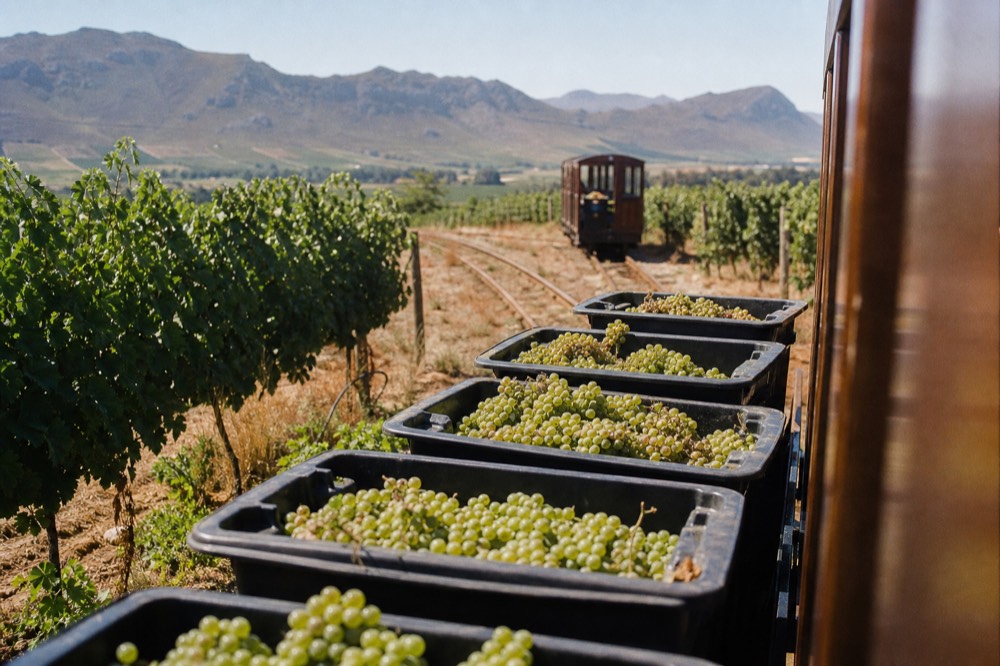
Harvest, or crush, typically runs from late January through April, sometimes starting earlier in hot, dry years like 2026. During this period, you might see grapes being picked, smell fermentation in the cellar, and find special harvest‑themed events. The Stellenbosch Harvest Parade took place on 31 January 2026, and several estates ran stomping and picking experiences. The trade‑off is that this is also peak tourist season, so tasting rooms are busier and accommodation prices higher.
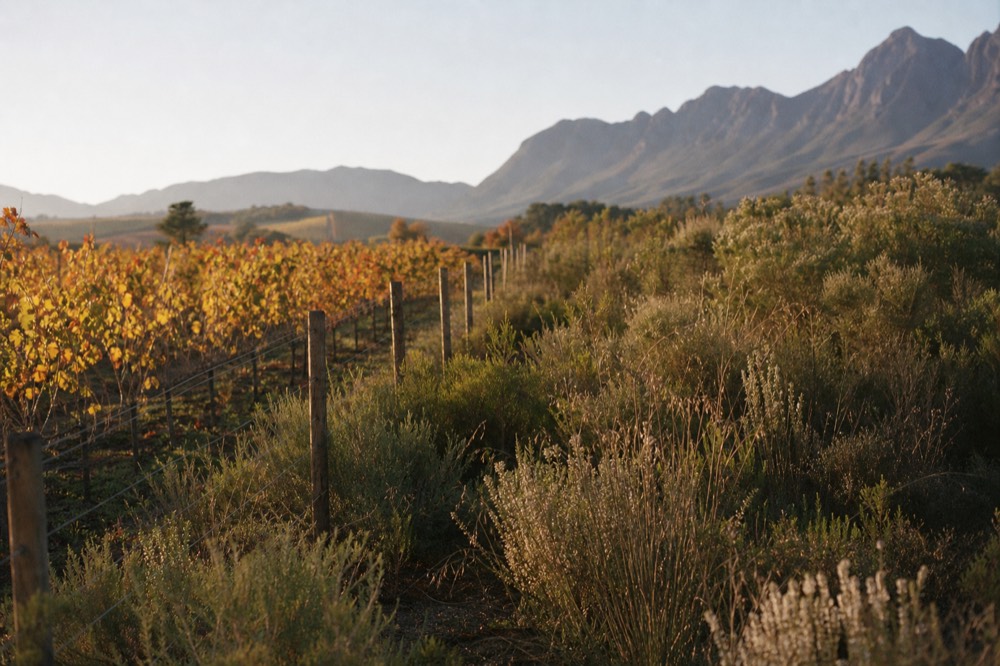
The shoulder months of September and October offer a sweet spot: the weather is warming up, the vineyards are green, and the crowds have not yet arrived. Wildflowers are out, and you can often find mid‑week availability at estates that are fully booked in summer. Winter, from May to August, brings cooler temperatures and rain, but the tasting rooms are cozy, and you are more likely to have the winemaker’s attention. Many estates offer winter specials on tastings and food.
| Season | Months | Weather | Crowds | Tasting experience |
|---|---|---|---|---|
| Harvest / peak summer | Jan–Mar | Hot, dry, 25–30°C | High | Busy, festive, harvest events |
| Autumn / post‑harvest | Apr–May | Mild, 18–25°C | Moderate | Calmer, autumn vineyard colours |
| Winter | Jun–Aug | Cool, wet, 15–20°C | Low | Quiet, fireside tastings |
| Spring | Sep–Nov | Warming, 18–24°C | Low to moderate | Green vineyards, wildflowers |
No matter when you go, book your tour or estate reservations a few days ahead during peak periods. The live listing for each tour shows real‑time availability, so you can secure your spot before you leave Cape Town.
The half‑day option works particularly well in the hotter months, when a morning of tasting followed by an early afternoon return lets you beat the worst of the heat. In winter, a full‑day tour with a long lunch inside a warm cellar can be the better choice.
How Do I Choose Which Stellenbosch Estates To Visit?
The estates you choose should match your wine preferences and the time you have. If you love bold reds, head for the Helderberg slopes; for crisp whites and méthode cap classique, look toward the cooler Stellenbosch‑kloof or the Polkadraai Hills. If you only have a half‑day, pick two or three estates that are close together to minimize driving.
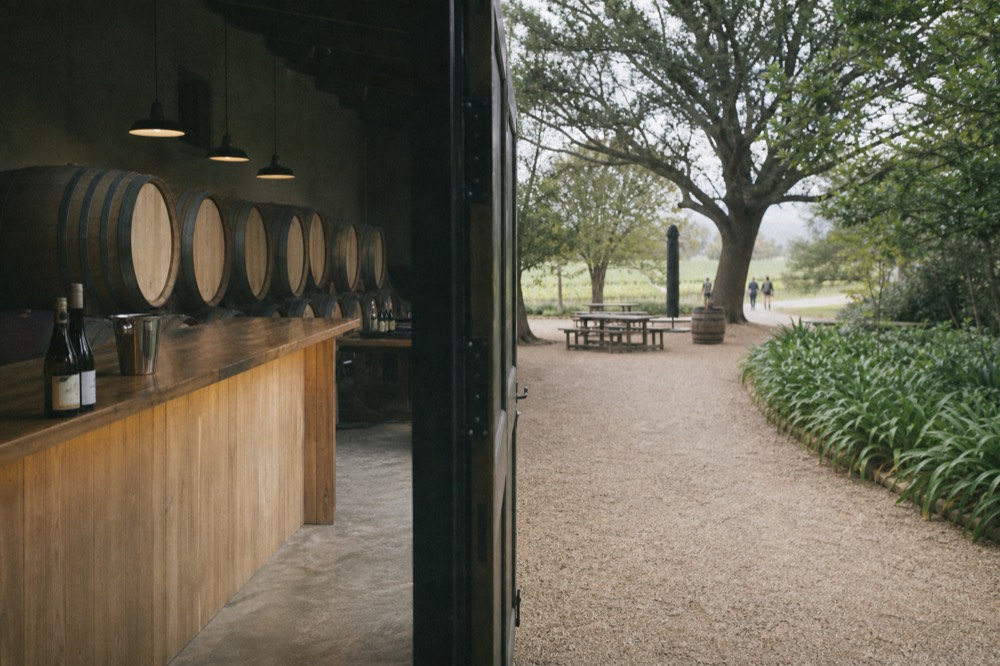
Stellenbosch has over 150 wine estates, so narrowing them down is essential. A good approach is to pick one large, well‑known estate for its range and facilities, one smaller boutique producer for a more personal tasting, and one estate with a strong food offering if you plan to eat. For example, you could start at Spier for a broad selection and a picnic, then move to a smaller estate like Uva Mira or De Toren for a focused, appointment‑only tasting.
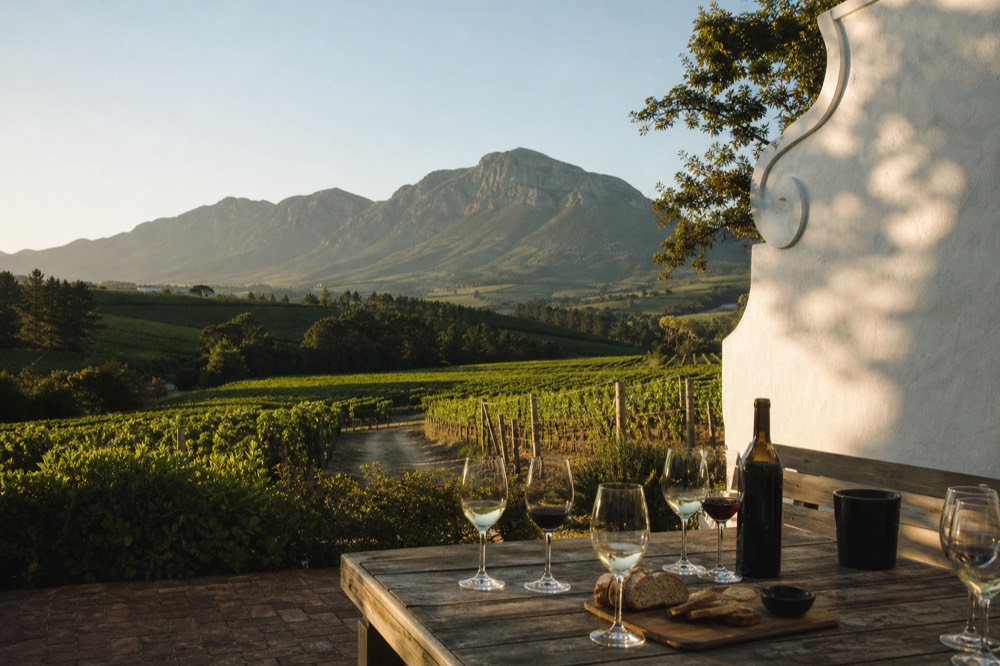
If you are on an organized tour, the itinerary is set, but you can often ask the operator which estates they visit and why. Some tours focus on historic estates with Cape Dutch architecture, others on organic and biodynamic producers, and still others on food and wine pairings. The tour’s description on the live listing will tell you the style.
Confirm any requested estate or restaurant with the operator; private transport does not guarantee private tastings, a particular lunch venue or behind-the-scenes access.
What Should I Know Before I Go?
Tasting rooms in Stellenbosch generally open from 10:00 to 17:00, with some closing earlier in winter. Most are closed on Christmas Day and New Year’s Day. The legal drinking age in South Africa is 18, and estates may ask for ID if you look under 18. Spitting is standard practice, and it is wise to eat a proper breakfast before a day of tasting.
Wear comfortable shoes if you plan to walk between town‑centre tasting rooms or explore estate gardens. The Stellenbosch summer sun is strong, so a hat and sunscreen are useful, especially on open‑air tram‑buses or tractor tours. In winter, bring a jacket; many tasting rooms are in old cellars that stay cool.
If you are driving, plan your route so that the last estate you visit is close to the N2 on‑ramp for a straightforward return to Cape Town. The R310 connects back to the N2, and the drive is well‑lit in the early evening. Avoid the Helshoogte Pass after dark if you are unfamiliar with the road, as it is winding and has limited lighting. For a broader look at how Stellenbosch compares to the neighbouring valley, our Stellenbosch or Franschhoek comparison walks through the practical differences.
If you want to see more than just Stellenbosch in a single day, a multi‑region tour that combines Stellenbosch with Franschhoek or Paarl can give you a broader taste of the Winelands. These tours spend less time in each town but offer a useful overview if you are short on days. For a deeper look at the Franschhoek side, our Franschhoek Wine Tram guide covers the hop‑on‑hop‑off experience that makes that valley distinct.
Common Questions About Visiting Stellenbosch From Cape Town
How long does it take to drive from Cape Town to Stellenbosch?
The drive takes 45 to 55 minutes via the N2 and R310, depending on traffic. The distance is roughly 50 km.
Is it better to self‑drive or book an organized tour?
An organized tour removes the need for a sober driver and handles reservations, while self‑driving offers more flexibility. The Vine Hopper is a middle ground for independent travellers.
How much do Stellenbosch wine tours cost?
Compare the current full booking total for your party. The recommended five-hour tour includes two winery tastings and pairings; lunch is extra. Other half-day and full-day packages have different tasting and meal inclusions.
Do I need to book wine tastings in advance?
Larger estates often accept walk‑ins, but smaller, boutique producers usually require reservations, especially on weekends and during peak season.
What is the legal drinking age in South Africa?
The legal drinking age is 18. Estates may ask for ID, and spitting buckets are provided and encouraged if you are visiting multiple estates.
Plan Your Wine Day
Starting recommendation. Adjust the choice below.
Stellenbosch Half-Day Wine Tour
Have a travel date in mind? Check it before arranging the rest of your day. Visit two wineries with a guide, pairings and a Stellenbosch town walk.
5 hours; English, Cape Town city-centre hotel pickup and return. Tastings included; lunch extra.
If the calendar does not load, use the booking link to select your date on GetYourGuide.
Check Dates For Stellenbosch Half-Day Wine TourCompare options and your costs
- Stellenbosch Half-Day Wine Tour
- Visit two wineries with a guide, pairings and a Stellenbosch town walk. 5 hours; English, Cape Town city-centre hotel pickup and return. Tastings included; lunch extra.
- Three Regions And Three Wineries By Coach
- Taste 15 wines across Paarl, Franschhoek and Stellenbosch with a guided coach day. Full day, allow 8.5 hours; predefined Cape Town collection points. Tastings and pairings included; lunch extra. Shared coach.
- Private Wine Expert: Stellenbosch And Franschhoek
- Request your preferred Winelands focus and taste at four estates with a specialist wine guide. 8 hours; Cape Town pickup area. Four tastings included; lunch extra. Ages 18–80, minimum two adults. Confirm requested estates before booking; private group.
This matches format and time, not personal suitability. Confirm the meeting point, language, ages and access arrangements for your party on the booking page.