Should I Visit Stellenbosch Or Franschhoek?
A head-to-head comparison of Stellenbosch and Franschhoek: drive times, character, wine estates, food, crowds and which one fits your Cape Town trip.
Should I Visit Stellenbosch Or Franschhoek?
Visit Stellenbosch if you want the densest concentration of wine estates, a walkable historic university town and the widest choice of tasting rooms; visit Franschhoek if your trip is built around food, romance and one polished, curated valley. Drive time barely separates them: Stellenbosch is roughly 45-55 minutes from central Cape Town and Franschhoek about 60-70, so the real question is which atmosphere you want, not which is closer.
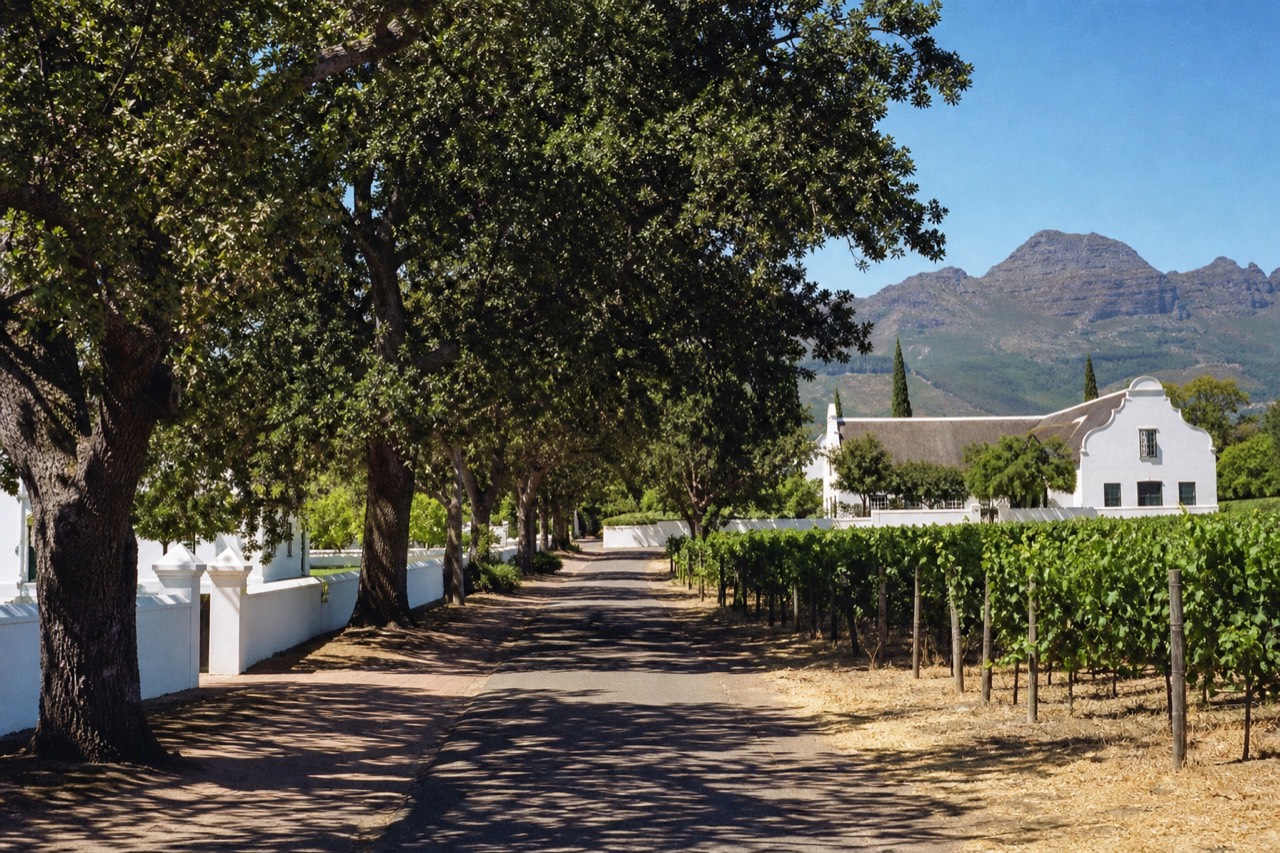
It is the single most common head-to-head question travelers ask about the Winelands, and the honest answer is that neither town is a wrong choice. Stellenbosch is South Africa's second-oldest town, home to a large university, with oak-lined streets and the highest density of wine estates of any district in the country. Franschhoek is smaller and more deliberate about its appeal: a "gourmet village" with French Huguenot heritage, a compact centre of boutiques and galleries, and the Franschhoek Wine Tram looping through the valley.
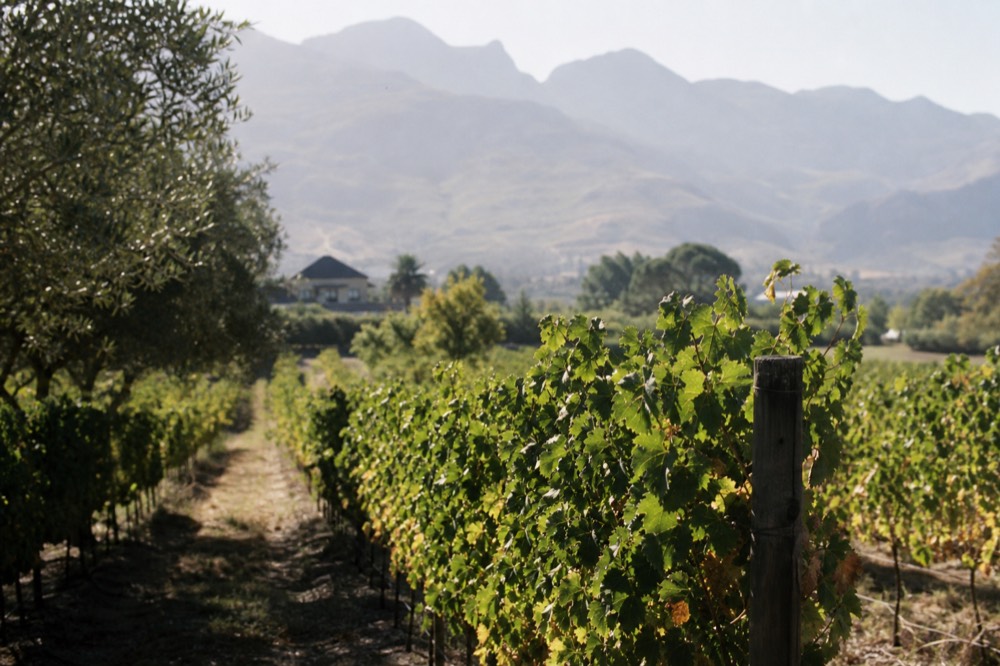
The comparison usually gets framed as wine versus food, and there is truth in that shorthand, but it undersells both. Stellenbosch has serious restaurants of its own, and Franschhoek has world-ranked vineyards: La Motte appeared at number 94 on the World's 50 Best Vineyards 2025 list, announced in November 2025. Stellenbosch answered with Tokara at 71 and Delaire Graff at 79 on the same list. These are two strong wine towns with different personalities, not one wine town and one lunch stop.
If you have two free days, do both. If you have one, pick the one that matches the trip you are actually taking: a group that wants to taste widely and keep costs down will stretch further in Stellenbosch; a couple celebrating something will find Franschhoek engineered for exactly that mood. And if you cannot decide, there are tours that stitch the two together in a single day, which we cover further down.
How Far Are Stellenbosch And Franschhoek From Cape Town?
Stellenbosch sits about 50 km from central Cape Town, typically a 45-55 minute drive via the N2 and R310. Franschhoek is roughly 75 km away, usually 60-70 minutes, because it lies about 30 minutes further inland from Stellenbosch along scenic passes such as Helshoogte. Paarl, for reference, is a comparable 50-60 minutes via the N1.
In practice the drive-time gap between the two is small enough that it should not decide your trip. Traffic on the N1 and N2 corridors matters more than raw distance: a Friday afternoon departure from the City Bowl can add real time to either route. What the numbers do tell you is that both towns work as comfortable day trips, and that combining them in one day is feasible because they sit roughly half an hour apart on the same inland corridor.
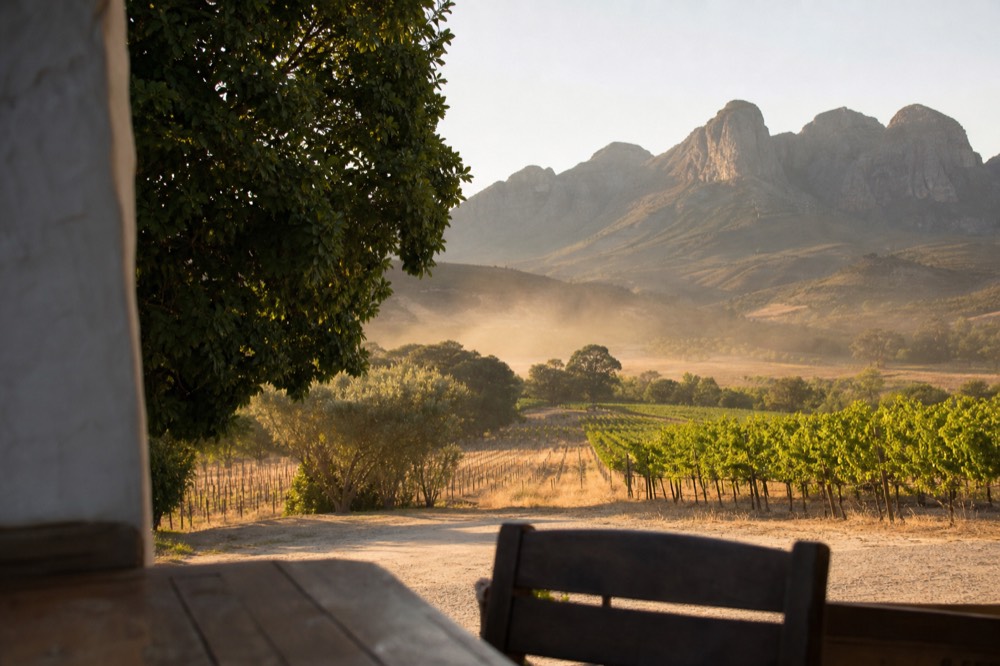
The drive between the two, over Helshoogte Pass, is itself one of the better stretches of road in the Winelands, with vineyards climbing the slopes on either side. If you self-drive, remember that South Africa runs a two-tier drink-drive limit: ordinary drivers are held to 0.05 g per 100 ml of blood, while professional drivers, a category that includes many tour and shuttle drivers holding a PrDP permit, are held to a stricter 0.02. That stricter professional limit is a genuine, practical argument for letting someone else drive on a day built around tastings.
| Destination | Distance from central Cape Town | Typical drive time | Route |
|---|---|---|---|
| Stellenbosch | ~50 km | 45-55 min | N2 / R310 |
| Franschhoek | ~75 km | 60-70 min | N1 or N2, then Helshoogte |
| Paarl | ~55-70 km | 50-60 min | N1 |
Distances and route times here are stable planning figures drawn from current Winelands transport guidance; actual times swing with traffic, so pad your schedule on summer weekends.
What Is Stellenbosch Actually Like?
Stellenbosch is a working university town with oak-lined streets, museums, a lively independent restaurant and nightlife scene, and the highest density of wine estates of any wine district in South Africa. It is walkable, energetic and noticeably less curated than Franschhoek, with student life giving the place an energy that exists whether or not tourists show up.
That last point is the town's real character. Franschhoek exists, in large part, to welcome visitors; Stellenbosch would carry on regardless. For a traveler, that means more choice and often better value: more tasting rooms within a short drive, more casual places to eat, and a broader spread of price points. The estate density is not a marketing line. The Stellenbosch Wine Route is the country's oldest formal wine route and the district packs a remarkable number of cellar doors into a compact area, from large operations that handle walk-ins easily to boutique estates that insist on bookings.
Recognition has followed the wine. Beyond Tokara and Delaire Graff placing 71st and 79th on the World's 50 Best Vineyards 2025 list, Stellenbosch-linked names took two of the Diners Club 2025 winemaking honours announced in November 2025: Coenie Snyman of Rock of Eye Wines as overall Winemaker of the Year and Marnich Aucamp of Stellenbosch Vineyards as Young Winemaker of the Year. The 2026 Platter's guide, released around the same time, also highlighted Stellenbosch wines across its wines-of-the-year categories. Recent openings keep the scene moving: Neil Ellis Wines unveiled a renovated tasting room with a new restaurant near Helshoogte Pass in October 2025, and Annandale opened the family-friendly Toevlug eatery in a historic farmhouse the same month.
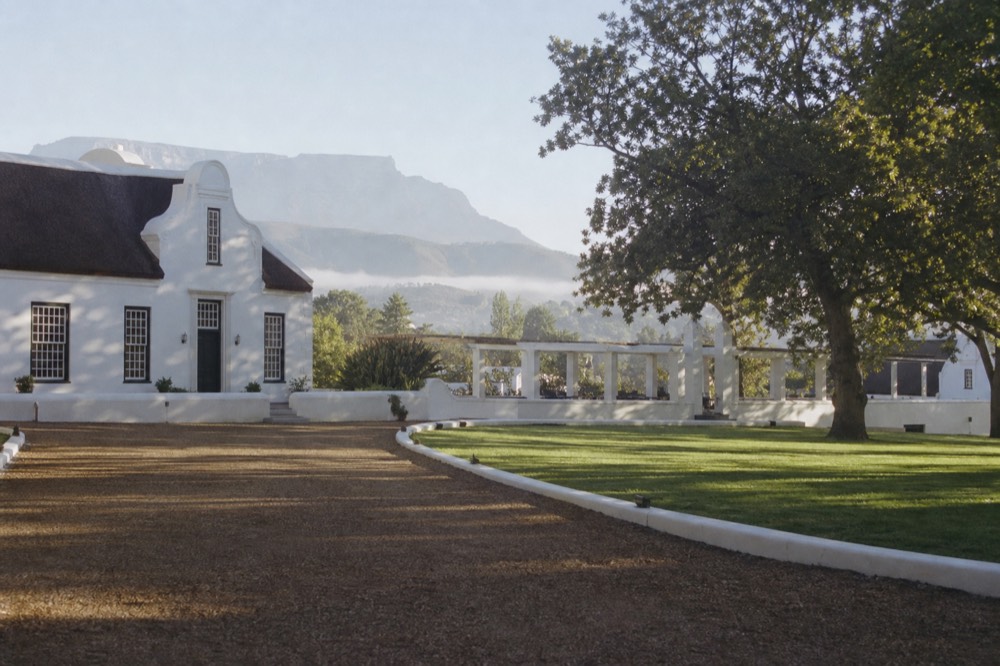
Choose Stellenbosch when you want breadth: many estates, flexible plans, a town you can wander on foot between tastings, and a restaurant scene that runs on its own steam. It also handles groups well, since the sheer number of cellar doors means a party of mixed interests can split an afternoon without anyone compromising much. For a shorter visit built around the town itself, our Stellenbosch wine tours from Cape Town guide covers the practical planning in detail.
What Is Franschhoek Actually Like?
Franschhoek is a small, polished, food-driven village with French Huguenot heritage, a compact walkable centre of boutiques, galleries and restaurants, and a curated, romantic feel. It is home to the Wine Tram, the hop-on-hop-off vintage-style service that loops through roughly 30 estates across five color-coded lines, and it leans gourmet in a way no other Winelands town matches.
The Huguenot story shapes everything. French settlers arrived at the end of the seventeenth century, and the valley's farms, food culture and even its name, which translates as "French corner," carry that inheritance. Today the village main street is essentially one long, well-kept promenade of eating and shopping, with the tram terminal near the centre and estates fanning out along the valley floor.
The Wine Tram is the town's signature experience: a hop-on-hop-off ticket costs R350 per adult, R90 for children aged 3 to 17, with under-3s free, and tastings and meals at the estates are extra, typically R60 to R260 per person. It runs daily except major holidays such as 24-25 December and 31 December-1 January. Each color-coded line serves 7 to 9 estates, with names like Rickety Bridge, Grande Provence, Boschendal, Haute Cabriere and Mont Rochelle spread across the network. One honest note: there is no literal "Cape Town Wine Tram." The product is the Franschhoek Wine Tram, about an hour's drive from the city, and transfers from Cape Town are sold as add-ons. Our Franschhoek Wine Tram guide goes deep on lines, estates and timing.
Food is the other reason people choose Franschhoek. The 2025 Eat Out Awards, announced in March 2025, singled out several Franschhoek restaurants, including Chefs Warehouse at Maison, Le coin Français and Orangerie at Le Lude. Recent openings have kept the valley interesting: Rupert & Rothschild launched a reimagined separate tasting room with a wine library in October 2025, and Boschendal opened Arum, a fire-focused restaurant in its 1812 cellar, in November 2025. La Motte, the valley's entry on the World's 50 Best Vineyards 2025 list at number 94, is hosting the JAN Franschhoek pop-up dining experience for a fifth season running September 2026 to April 2027.
Choose Franschhoek when the meal is the point, when you want a romantic or celebratory setting, or when the tram's relaxed hop-on-hop-off rhythm sounds like your kind of day.
Can You See Both Stellenbosch And Franschhoek In One Day?
Yes, and it is a popular way to sidestep the choice entirely. Because the towns sit roughly 30 minutes apart, a guided day tour can cover Stellenbosch estates in the morning, cross Helshoogte Pass, and finish with Franschhoek tastings and lunch in the afternoon, with a driver handling the roads and the two-tier drink-drive limits.
The trade-off is depth. A combined day gives you the character of both valleys, a sense of which one deserves a return trip, and a handful of tastings in each, but you will not work far down either town's list of estates. A dedicated single-town day, by contrast, lets you settle in: four or five cellar doors in Stellenbosch, or a full tram loop plus a long lunch in Franschhoek.
Shared and private booking options are distinct; compare the selected option when deciding how much control you want over the day.
If your priority is actually Stellenbosch depth rather than the pairing, a half-day Stellenbosch format is the tighter fit, while a three-regions itinerary stretches the same idea across Stellenbosch, Franschhoek and Paarl for travelers who want the whole Winelands panorama in one long day. Our Cape Town wine tour guide walks through how these formats differ and who each one suits.
What Should You Know Before Choosing Either Town?
A few practical rules apply equally to both: the national drinking age is 18 and licensed tasting rooms must check ID for anyone who looks younger; advance booking is wise at smaller estates and near-essential in peak season from November to March; and standard tasting fees usually run R80 to R250 per person, often waived or refunded with a bottle purchase.
None of this differs between the towns, but it shapes the day you will have in each. In Stellenbosch, larger commercial estates absorb walk-ins more easily, which suits spontaneous plans. In Franschhoek, the tram concentrates arrivals at popular estates on a schedule, so lunch reservations in the village and pre-booked tastings at the stops you care about most will save you standing in line.
Timing matters too. Peak crowding runs December through February into early March, which is also harvest season, when the valleys are at their busiest and most festive. Shoulder periods, September to November or post-harvest March and April, balance thinner crowds against full activity calendars. Harvest events add colour if you can catch them: Stellenbosch held its Harvest Parade on 31 January 2026, and Delheim ran its harvest festival on 30-31 January 2026. The Mediterranean climate gives the region hot, dry summers and cool, wet winters, and the "Cape Doctor" south-easterly wind blows from September to March, which can occasionally interrupt an outdoor tasting terrace.
So the practical answer to the question this article opened with: match the town to the trip. Energetic, wide-ranging and value-conscious days point to Stellenbosch. Slow, food-first, romantic days point to Franschhoek. One day each, or a combined tour, lets you refuse to choose. Whichever you pick, Cape Town Wine Tours exists to make the planning side of that decision straightforward, with guides for every valley and tour format in between.
The short version of everything above: Stellenbosch wins on estate density, walkability, student-town energy and value; Franschhoek wins on food, romance and the Wine Tram experience. Drive times are close enough, roughly 45-55 minutes versus 60-70 from central Cape Town, that distance should not decide your trip, and a combined day tour covers both if you cannot pick.
Common Questions About Stellenbosch Or Franschhoek
Should I visit Stellenbosch or Franschhoek?
Choose Stellenbosch for estate density, walkable town energy and value; choose Franschhoek for food, romance and the Wine Tram. Drive times are close, 45-55 minutes versus 60-70 from central Cape Town, so atmosphere should decide, not distance.
Is Stellenbosch or Franschhoek better?
Neither is objectively better. Stellenbosch suits travelers who want many estates and a lively, independent town; Franschhoek suits travelers whose day revolves around a great lunch and a curated valley. Both produce world-ranked wine.
Which is better, Stellenbosch or Franschhoek?
For a first visit built around wine tasting, Stellenbosch offers more cellar doors per kilometre. For a celebration or a food-led day, Franschhoek wins. If you cannot pick, a combined day tour covers both across the roughly 30-minute drive between them.
Can you visit both Stellenbosch and Franschhoek in one day?
Yes. The towns are about 30 minutes apart via Helshoogte Pass, so guided day tours regularly cover Stellenbosch in the morning and Franschhoek in the afternoon. Expect breadth rather than depth at each stop.
Is the Wine Tram in Cape Town or Franschhoek?
The tram is the Franschhoek Wine Tram, based about an hour's drive from central Cape Town. There is no tram operating from the city itself; transfers from Cape Town are sold as add-ons to the hop-on-hop-off ticket.
When is the best time to visit Stellenbosch or Franschhoek?
December to early March is peak season and harvest time, busy and festive. September to November and post-harvest March to April offer thinner crowds with good weather. Book tastings ahead in peak season, especially in Franschhoek.
Plan Your Wine Day
Starting recommendation. Adjust the choice below.
Franschhoek Tram And Stellenbosch Guided Day
Have a travel date in mind? Check it before arranging the rest of your day. Visit Stellenbosch and Franschhoek with a hosted itinerary and tram ride.
9 hours; central Cape Town pickup area. Tastings and meals depend on option; confirm terms, including cancellation.
Choose a date to see scheduled departures.
Published schedule, not confirmed seats. Availability and final price are confirmed on Viator.
Check Dates For Franschhoek Tram And Stellenbosch Guided DayCompare options and your costs
- Franschhoek Tram And Stellenbosch Guided Day
- Visit Stellenbosch and Franschhoek with a hosted itinerary and tram ride. 9 hours; central Cape Town pickup area. Tastings and meals depend on option; confirm terms, including cancellation.
- Cape Town Transfer And Franschhoek Wine Tram
- Combine the return Cape Town coach with the Franschhoek hop-on-hop-off tram. Full day, allow 8.5 hours; city collection points. Tastings and lunch extra; not wheelchair accessible.
- Private Winelands Day With Paired Lunch
- Combine four estate visits with three guided tastings and a paired gourmet lunch. 8 hours; English host, Cape Town pickup and private transport. Confirm chosen estates and dietary arrangements.
This matches format and time, not personal suitability. Confirm the meeting point, language, ages and access arrangements for your party on the booking page.