Cape Town Wine Tasting Tours: What A Tasting Day Actually Includes
A tasting tour is not the same thing as a full winelands day trip, and the difference matters when you are comparing prices. Here is what a tasting-focused outing from Cape Town actually contains, what it costs on the ground, and how to pick the format that fits your day.
Short answer
A tasting-focused tour from Cape Town may visit two wineries in five hours or more estates on a full-day route. Several guided packages include tastings and pairings; add fees only when the booked option excludes them. Stellenbosch and Constantia both offer half-day formats.
Grape picking in the Cape runs from late January through April, which means most of the year the winelands experience on offer is not harvest spectacle but tasting room ritual: a counter, a flight of glasses, a pourer with opinions. That ritual has its own economics and its own etiquette, and travelers who confuse a tasting tour with a full estate day trip often end up paying for the wrong thing. This guide, published by Cape Town Wine Tours, separates the two.
What Does A Cape Town Wine Tasting Tour Actually Include?
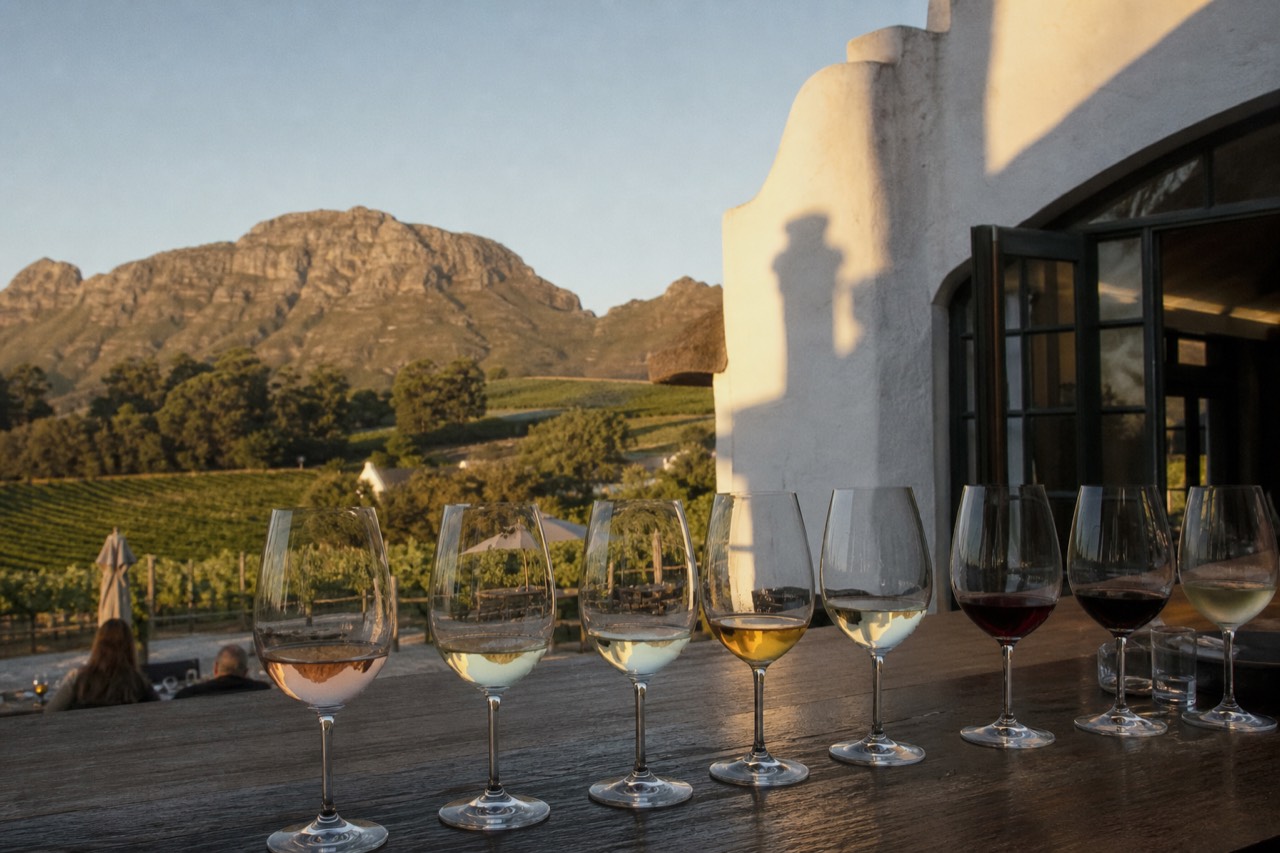
A tasting-focused tour organizes transport and cellar-door visits around sampling wine. The number of wineries and whether tasting fees are included depend on the product: a five-hour half-day may visit two wineries, while longer tours can cover more.
The core promise is efficiency. You are not wandering a farm, doing a cellar tour or sitting down to a long lunch, unless the specific listing says so. You are arriving, tasting, moving. That suits visitors who want breadth, a sense of several producers' styles in one day, rather than depth at a single property.
What varies most between listings is what surrounds the tastings. Some include a cheese or chocolate pairing at one stop. Some build in a scenic stop, such as a pass viewpoint between Stellenbosch and Franschhoek. Some are strictly tasting, tasting, tasting. Read the inclusions line on the operator's live listing carefully, because "wine tasting tour" is used loosely across the industry and two similarly priced products can differ by an entire pairing stop.
For budgeting, separate the quoted tour price from its actual exclusions. Several guided tours include their advertised tastings and pairings, so do not add a second tasting allowance for those same inclusions.
How Many Wineries Can You Realistically Visit In One Outing?
Three to five estates is the realistic ceiling for a single tasting day in the Cape Winelands, and most well-run tours plan for three or four: drive times between estates run 15 to 40 minutes, a seated tasting takes 45 minutes to an hour, and squeezing a sixth stop turns the day into transport rather than tasting.
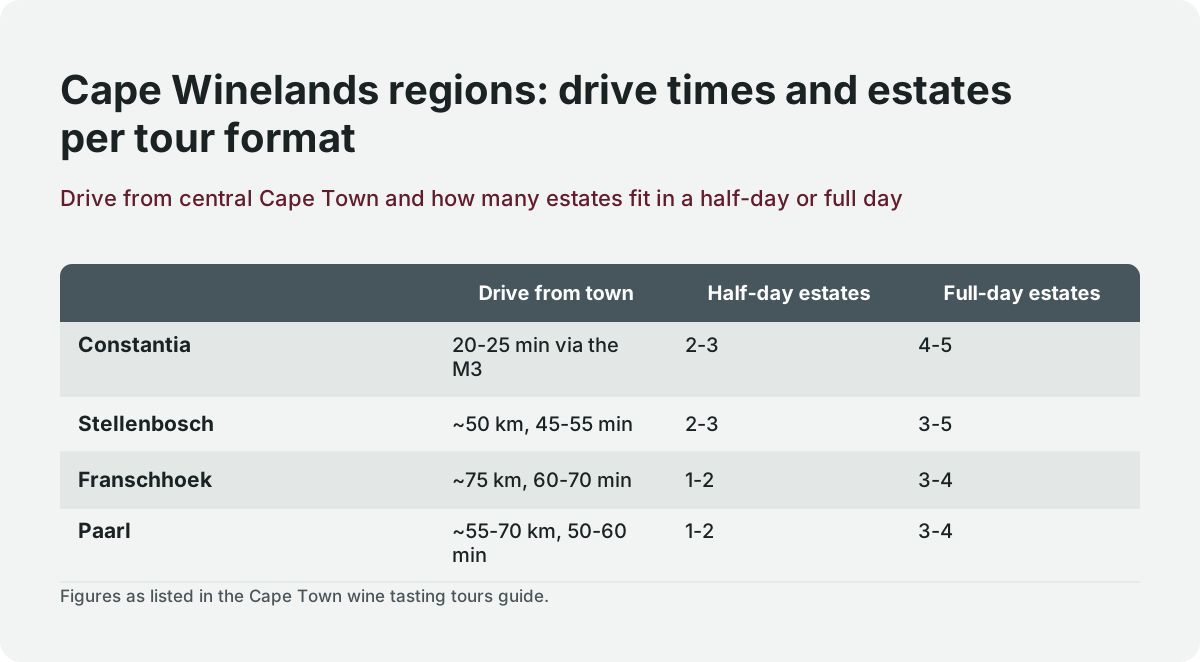
The arithmetic is unforgiving. Stellenbosch sits roughly 50 km and 45 to 55 minutes from central Cape Town via the N2/R310. Franschhoek is about 75 km and 60 to 70 minutes, roughly 30 minutes further inland from Stellenbosch via Helshoogte. Constantia is the exception, inside Cape Town's southern suburbs just 20 to 25 minutes from the City Bowl via the M3, which is why half-day tasting formats lean on it so heavily.
| Region | Drive from central Cape Town | Estates a half-day can cover | Estates a full day can cover |
|---|---|---|---|
| Constantia | 20-25 min via the M3 | 2-3 | 4-5 |
| Stellenbosch | ~50 km, 45-55 min via N2/R310 | 2-3 | 3-5 |
| Franschhoek | ~75 km, 60-70 min | 1-2 | 3-4 |
| Paarl | ~55-70 km, 50-60 min via N1 | 1-2 | 3-4 |
Tours that advertise six or more stops deserve scrutiny. Either the stops are close together, which works in Constantia's compact valley, or the "tastings" are abbreviated pours at commercial estates built for volume. A tighter route with three thoughtful stops almost always beats a rushed six. For help choosing a valley, our guide to picking a wine region compares the three main towns side by side.
If your priority is squeezing in many estates with minimal planning, the Franschhoek Wine Tram explained covers the hop-on-hop-off alternative, where you set your own pace across the valley's lines.
Half-Day Or Full-Day: Which Tasting Format Fits Your Trip?
A half-day tasting tour runs roughly four to five hours and typically covers one region, usually Stellenbosch or Constantia, while a full-day format runs seven to nine hours, crosses two regions, and adds a lunch stop, so the choice comes down to whether wine is the whole point of your day or one item on a longer Cape Town itinerary.
Half-day tours shine for visitors combining wine with something else: a morning Stellenbosch departure followed by city plans, or the noon-start Constantia outing followed by an evening in Cape Town. Because Constantia is 20 to 25 minutes from the City Bowl, a half-day there barely dents the day. A Stellenbosch half-day works too, given the 45 to 55 minute transfer each way still leaves two solid tasting stops.
Full-day tours suit travelers whose whole day belongs to wine. The classic shape is Stellenbosch in the morning, the Helshoogte Pass drive, then Franschhoek for lunch and two afternoon tastings. You trade flexibility for coverage. Once committed, you are on the vehicle's clock, not your own.
There is also a middle category worth naming: tasting tours with a luxury or small-group framing, which slow the pace, cut the group size and often fold tasting fees into the headline price. These cost more per stop but remove the on-the-day micro-payments that surprise some travelers.
How Much Should You Budget For Tasting Fees?
Start with the included tastings in your tour quote. Add an estate fee only for excluded tastings you intend to buy, then budget any excluded lunch and optional wine purchases. Ask the estate about purchase credits; do not assume a bottle cancels the tasting fee.
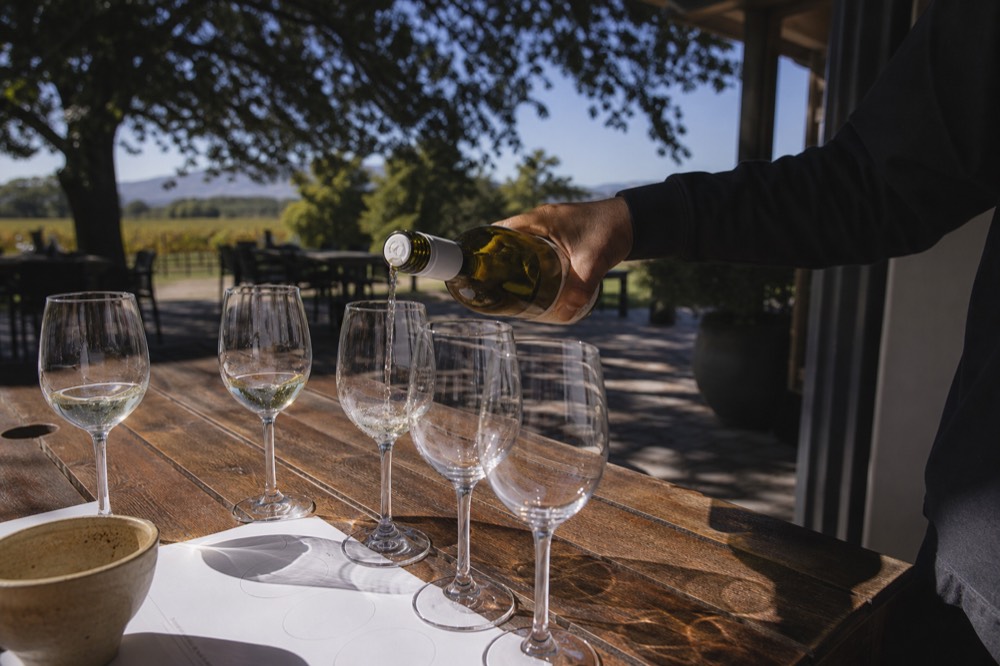
The fee buys a flight, typically four to six pours, plus the pourer's time. At the lower end you get a straightforward tasting counter. At the upper end you get seated service, older vintages or a food pairing. The fee is a planning range, not a promise: each estate sets its own tariff, so check the room when you arrive or the estate's own site beforehand.
| Tasting type | Typical cost per person | What you get |
|---|---|---|
| Standard flight | R80-R250 | 4-6 pours at the counter |
| Seated or premium flight | Upper end of that range or above | Older vintages, reserve wines, seated service |
| Paired tasting (cheese, chocolate) | Above the standard range | Flight plus a food pairing plate |
| Fee with bottle purchase | Often waived or refunded | Standard flight, credited against purchase |
Ask whether any purchase credit applies before paying, and buy bottles because you want them rather than to cancel a tasting charge.
What Is In A Tasting Flight, And What Is The Spitting-Bucket Norm?
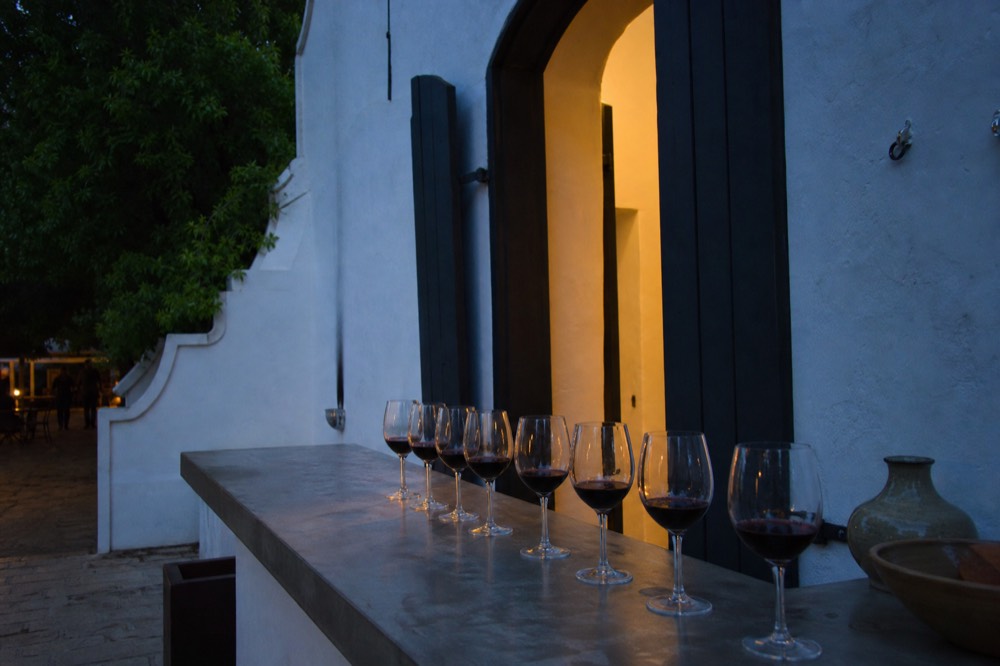
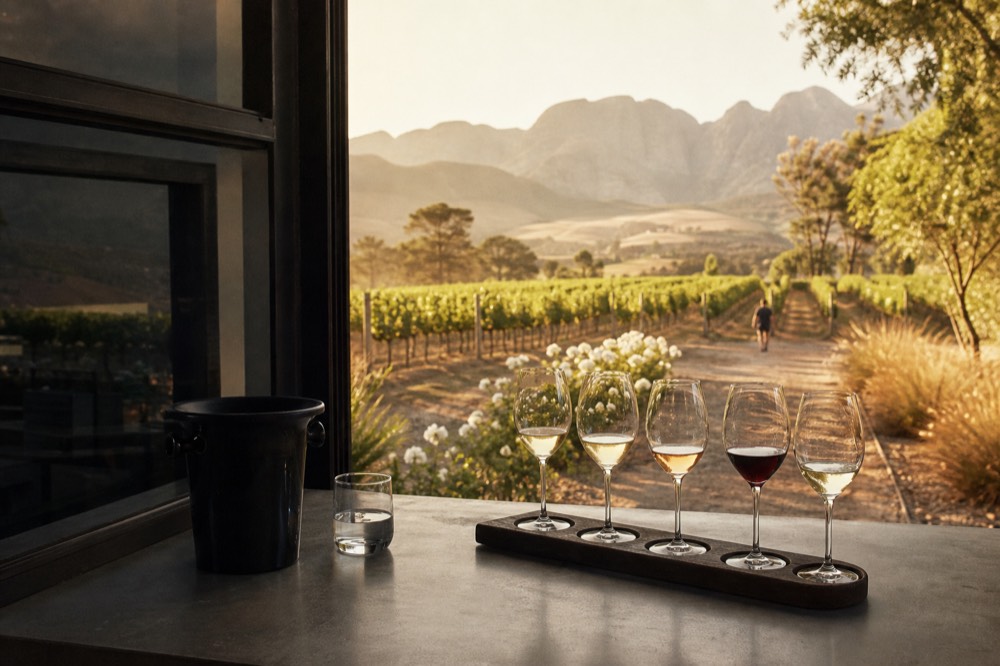
A standard flight is four to six pours of roughly 50 ml each, and the professional norm across the Cape Winelands is to spit most of it into the buckets provided at every counter: spitting is standard and encouraged at South African cellar doors, particularly for anyone tasting across multiple estates in a day or driving afterward, and no pourer will read it as disrespect.
Visitors sometimes hesitate to spit, treating it as wasteful or rude. It is neither. It is how the industry tastes professionally, and it is the difference between finishing a four-estate day with a clear head and not finishing it at all. The pours are sized for looking, swirling, sniffing and a small taste, not for drinking.
The etiquette around the bucket is simple. Spit decisively, not apologetically. Rinse water is usually available between wines. If you love a pour, finish the glass; nobody objects. The bucket exists for everything you do not want to swallow, and using it marks you as someone who has done this before.
This norm connects to a legal point most international visitors never hear about. South Africa runs a two-tier blood-alcohol limit: 0.05 g per 100 ml for ordinary drivers, but a stricter 0.02 g per 100 ml for professional drivers, a category covering many tour and shuttle drivers holding a PrDP permit. Your tour driver is held to the tighter standard, which is a genuine, if rarely advertised, argument for taking an organized tasting tour rather than self-driving between estates.
Do You Need To Book Tastings Ahead, And What ID Rules Apply?
Advance booking is not legally required but is widely recommended or required in practice, especially at smaller estates and in peak season from roughly November to March, and the legal drinking age is 18 nationwide, with tasting rooms required to ask for ID, a passport or a driver's licence from anyone who appears under 18 before serving.
The booking pressure varies by estate type. Large, commercial estates often absorb walk-ins during published hours when capacity allows. Boutique estates, and anything with a seated or paired tasting, increasingly want a reservation. A tour with a driver-guide handles this for you, which is one of the quiet advantages of the format: the operator books the slots and you simply walk in.
The ID rule catches younger-looking international visitors off guard. It stems from the Liquor Act 59 of 2003 and the National Liquor Norms and Standards, and refusal to produce ID means the person is treated as under 18 and denied service. Carry a passport on a tasting day; a phone photo is not a document.
For travelers weighing the whole budget, our breakdown of what Cape Town wine tours cost puts tour prices and on-the-ground allowances side by side.
Which Region Works Best For A Tasting-First Day?
Constantia wins for short, city-anchored tasting runs at 20 to 25 minutes from the City Bowl; Stellenbosch wins for density, with the highest concentration of wine estates in the country and a walkable town core between stops; Franschhoek wins for a curated, food-driven tasting day; and Paarl wins for value and fewer queues, with broader valleys and a quieter working-farm feel.
The regions reward different travelers. Stellenbosch, South Africa's second-oldest town, mixes oak-lined streets and student energy with cellar doors minutes apart, so a tasting day there loses little time in transit. Franschhoek is smaller and more polished, a French Huguenot village where the tasting stops double as destination restaurants, and it is home to the hop-on-hop-off tram for travelers who want independence. Paarl is the largest by population but the least touristed of the three, which translates to shorter waits at counters and more value-oriented flights.
| Region | Best for | Character | Catch |
|---|---|---|---|
| Constantia | Half-day, city-based days | Historic valley, 20-25 min from town | Few estates, books out in summer |
| Stellenbosch | Maximum estates per hour | University town, highest estate density | Busiest tasting rooms in peak season |
| Franschhoek | Food plus tasting | Gourmet village, French heritage | Furthest drive, 60-70 min |
| Paarl | Value and quiet | Working agricultural town, big reds | Less polished, fewer curated stops |
Awards give the regions a current scoreboard. In the World's 50 Best Vineyards 2025 list, announced in November 2025, Stellenbosch placed Tokara at #71 and Delaire Graff at #79, while Franschhoek's La Motte entered at #94. Constantia's Klein Constantia ranked higher still at #6, named Best Vineyard in Africa, and Groot Constantia's Grand Constance took gold at the Muscats du Monde competition in July 2025. Any of the four valleys can anchor a serious tasting day.
When Is The Best Time Of Year For A Tasting Tour?
The shoulder seasons, September to November and post-harvest March to April, offer the best balance of weather, cellar door activity and thin crowds, while December to February brings peak summer heat and peak queues, and the late January to April harvest window adds festive energy but also the year's highest demand at popular estates.
Spring, which is what a September or October visit gives you, warms up through the 18-24°C range with blooming vineyards and noticeably fewer tour buses than midsummer. The trade-off is that harvest events are not running then. If you want to see grapes coming in, target February or early March, when picking is in full swing across Stellenbosch, Franschhoek, Paarl and Constantia.
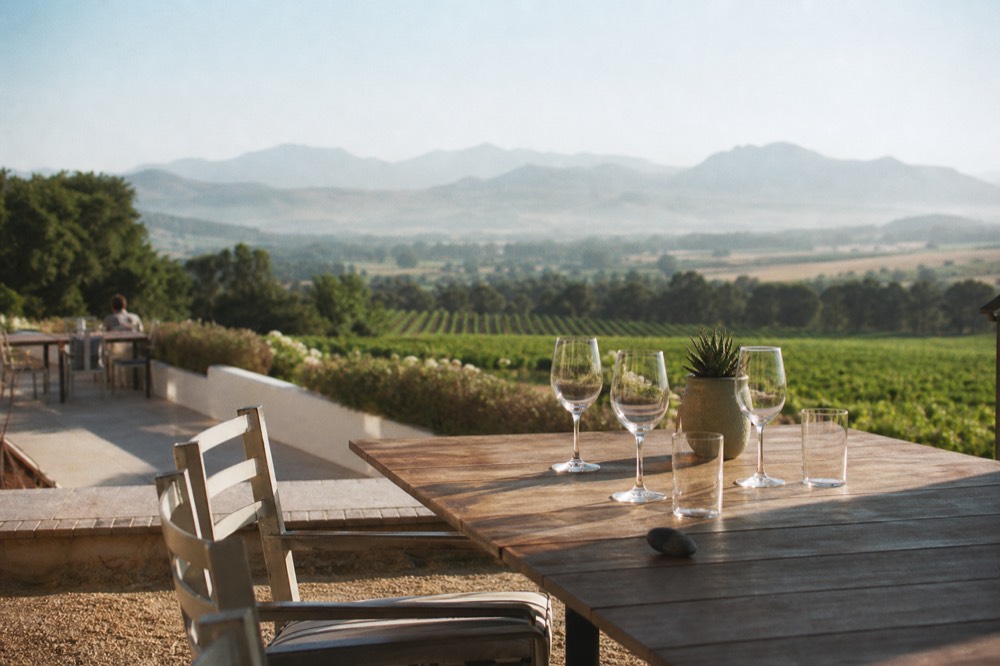
One climate note that shapes outdoor tastings: the "Cape Doctor", the strong south-easterly wind that blows from September to March. It cools the vines and keeps the air dry, but it can turn a terrace tasting into a wind-tunnel experience. Indoor cellar doors are the fallback, and most estates have one.
Crowding follows the school calendar as much as the weather. December and January are the busiest months, with high demand for both estate reservations and tour seats. Wesgro's visitor tracking for January to June 2025 found that April was the peak month for Cape Winelands visits overall, with domestic travelers making up the large majority, so late-summer crowds are real even after the international peak fades.
Tasting Tour Or Full Estate Day Trip: Which Should You Book?
Book a tasting-focused outing if your priority is comparing wines and producers; choose a slower private or estate-focused day if you want more control over the pace. Two winery visits can fit a five-hour outing, while a full wine day allows more time for travel, tasting and lunch.
The confusion is understandable because both get marketed as "wine tours from Cape Town". A tasting tour is a sampler: breadth, pace, comparison. An estate day is an immersion: one farm's story, its restaurant, its view from a deck chair. Neither is better; they serve different appetites.
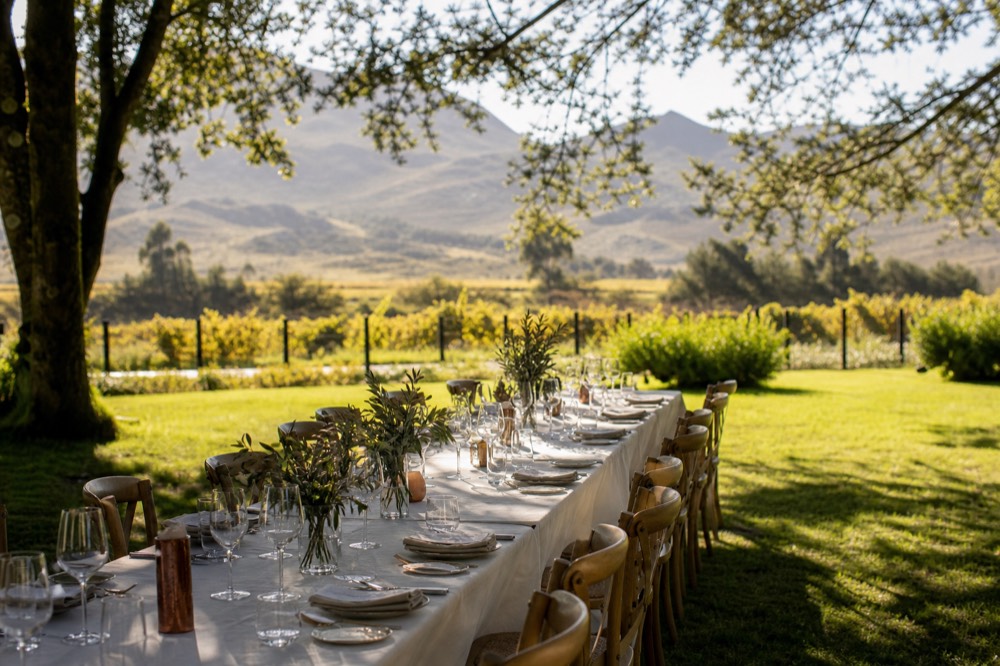
A useful self-test: when you imagine the day, are you holding a flight of five glasses or a single glass on a terrace for an hour? If it is the flight, book the tasting format. If it is the terrace, look at full-day and private options, and read our comparison of wine tram versus guided tour versus private driver for the independence-minded middle ground.
Compare total cost and stated inclusions rather than assuming tasting fees are always extra. The half-day paired-tasting option includes its advertised tastings; other tours and package tiers handle fees differently.
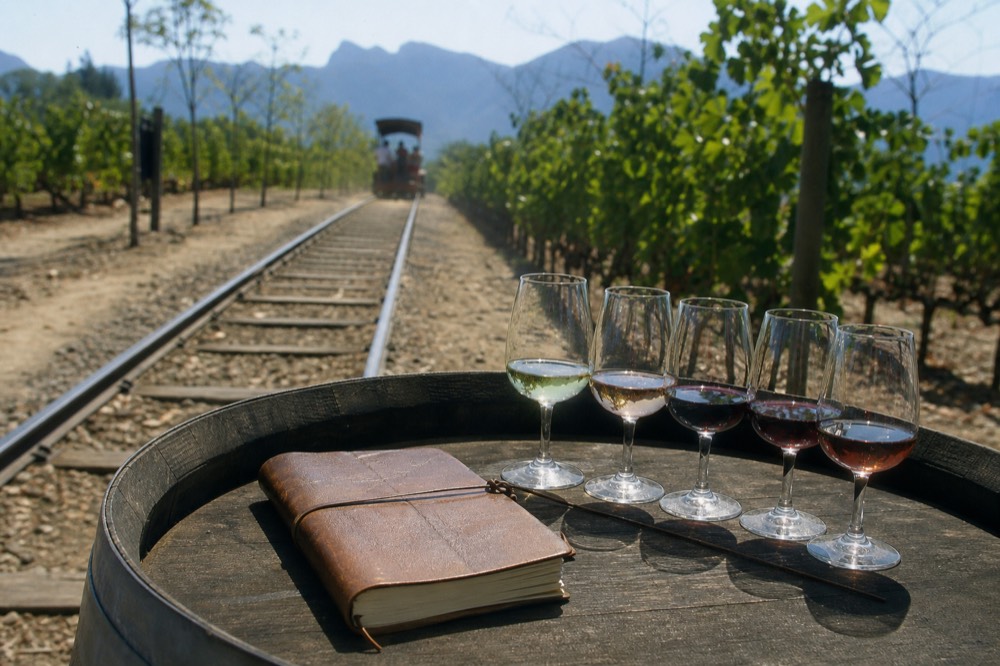
However you book, the honest pitch for tasting tours is the professional driver. With tour drivers held to the 0.02 professional blood-alcohol limit rather than the 0.05 ordinary limit, an organized tasting day lets you swallow the pours you love without doing the arithmetic on the drive home. That, plus the routing and the reservations, is what the tour price actually buys.
These are the questions travelers ask most often about tasting-focused tours from Cape Town: how many estates fit in a day, whether fees are included, what the spitting norm really is, whether a half-day works, the ID rules, and which month to target, with each answer drawn from the same verified figures used throughout this guide.
Common Questions About Cape Town Wine Tasting Tours
How many wineries does a tasting tour visit in one day?
Realistically three to five estates, with most tours planning three or four. Drive times and roughly an hour per seated tasting make a sixth stop counterproductive outside Constantia's compact valley.
Are tasting fees included in the tour price?
It depends on the package. The featured five-hour Stellenbosch tour includes its two winery tastings and pairings; the Constantia tour includes its advertised tastings too. Add separate fees only for experiences excluded by the option you book.
Is spitting really normal at Cape wineries?
Yes. Spittoons are standard at every counter and spitting is encouraged, particularly across multiple estates in a day or before driving. It is professional practice, not rudeness.
Can I do a tasting tour as a half-day from Cape Town?
Yes, and it is a popular format. Constantia, 20 to 25 minutes from the City Bowl, and Stellenbosch, about 45 to 55 minutes, both support a four to five hour tasting outing covering two or three estates.
Do I need ID for wine tasting in South Africa?
Carry a passport or driver's licence. The legal drinking age is 18 nationwide, and tasting rooms must request ID from anyone who appears under 18; refusal to produce it means service is denied.
What is the best month for a tasting tour?
September to November and March to April balance weather, crowds and cellar door activity. December to February is peak season with the most demand, while the late January to April harvest adds energy and events to the busiest window.
Plan Your Wine Day
Starting recommendation. Adjust the choice below.
Stellenbosch Half-Day Tastings And Pairings
Have a travel date in mind? Check it before arranging the rest of your day. Combine two winery visits and food pairings with time in Stellenbosch.
5 hours; English, Cape Town hotel pickup and return. Tastings included; lunch extra. Confirm winery route and pickup.
Choose a date to see scheduled departures.
Published schedule, not confirmed seats. Availability and final price are confirmed on Viator.
Check Dates For Stellenbosch Half-Day Tastings And PairingsCompare options and your costs
- Stellenbosch Half-Day Tastings And Pairings
- Combine two winery visits and food pairings with time in Stellenbosch. 5 hours; English, Cape Town hotel pickup and return. Tastings included; lunch extra. Confirm winery route and pickup.
- Constantia Half-Day Tastings
- Visit Groot Constantia and another valley estate with tasting fees and city transport included. 5 hours; English guide and Cape Town pickup. Second estate may be Beau Constantia or Constantia Glen. Lunch extra.
- Guided Winelands Tastings And Lunch
- Explore the Winelands with guided tastings, a cellar visit and vineyard lunch included. 9 hours; English guide, Cape Town pickup areas. Ages 18+; not wheelchair accessible. Pairings depend on availability.
This matches format and time, not personal suitability. Confirm the meeting point, language, ages and access arrangements for your party on the booking page.