How To Spend A Day In Franschhoek?
A practical one-day Franschhoek itinerary built from verified facts: tram lines, estates, drive times, tasting fees and how many days you actually need.
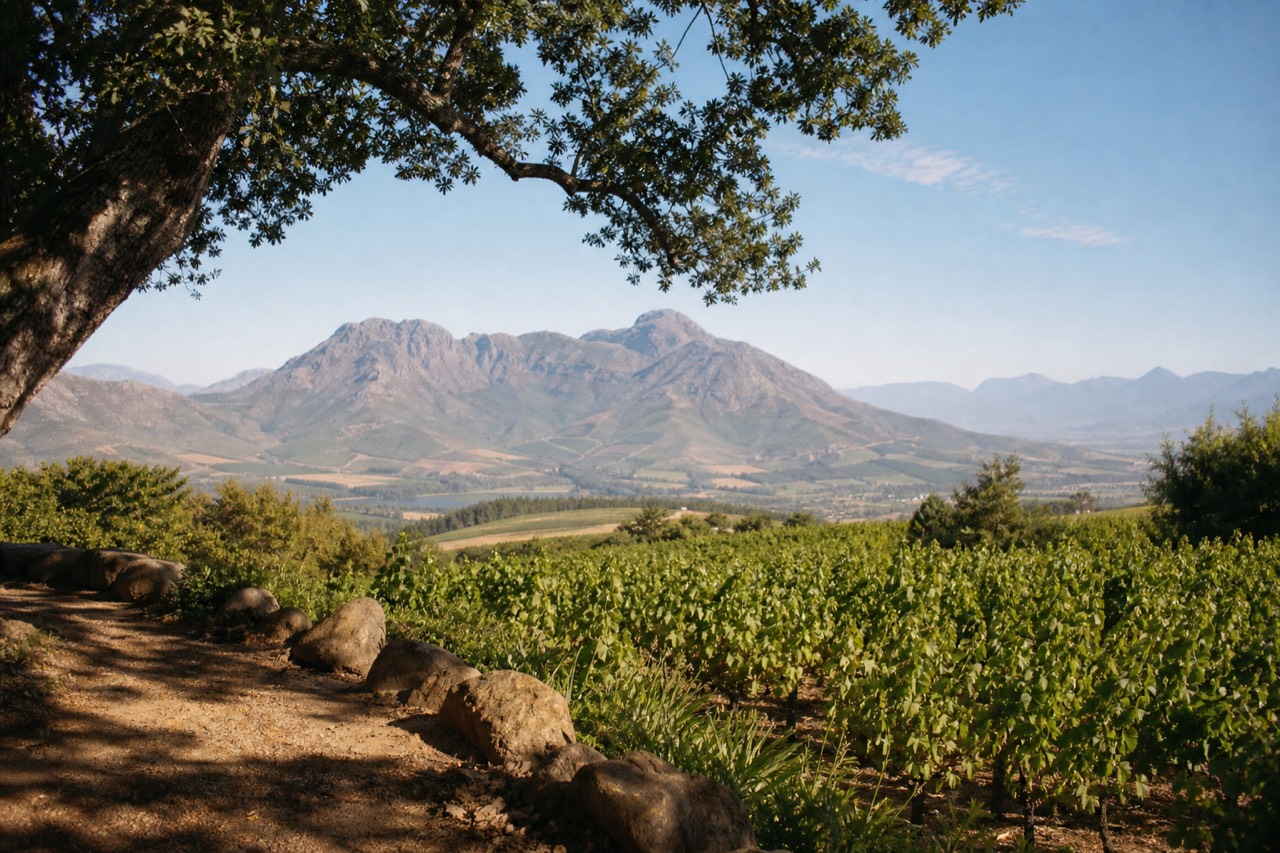
Franschhoek sits roughly 75 km from central Cape Town, about 60 to 70 minutes by road, and another 30 minutes inland beyond Stellenbosch if you take the Helshoogte Pass route. That geography shapes any one-day plan: you lose the morning getting there, so the itinerary that works is one built around a single valley loop rather than a scramble across the wider Winelands. The village itself is compact, food-driven and walkable, with French Huguenot heritage in its architecture and its restaurant culture, and the estates fan out along two roads from the centre. This site, Cape Town Wine Tours, exists to make exactly this kind of planning decision easier, with itineraries and comparisons drawn from verified facts rather than brochure copy.
How To Spend A Day In Franschhoek?
A realistic single day runs like this: arrive by 10:00, ride one hop-on-hop-off tram line through the morning with two estate stops, lunch in the village or at a farm restaurant, one final tasting or a gallery wander in the afternoon, and the drive back to Cape Town before dark. Trying to compress more than three estates into that window turns a leisurely day into a checklist sprint, and the valley rewards the opposite pace. The tram's hop-on-hop-off ticket costs R350 per adult, with child tickets at R90 for ages 3 to 17 and under-3s free, and tastings at the estates are extra, typically R60 to R260 per person.
The single biggest planning decision is whether the day revolves around the tram or around a private vehicle. The tram fixes your rhythm: it loops hourly, so if you hop off at an estate you are committing to roughly an hour there before the next tram-bus comes through. That is actually a discipline most visitors need, because Franschhoek's estate restaurants and lawns are engineered for lingering. A private driver may offer flexibility within an agreed itinerary; a shared guided tour follows its own schedule rather than the public tram timetable.
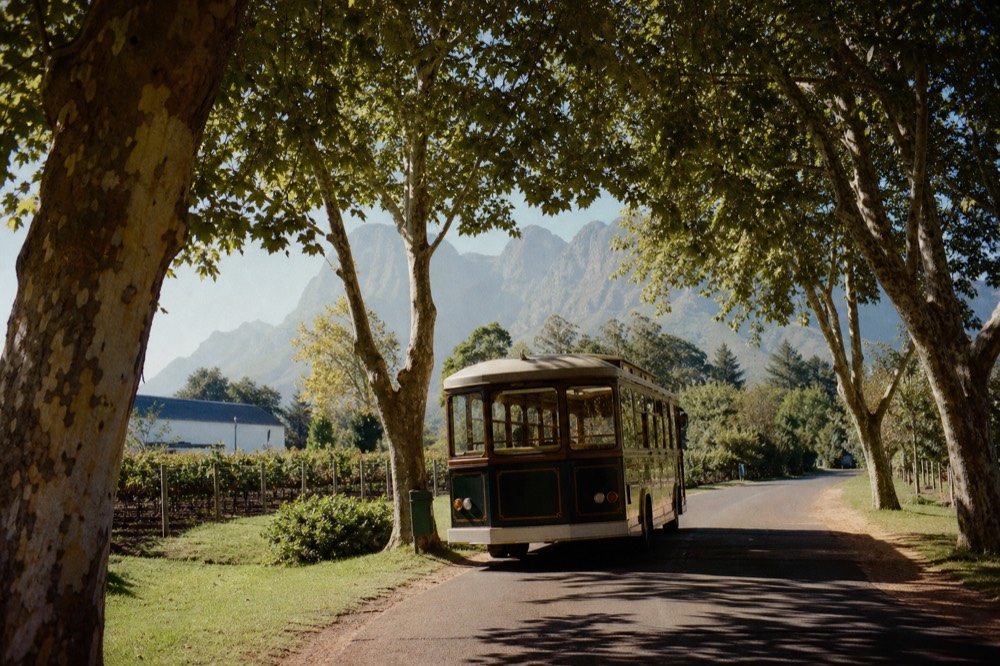
The tram runs five colour-coded lines, Red, Blue, Pink, Orange and Navy or Green depending on the schedule, using a mix of narrow-gauge vintage-style Brill trams and open-air tram-buses. Each line serves roughly 7 to 9 estates, and collectively the network reaches about 30 properties across the valley, names like Rickety Bridge, Grande Provence, Boschendal, Vrede en Lust, Plaisir de Merle, Allée Bleue, Haute Cabrière, Mont Rochelle and La Bri. Service runs daily except major holidays such as 24 to 25 December and 31 December to 1 January. If you are weighing the tram against other ways of getting around, our comparison of wine tram versus guided tour versus private driver breaks down the trade-offs in detail.
Because the tram is the valley's signature product, it deserves a closer look as the backbone of a one-day plan. The terminals sit at Franschhoek village, in the Cabriere Street area, or at Groot Drakenstein on the valley's edge, and which terminal you start from determines which direction your loop runs. Tastings and meals are never included in the ticket itself, so budget for those separately at each stop. The experience is genuinely popular: a February 2026 Telegraph feature described a ride in detail, and the operator's own site carries current schedules and line maps for planning.
What Are Some Must-Do Things To Do In Franschhoek?
The short list almost everyone agrees on: ride at least one tram line for the scenery, taste at Haute Cabrière or Grande Provence, eat a long lunch at a farm restaurant, and walk the village's Huguenot-era main street before you leave. Beyond that, the valley's two standouts are Boschendal, whose farm-to-fire restaurant Arum opened in November 2025 in the 1812 cellar, and La Motte, which ranked number 94 in the World's 50 Best Vineyards 2025 list announced in November 2025, and which hosts the returning JAN Franschhoek pop-up dining series from September 2026 through April 2027.
Rupert & Rothschild Vignerons opened a reimagined separate tasting room with a wine library and an expanded restaurant overlooking the gardens in October 2025, part of a wider wave of tasting-room investment across the valley. For a morning that pairs wine with views, the estates on the valley's western slopes catch the light early; for afternoon stops, the properties closer to the village let you finish with a short stroll rather than a timed ride back.
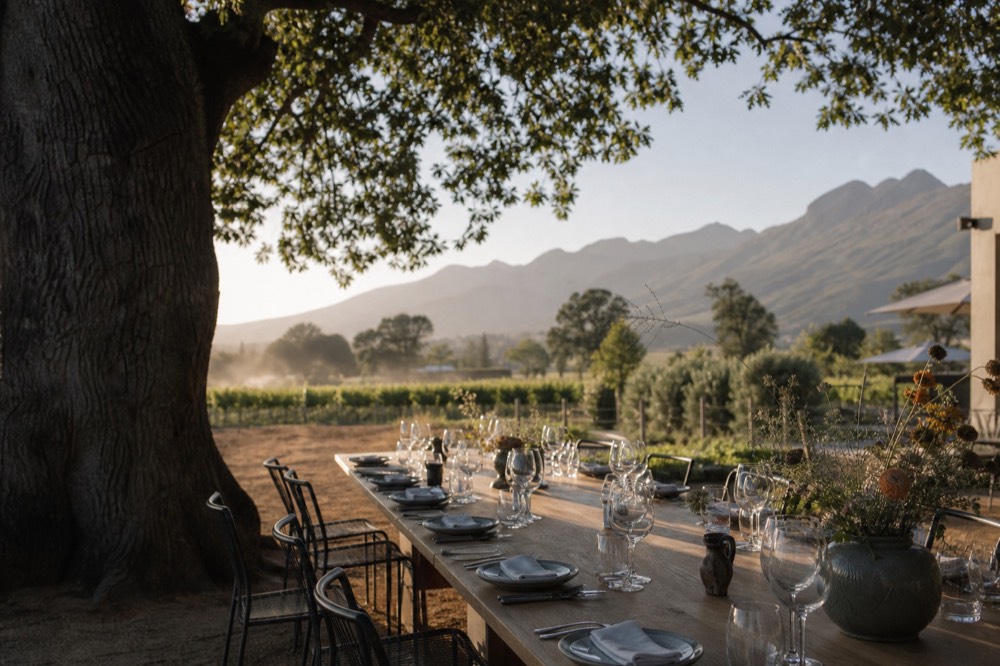
If your day is food-led rather than tasting-led, invert the plan: book lunch first at one of the estate restaurants, then fit tastings around it. The 2025 Eat Out Awards gave one-star mentions to several Franschhoek tables, including Chefs Warehouse at Maison, Le coin Français and Orangerie at Le Lude, which tells you where the village's reputation as a gourmet destination comes from. Reservations matter here more than anywhere else in the Winelands, because the dining rooms fill on weekends year-round, not just in summer.
How Many Wineries Are In Franschhoek?
There is no single official count, and any precise number you see quoted should be treated with suspicion; what can be said firmly is that the Franschhoek Wine Tram's network alone reaches roughly 30 estates, and dozens more tasting rooms sit across the valley beyond it. The honest framing is "dozens across the valley", which is why a one-day visit is a selection exercise, not a coverage exercise. Picking two or three properties that suit your taste in wine, whether that is Méthode Cap Classique at Haute Cabrière or the reds at Vrede en Lust, beats trying to sample the valley's full range.
| Planning question | Practical answer |
|---|---|
| Estates reachable by tram | Estates available on the current operating routes; check the timetable for your date |
| Estates per individual line | About 7 to 9 per line |
| Tram hop-on-hop-off ticket | R350 per adult, R90 per child 3-17 |
| Typical tasting fee at an estate | R60 to R260 per person, often waived with a bottle purchase |
| Estates realistic in one day | Two or three without rushing |
The tram's structure helps you choose. Because each line covers a distinct cluster of estates, you are really choosing a neighbourhood of the valley, not just a set of wines. The lines closer to the village terminal suit a shorter day; the outer loops trade convenience for bigger scenery and quieter tasting rooms. Our guide to which Wine Tram line is best walks through that choice estate by estate.
Advance booking deserves a word here, because it is the most common way a one-day plan unravels. There is no uniform legal requirement to reserve at wineries, but booking ahead is widely recommended or required in practice across Stellenbosch, Franschhoek, Paarl and Constantia, especially at smaller boutique estates and during the peak stretch from roughly November to March. Larger, more commercial estates often accommodate walk-ins during published hours when capacity allows, but on a tight one-day schedule a walk-in gamble at your must-visit estate is a risk not worth taking. Call or book online the evening before for both tastings and lunch.
How Many Days Are Recommended To Visit Franschhoek?
One day is enough for a tasting-focused visit built around a single tram line or a short guided route; two days is the better fit if you want the village's restaurants, galleries and slower rhythm without watching the clock, and anything beyond that is a stay rather than a trip. This is guidance, not a rule. Plenty of visitors do a satisfying single day from Cape Town, and plenty of two-day visitors say they wished they had booked the second night's dinner before arriving.
The one-day version works best when you accept its limits. You will see one line's worth of estates, one long lunch, and the village itself in the late afternoon. What you give up is the freedom to linger into the evening, which is when Franschhoek's character arguably shows most, once the day-trippers have driven back over the pass and the main street belongs to the people staying the night.
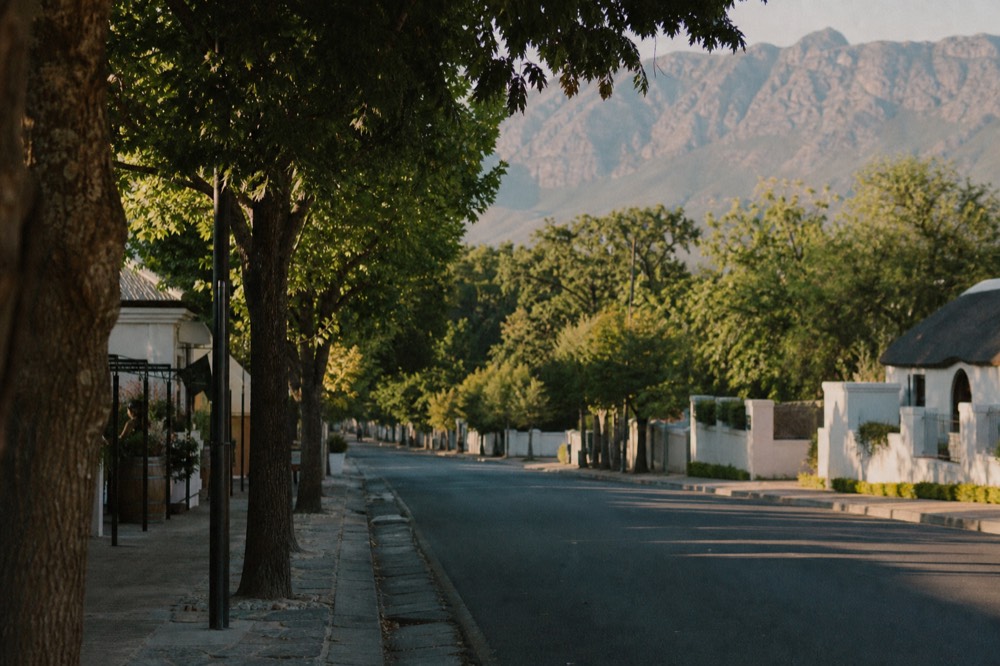
For a fuller comparison of the valley against its neighbour, where a single day forces a choice, see our head-to-head on Stellenbosch or Franschhoek. The short version: Stellenbosch, South Africa's second-oldest town, offers the highest density of estates and a walkable student-town energy, while Franschhoek is smaller, more curated and food-driven, which is exactly why it rewards the unhurried two-day version.
What Does A Sample One-Day Itinerary Actually Look Like?
Leave Cape Town by 09:00, arrive in Franschhoek around 10:15, catch a late-morning tram on your chosen line with stops at two estates, take a 13:30 lunch booking in the village or at a farm restaurant, add one final tasting or a walk down the main street, and depart by 17:00 to be back in the city before 18:30. That timing assumes the 60 to 70 minute drive each way holds, which it usually does outside the Friday-afternoon and Sunday-evening peaks.
A private driver can offer a different pace from an hourly tram loop, depending on the agreed itinerary. A hosted tour visiting Franschhoek and Stellenbosch follows its own schedule; compare its stops and inclusions with this sample day rather than assuming unlimited flexibility.
One practical note that applies across the whole day: South Africa's legal drinking age is 18, and tasting rooms are required to ask for ID from anyone who appears younger, so bring passports or licences for the whole group. And if anyone in your party is driving, know that the blood-alcohol limit for ordinary drivers is 0.05 g per 100 ml, while professional drivers, a category that includes many tour and shuttle drivers holding a PrDP, are held to a stricter 0.02 limit. That two-tier rule is a quiet argument for letting someone else do the driving between estates.
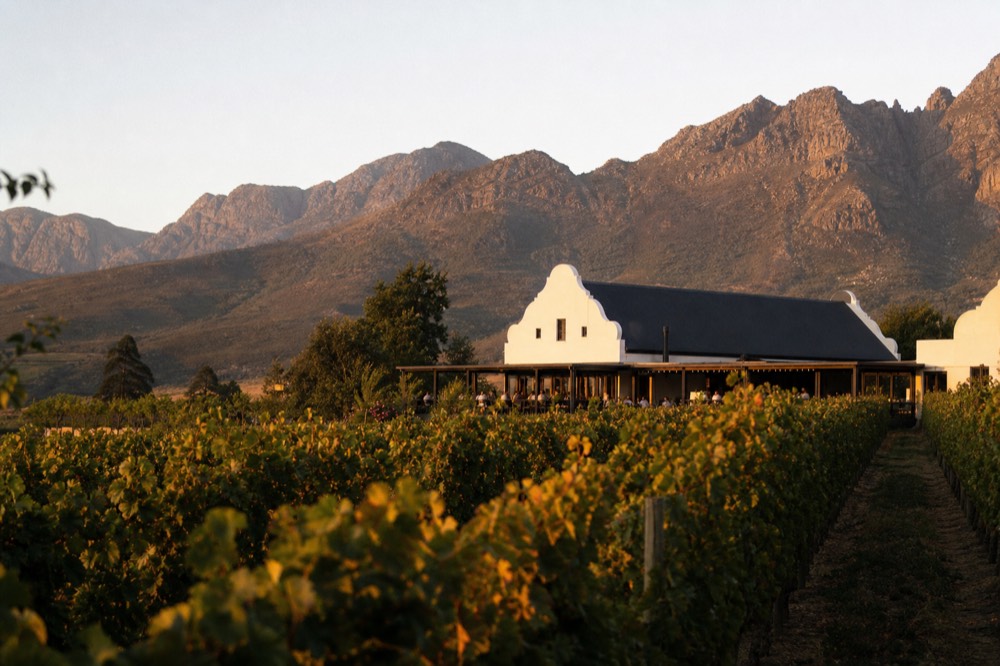
Timing your day against the seasons matters too. The Cape Doctor, the south-easterly wind that blows from September to March, can sharpen an open-air tram-bus ride, while the December-to-February peak brings the biggest crowds to the valley's tasting rooms. The shoulder months, September to November and post-harvest March to April, tend to balance activity and space, and harvest itself, late January through April, adds a festive energy to the estates even if it means busier roads.
A September 2026 visit, for reference, lands in that spring shoulder: warming days, fewer crowds than the summer peak, and wildflowers on the lower slopes, but no harvest activity, since the crush runs late January through April. If your dates are flexible and you want the valley at its most festive, aim for February or early March, when picking is in full swing and estates run harvest events, La Motte's Harvest Experience ran Monday to Saturday from 23 January to mid-March 2026 at R300 per person for its sessions. If you want it quiet, come in spring instead.
These are the questions travelers ask most before committing to a single day in the valley, answered from the same verified facts used throughout this itinerary: how the day should be structured, what genuinely deserves a stop, how many wineries exist here, how many days to budget, and whether the tram is the right backbone for the plan. Each answer is short enough to read while you are already on the road.
A few of the valley's newer openings slot neatly into that 13:30 lunch slot or the final tasting before your 17:00 departure. Boschendal's Arum, the fire-focused restaurant in its 1812 cellar, opened in November 2025 and works well if you want lunch on a working farm rather than in the village. Rupert & Rothschild's separate tasting room, unveiled in October 2025 with a wine library and expanded restaurant, is a strong candidate for that last stop on the way out of the valley. And if your dates fall between September 2026 and April 2027, the JAN Franschhoek pop-up at La Motte, now in its fifth season, can anchor the whole day around a single estate, since La Motte is also the valley's entry on the World's 50 Best Vineyards list, at number 94 since November 2025.
One more seasonal note for the tram portion of the day: the December-to-February peak that fills the tasting rooms also fills the trams, so a late-morning boarding time is easier to hold in the September-to-November shoulder, when the same itinerary runs with more slack at each stop.
Common Questions About Spending A Day In Franschhoek
How to spend a day in Franschhoek?
Arrive by mid-morning, ride one hop-on-hop-off tram line with two estate stops, take a long lunch in the village or at a farm restaurant, finish with one more tasting or a walk down the main street, and drive back to Cape Town before dark. Two or three estates is the realistic maximum for a relaxed day.
What are some must-do things to do in Franschhoek?
Ride a tram line for the valley scenery, taste at estates like Haute Cabrière, Grande Provence or Boschendal, eat a long lunch at a farm restaurant, and walk the Huguenot-era village centre. La Motte, newly on the World's 50 Best Vineyards list, is a strong addition.
How many wineries are in Franschhoek?
There is no precise official count, so treat exact numbers with caution. The Wine Tram network alone reaches roughly 30 estates across its five lines, and dozens more tasting rooms sit in the valley beyond that network, which is why one-day visits are about selection, not coverage.
How many days are recommended to visit Franschhoek?
One day works for a tasting-focused visit built around a single tram line or guided route. Two days suits travelers who want the village's restaurants and slower rhythm without a clock running. Anything longer is a stay rather than a trip.
Is the Wine Tram the best way to see the valley in one day?
It is the most scenic and the most structured option, with hourly loops fixing your pace at each estate. A private driver may offer flexibility within an agreed route, while a shared guided tour follows its own itinerary and timing.
Plan Your Wine Day
Starting recommendation. Adjust the choice below.
Cape Town Transfer And Franschhoek Wine Tram
Have a travel date in mind? Check it before arranging the rest of your day. Combine the return Cape Town coach with the Franschhoek hop-on-hop-off tram.
Full day, allow 8.5 hours; city collection points. Tastings and lunch extra; not wheelchair accessible.
Choose a date to see scheduled departures.
Published schedule, not confirmed seats. Availability and final price are confirmed on Viator.
Check Dates For Cape Town Transfer And Franschhoek Wine TramCompare options and your costs
- Cape Town Transfer And Franschhoek Wine Tram
- Combine the return Cape Town coach with the Franschhoek hop-on-hop-off tram. Full day, allow 8.5 hours; city collection points. Tastings and lunch extra; not wheelchair accessible.
- Franschhoek Tram And Stellenbosch Guided Day
- Visit Stellenbosch and Franschhoek with a hosted itinerary and tram ride. 9 hours; central Cape Town pickup area. Tastings and meals depend on option; confirm terms, including cancellation.
- Private Winelands Day With Paired Lunch
- Combine four estate visits with three guided tastings and a paired gourmet lunch. 8 hours; English host, Cape Town pickup and private transport. Confirm chosen estates and dietary arrangements.
This matches format and time, not personal suitability. Confirm the meeting point, language, ages and access arrangements for your party on the booking page.