Paarl Wine Tour Guide: The Quieter Winelands Valley
Paarl is the largest of the three classic Winelands towns by population, yet it draws the fewest tour buses. This guide covers what a Paarl wine day actually looks like, what it costs, and how to fold it into a Cape Town trip.
Short answer
Paarl sits about 55-70 km from central Cape Town, a 50-60 minute drive via the N1. It is the working-agricultural heart of the Winelands: broader valleys, bigger reds and fortified styles, fewer crowds and better value than Stellenbosch or Franschhoek, with tasting fees usually R80-R250 per flight.
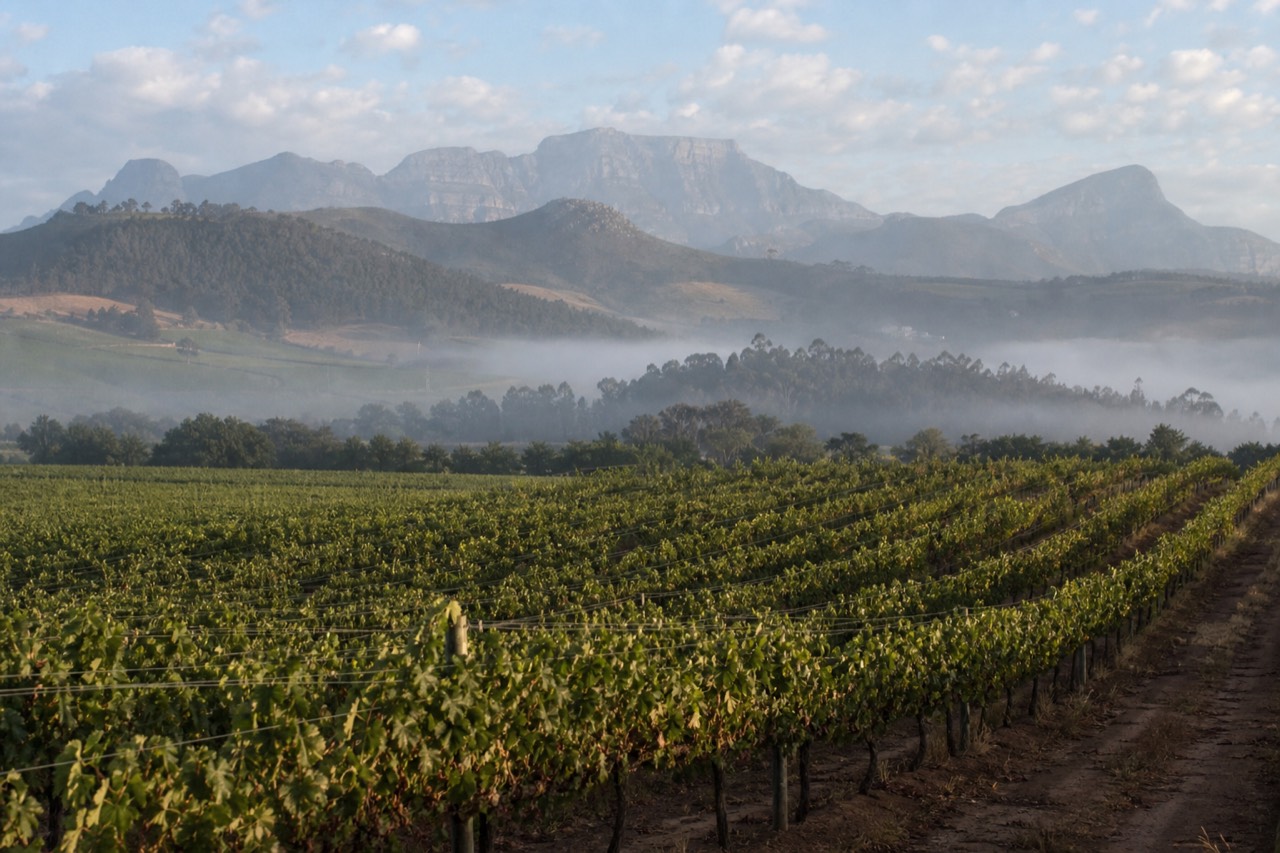
Paarl does not audition for your affection the way Franschhoek does. It is the largest of the three classic Winelands towns by population, a working agricultural centre where grapes are grown, crushed and shipped rather than staged for photographs, and that is exactly why a certain kind of traveller ends up preferring it. The valleys are broader, the queues at tasting counters are shorter, and the prices lean toward value rather than romance.
The town sits roughly 55-70 km from central Cape Town, a 50-60 minute drive up the N1, traffic depending. That puts it within easy reach of a day trip, and its position on the N1 corridor means it pairs naturally with Stellenbosch and Franschhoek on a loop route. This guide walks through what a Paarl wine day actually involves: the drive, the estates, the costs, the seasonality, and the honest reality that Paarl is usually visited as one stop inside a multi-region day rather than as a standalone booked tour.
A shared three-region tour gives Paarl one tasting stop. For a more focused day, the private wine-expert tour allows a route chosen from the Stellenbosch, Franschhoek and Paarl area; agree a Paarl-focused estate list with the operator before booking.
What Kind Of Wine Town Is Paarl, Really?
Paarl is the Winelands' working town: the largest of the three classic winelands towns by population, bigger and quieter than Stellenbosch or Franschhoek, with broader valleys, larger estates, fewer crowds at tastings, and a focus on bigger reds and fortified styles. It trades polish for value, and it feels like a place where wine is made rather than performed.
That character summary is not marketing spin; it is the consistent read across recent Winelands travel guides. Stellenbosch is the energetic university town with oak-lined streets and the highest density of wine estates in the country. Franschhoek is the small, curated "gourmet village" with French Huguenot heritage and a compact walkable centre of boutiques and galleries. Paarl is none of those things, deliberately or otherwise.
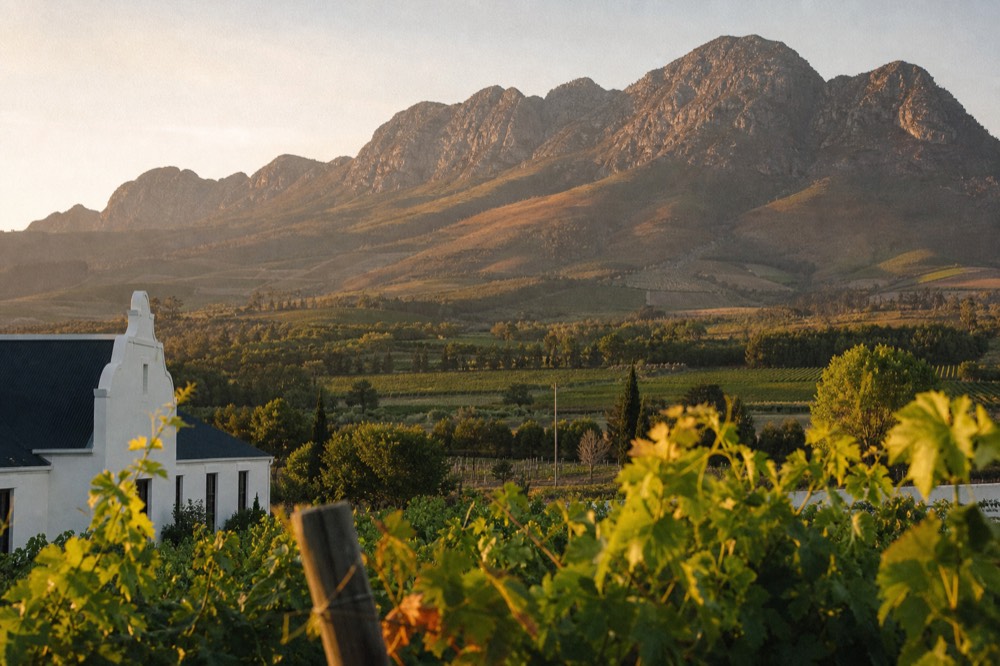
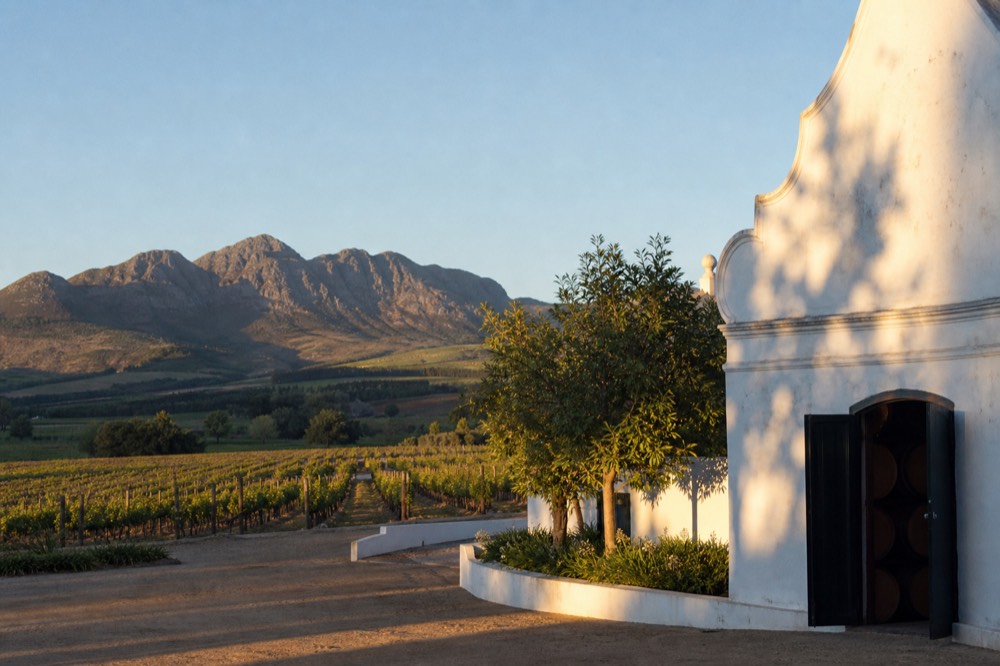
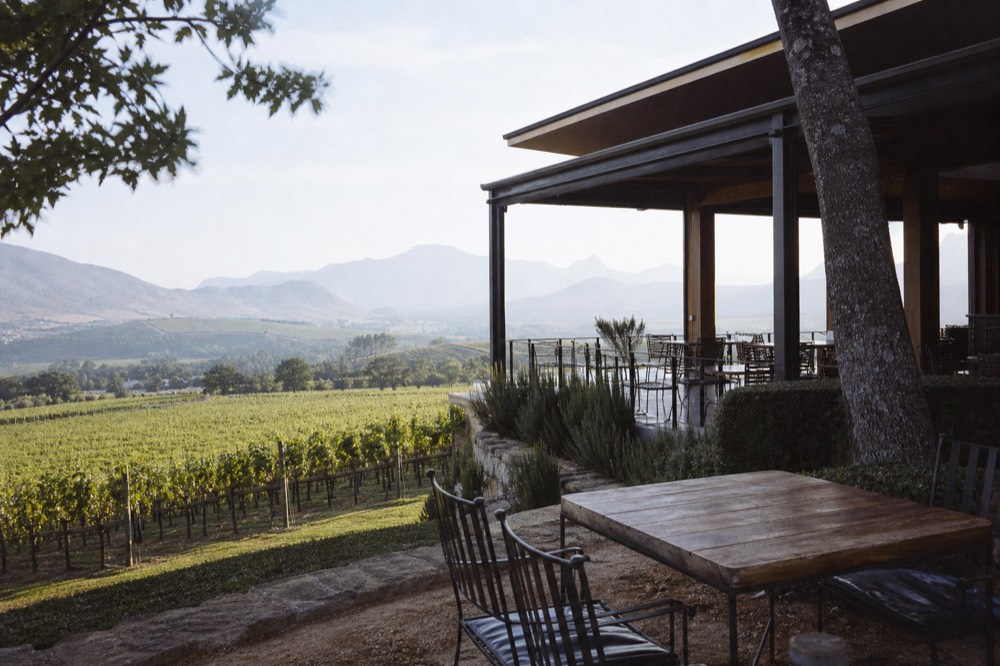
What you get instead is space. The Paarl valley runs wide, with granite-based soils under vineyards that roll toward the Drakenstein mountains, and estates that are often physically larger than their Stellenbosch counterparts. The wine styles follow the terrain and the climate: this is red country, with structured Cabernet, Shiraz and Bordeaux-style blends, plus a tradition of fortified wines that survives more strongly here than in the trendier towns.
The crowd factor matters more than many first-time visitors expect. In peak season, tasting rooms in Stellenbosch and Franschhoek can run at full capacity, and the Franschhoek Wine Tram queues are a known frustration. Paarl's tasting counters, by contrast, rarely feel rushed. You are more likely to be poured by someone who works the farm than by a seasonal host hired for the December surge.
There is a trade-off, and honesty requires naming it. Paarl is less photogenic in the postcard sense, and its restaurant scene, while improving, does not match Franschhoek's concentration of celebrated kitchens. The 2025 Eat Out Awards gave a one-star mention to Scape at Vrymansfontein in the Paarl area, and Zomerlust Boutique Hotel opened its fire-centric Smeul restaurant in May 2026, so the food story is moving. But if your day is built around a landmark lunch, Franschhoek still leads.
How Far Is Paarl From Cape Town, And How Do You Get There?
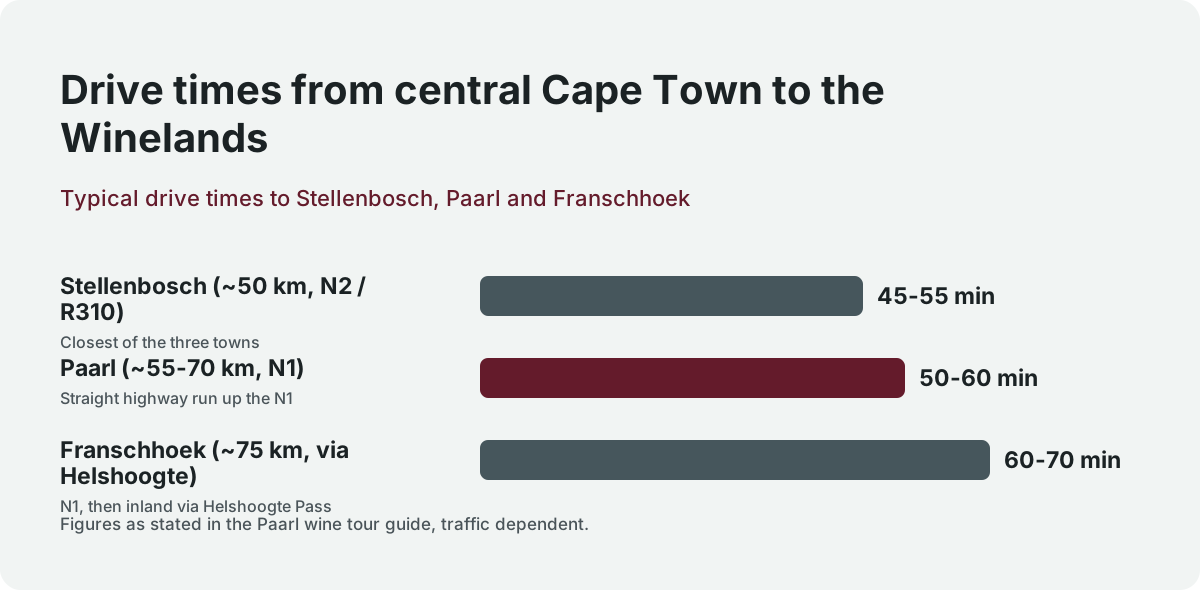
Paarl is roughly 55-70 km from central Cape Town, a 50-60 minute drive via the N1, traffic dependent. That is comparable to Stellenbosch's 45-55 minutes, and about 30 minutes closer than Franschhoek, which sits further inland past Stellenbosch via the Helshoogte Pass. Self-drive, a private driver, or a multi-region guided day trip are the three realistic options.
The N1 route is the simplest Winelands drive of the three: a straight highway run that clears the Cape Town suburbs and drops you into the valley without the pass roads that complicate the Franschhoek approach. For a self-driving visitor, that ease cuts both ways. It makes Paarl an easy first stop, but it also means the temptation to keep tasting and keep driving is real, and South Africa's drink-driving law is not forgiving. The blood-alcohol limit for ordinary drivers is 0.05 g per 100 ml; for professional drivers, including the PrDP holders who drive most tour vehicles, it is a stricter 0.02 g per 100 ml. A zero-tolerance limit has been signed into law but is not yet in force.
That two-tier limit is a genuinely underrated argument for handing the wheel to someone else. Your tour driver is legally held to a stricter standard than you would be behind your own rental car, and the driver knows the estate roads, the parking, and which tasting rooms can absorb a group at short notice.
For context, here is how the three towns stack up on distance and drive time from central Cape Town:
| Town | Distance from central Cape Town | Typical drive time | Main route |
|---|---|---|---|
| Stellenbosch | ~50 km | 45-55 min | N2 / R310 |
| Paarl | ~55-70 km | 50-60 min | N1 |
| Franschhoek | ~75 km | 60-70 min | N1, then inland via Helshoogte |
There is no passenger rail option worth planning around, and ride-hailing works in town but becomes unreliable for estate-to-estate hops in the valley. If you want to visit several estates without driving, a guided day trip or a private driver is the practical answer. The multi-region day trips that include Paarl handle the logistics, and several also build in the Drakenstein Prison photo stop, the site outside Paarl where Nelson Mandela walked free after his release from prison, which is a genuine add for visitors who want the history alongside the wine.
The Viator and GetYourGuide three-region listings offer the same City Sightseeing style of shared coach day. Compare their date-specific totals and terms rather than treating them as different tour formats. Prices and ratings for each are on the operator's live listing rather than printed here, since they move with season and availability.
What Does A Paarl Wine Tour Day Actually Look Like?
The recommended three-region coach day collects guests at predefined Cape Town stops, visits Stellenbosch for a morning cellar tour, tasting and town walk, continues to Franschhoek, then includes the Drakenstein photo stop and an afternoon Paarl tasting before returning to the starting point. Three estate tastings are included; lunch is extra.
The shape of the day matters more than the specific estates, because the valley rewards pacing. A rushed two-hour Paarl dash feels like a highway stop; a morning spent at two estates with a long lunch lets the place breathe. Most multi-region itineraries give Paarl either the morning slot (closest to Cape Town on the N1) or the midday slot between Stellenbosch and Franschhoek.
The following is an independent Paarl-focused planning example, not the schedule of the recommended three-region coach tour:
| Time | Activity | Notes |
|---|---|---|
| 08:30-09:00 | Pickup in Cape Town | Hotel or central meeting point |
| 09:00-10:00 | Drive up the N1 | Often includes the Drakenstein Prison photo stop |
| 10:00-11:30 | First Paarl estate | Guided tasting, cellar visit at some estates |
| 11:30-13:00 | Second Paarl estate | Red and fortified focus is common here |
| 13:00-14:30 | Lunch | Estate restaurant or town stop |
| 14:30 onward | Stellenbosch or Franschhoek | Loop back toward Cape Town |
| 17:30-18:30 | Drop-off | Timing depends on the final region |
Times vary by operator and by how long the group lingers at each counter; treat the table as a planning shape, not a schedule promise. What is consistent is the loop logic. Paarl's N1 position makes it the natural first or last stop, and the Helshoogte Pass road then links the Paarl side of the valley to Stellenbosch and on toward Franschhoek without backtracking.
A shared coach itinerary gives you a taste of Paarl alongside other valleys. A Paarl-focused day needs a separately agreed route, whether you use a private wine guide, a driver or a sober self-driver.
For travellers weighing whether a guided day beats a self-drive loop at all, the comparison of formats, hop-on-hop-off versus guided versus private driver, is covered in detail in the Wine Tram vs guided tour comparison, and the broader case for each region is laid out in which wine region to choose.
Which Wineries Should You Visit In Paarl?
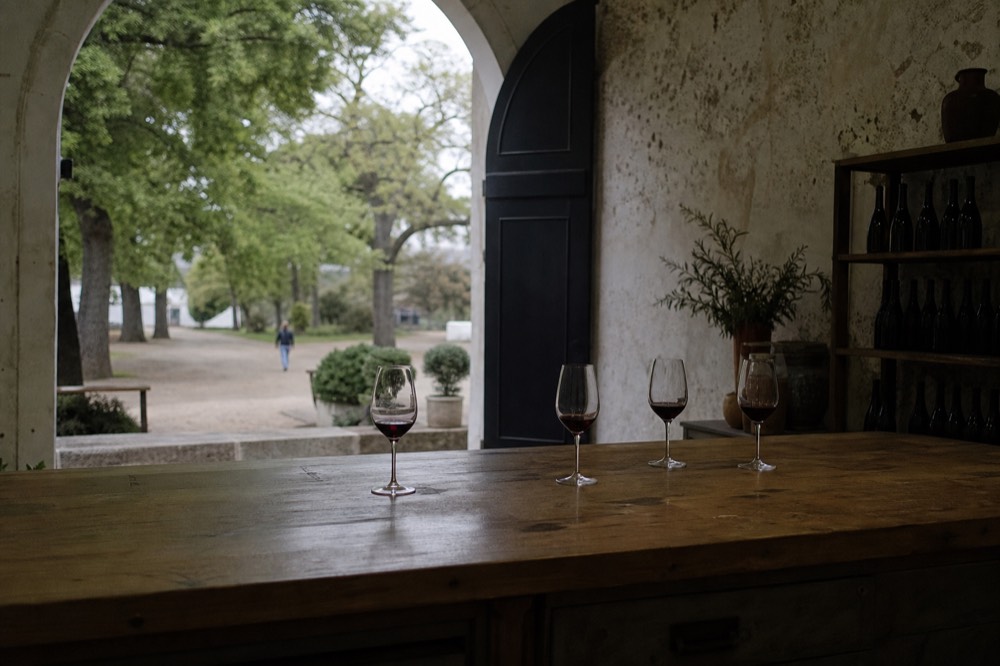
Paarl's estate list leans toward large, historic working farms with strong red and fortified programmes. There is no single canonical circuit, but a good Paarl set pairs one big-name estate with one or two smaller tasting rooms, and booking ahead is wise at boutique estates in the November-to-March peak. Tasting fees typically run R80-R250 per flight, often waived with a bottle purchase.
This guide does not rank individual Paarl estates with scores, because estate quality shifts with winemaker changes and vintage, and a list that pretends otherwise ages badly. What holds steady is the pattern: Paarl rewards visitors who mix scale. One large estate gives you the cellar-tour grandeur; a smaller farm gives you the conversation with the person holding the bottle.
Booking policy is the practical detail that catches people out. There is no uniform legal requirement to reserve, but advance booking is widely recommended or required across the Winelands in peak season, roughly November to March, especially at smaller estates. Larger, more commercial estates often absorb walk-ins during published hours when capacity allows. If you are on a guided tour, the operator handles this; if you are self-driving, call or book online the day before for anything boutique.
On wine styles, go with the valley's strengths. Paarl's warm, granite-soiled slopes favour structured reds: Cabernet Sauvignon, Shiraz, Rhone-style blends and Bordeaux blends, plus the fortified tradition. Visitors who arrive expecting the crisp Chenin-and-Sauvignon profile of cooler coastal areas sometimes under-rate Paarl purely because they tasted the wrong things. Ask the counter what the farm is actually known for, and let the reds lead.
How Much Does A Paarl Wine Day Cost?
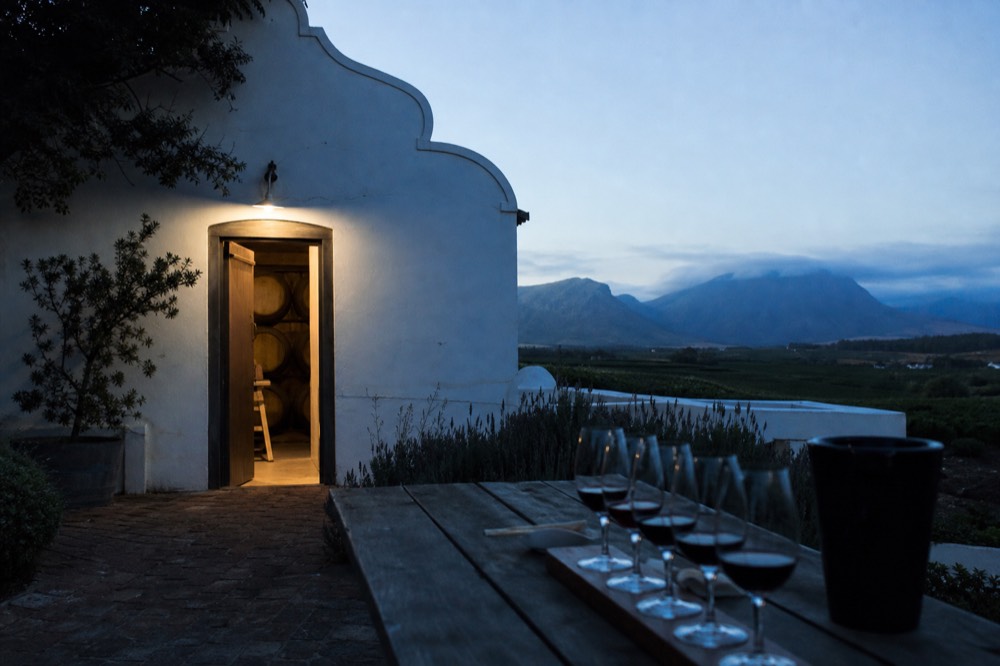
Budget three cost layers: transport, tastings and lunch. Tasting fees in the Winelands typically run R80-R250 per person per flight, premium tastings higher, often waived or refunded with a bottle purchase. A multi-region guided day trip from Cape Town is priced on the operator's live listing; self-drive adds rental, fuel and the drink-driving constraint to the maths.
The tasting-fee layer is the most predictable. Across Stellenbosch, Paarl and Franschhoek, a standard flight lands in that R80-R250 band, with premium and paired tastings above it. A two-estate Paarl morning therefore means paying two standard tasting fees per person, and the per-flight band above tells you what each of those costs, before food, and before whatever bottles end up in the boot.
| Cost layer | Typical range per person | Notes |
|---|---|---|
| Tasting fee, standard flight | R80-R250 | Often waived with a bottle purchase |
| Premium / paired tasting | Above the standard band | Chocolate, biltong and cellar tastings |
| Lunch at an estate restaurant | Varies widely by venue | Paarl's scene is cheaper than Franschhoek's |
| Guided multi-region day trip | On the operator's live listing | Usually includes transport and driver |
| Self-drive day | Rental + fuel + N1 toll-free roads | You stay under the 0.05 BAC limit or you don't drive |
The comparison that matters is guided versus self-drive, and the drink-driving law tilts it more than most visitors realise. A self-drive day across three estates is cheap on paper, but it means either spitting everything (buckets are standard and encouraged at South African tasting rooms), stopping early, or risking a limit that is lower than many European visitors assume. A guided or private-driver day removes that arithmetic entirely, and the price gap narrows once you add rental, fuel and parking.
For a fuller cost breakdown across every tour format from Cape Town, including how multi-region day trips stack up against tram packages and private drivers, see how much wine tours cost in Cape Town.
Paarl Vs Stellenbosch Vs Franschhoek: Which One Earns Your Day?
Choose Paarl for value, space, reds and fortified wines, and fewer crowds. Choose Stellenbosch for estate density, walkability and a lively town with independent restaurants and nightlife. Choose Franschhoek for the curated gourmet village feel, French Huguenot heritage and the Wine Tram. Most visitors with one Winelands day should combine at least two, and Paarl slots naturally into any loop via the N1.
The three towns sit within about 30 minutes of each other, which is why the either-or framing that dominates travel forums is slightly false economy. The real question is which two, or which three, and in what order. Paarl's N1 position makes it the cheapest add-on in terms of drive time: it sits on the way to everything else.
Character is the deciding factor. Stellenbosch, South Africa's second-oldest town, delivers oak-lined streets, museums and student energy, with the highest density of wine estates of any Winelands town. Franschhoek is smaller and more polished, a food-driven village where the Wine Tram loops through roughly 30 estates across its colour-coded lines. Paarl is bigger, quieter and more working-farm, with broader valleys and a red-and-fortified wine identity.
The awards picture reflects that spread. In the World's 50 Best Vineyards 2025 list, announced in November 2025, Stellenbosch placed Tokara at #71 and Delaire Graff at #79, while Franschhoek's La Motte entered at #94. Paarl's estates did not make that particular list, but Constantia's Klein Constantia ranked #6 overall and Best Vineyard in Africa, a reminder that the Cape's global reputation is not confined to the big three towns.
| Factor | Paarl | Stellenbosch | Franschhoek |
|---|---|---|---|
| Feel | Working agricultural town | University town, lively | Curated gourmet village |
| Crowds at tastings | Fewest | Moderate to busy | Busiest, tram queues |
| Wine identity | Big reds, fortified | Broadest estate range | Elegant, food-paired |
| Drive from Cape Town | 50-60 min | 45-55 min | 60-70 min |
| Food scene | Improving, value-led | Strong, independent | Strongest, celebrated |
| Signature transport | Private driver or tour | Walkable town core | Wine Tram |
If you have exactly one day and wine is the priority, the Paarl-Franschhoek-Stellenbosch loop covers all three characters without rushing any of them. If you have two days, Paarl plus Stellenbosch on day one and a full Franschhoek day on day two is the classic split, covered in detail in Stellenbosch or Franschhoek.
When Is The Best Time Of Year To Tour Paarl?
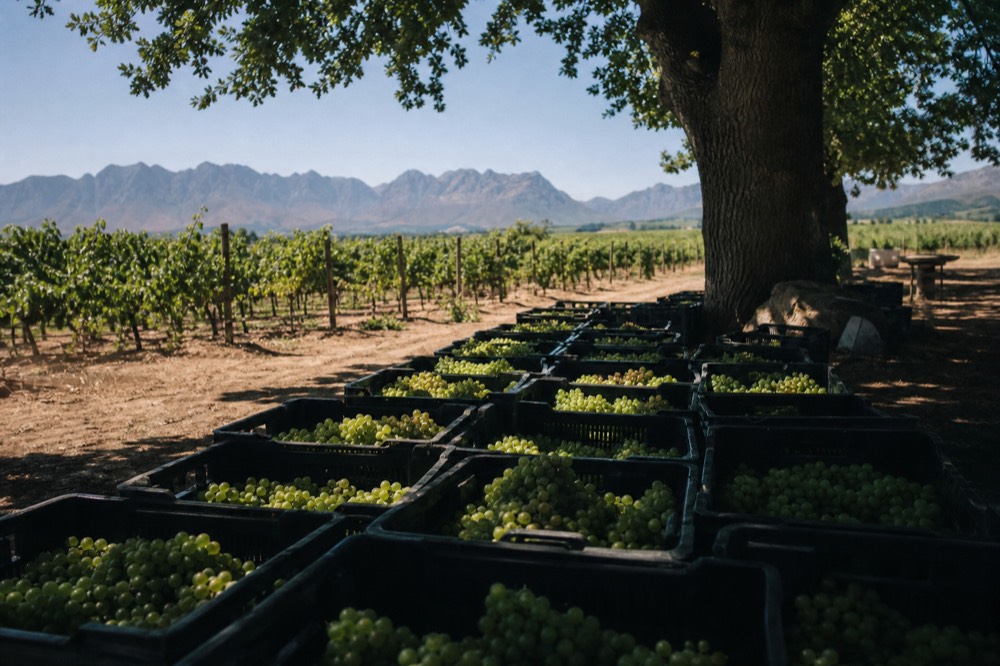
Harvest season, late January through April, brings the most energy to the Winelands, with picking, crushing and harvest events on the farms, though it overlaps the December-to-February peak-crowd window. Spring, September to November, and post-harvest March to April offer the best balance of weather, crowds and activity for a Paarl day.
The Cape's Mediterranean climate sets the rhythm: hot, dry summers, cool, wet winters. Summer highs around February run near 28°C with almost no rain, which is ideal for outdoor tastings but also brings the "Cape Doctor", the strong south-easterly wind that blows from September to March and can scatter an uncovered terrace tasting. Winter, June and July, is wet and quiet; some estates reduce hours, and valley views lose their green.
Crowding follows the school-holiday calendar more than the wine calendar. December through February and early March is the busiest period for estates and tours. September to November delivers warming spring days, blooming landscapes and thinner crowds, which is why it is the quiet consensus pick among repeat visitors. Post-harvest March and April offers a similar balance once the crush crowds thin.
Harvest itself is the spectacle. Across Stellenbosch, Franschhoek, Paarl and Constantia, crush typically runs late January through April, with the 2026 season running early. In Paarl-adjacent 2026 event listings, the Stellenbosch Harvest Parade ran on 31 January 2026 and Delheim's Harvest Festival on 30-31 January 2026, while La Motte's Harvest Experience in Franschhoek ran Monday to Saturday from 23 January to mid-March at R300 per person. Paarl's own valley events rotate year to year, so check estate calendars for the season you book.
For a September 2026 visit, expect spring conditions: warming days, fewer crowds than the summer peak, and no harvest activity, since the crush is a Southern Hemisphere late-summer event. The trade is green valleys and empty tasting rooms versus the theatre of the crush.
What Should You Know Before You Go: IDs, Ages And The Law?
South Africa's drinking age is 18 nationwide, and tasting rooms are legally required to request ID from anyone who appears under 18, with refusal treated as under-18. The drink-drive limit is 0.05 g per 100 ml blood for ordinary drivers and a stricter 0.02 for professional drivers including tour drivers; a zero-tolerance law is signed but not yet in force. Spitting is standard and encouraged when tasting across multiple estates.
The ID rule catches international visitors more often than the age rule does. Tasting room staff are bound by the National Liquor Norms and Standards to ask for ID, a passport or a driver's licence from anyone who looks under 18, and a 22-year-old without a passport on them can, in principle, be refused. Carry ID on any wine day; it weighs nothing.
The two-tier drink-drive limit is the fact worth building your whole day around. Ordinary drivers sit at 0.05 g per 100 ml blood, already lower than many visitors assume. Professional drivers, the PrDP holders who drive tour vehicles and shuttles, sit at 0.02. The practical translation: the person driving your booked tour is legally held to a stricter sobriety standard than you would be behind a rental car, which is the single most under-cited argument for booking rather than self-driving a multi-estate day. The legal framework sits under the Liquor Act 59 of 2003 for service and the National Road Traffic Act 93 of 1996, section 65, for driving, summarised in government guidance at gov.za's statement on the Cape's world-class vineyards, which also confirms the 2025 World's 50 Best Vineyards placements.
On tasting etiquette, the spit bucket is your friend, not an insult to the winemaker. Across a two-estate Paarl morning plus an afternoon elsewhere, spitting is the difference between a full day and a truncated one. Buckets are standard at every counter, and nobody blinks.
Finally, booking ahead: no law requires it, but the practical norm across the Winelands is that boutique estates want reservations in the November-to-March peak, while larger estates flex to walk-ins. Guided tours handle this; self-drivers should plan one day ahead.
How To Book A Paarl Wine Day Without Overpaying
Book a multi-region day trip if one Paarl tasting stop suits your plans. For more time in Paarl, compare a private wine-expert itinerary agreed with the operator. Check the complete party price, included tastings, pickup and cancellation terms for the chosen date.
For a ready-made route from Cape Town, compare the confirmed three-region coach listings and their inclusions. They visit Paarl as part of a wider Winelands day; a full day in Paarl requires a separately arranged itinerary.
For most first-time visitors, the standard loop is the right call: it covers all three town characters in one day at a mid-range price. Compare the actual group size, route and package inclusions rather than assuming a luxury label guarantees private access or a slower day.
Alternative Winelands packages can vary in estate count and included tastings or lunch. Compare the selected package rather than assuming it gives more time in Paarl.
Wherever you book, read the cancellation terms before paying. Free-cancellation and pay-later options are common on multi-region day trips, and they matter in the Winelands, where a surprise "Cape Doctor" wind day or a group schedule change can reshuffle plans. The operator's live listing shows the exact terms for your date.
If you are still deciding between regions rather than formats, the site's full regional comparison, including Constantia's 20-25 minute suburban option, is at Cape Town Wine Tours, and the deeper town-by-town breakdown sits in the Franschhoek private wine tour guide.
These are the questions Paarl-bound visitors ask most: whether Paarl justifies a stop against its two famous neighbours, how the drive and the costs actually work, whether a Paarl-only tour exists, and what the law requires of you at the tasting counter and behind the wheel. Each answer below is short, current and drawn from the same verified facts as the guide above.
Common Questions About Paarl Wine Tours
Is Paarl worth visiting compared with Stellenbosch and Franschhoek?
Yes, if you value space, value-for-money tastings, big reds and fortified wines, and shorter queues. Paarl is the largest of the three towns by population but the least touristed, with a working-farm feel. It is less photogenic and has a thinner fine-dining scene than Franschhoek, so travellers chasing a gourmet village day may prefer to pass, but most visitors with a full Winelands day should include it as one stop on a loop.
How far is Paarl from Cape Town?
Roughly 55-70 km, a 50-60 minute drive from central Cape Town via the N1, traffic dependent. That is comparable to Stellenbosch's 45-55 minutes and closer than Franschhoek's 60-70 minutes, which is why Paarl usually serves as the first or last stop on a multi-region loop.
Can you book a Paarl-only wine tour?
A private wine-expert itinerary can be requested around Paarl estates; confirm the exact stops and route with the operator before booking. The shared three-region coach tour includes just one Paarl estate alongside Stellenbosch and Franschhoek.
How much do wine tastings in Paarl cost?
Tasting fees in the Winelands typically run R80-R250 per person for a standard flight, with premium and paired tastings higher, and the fee is often waived or refunded with a bottle purchase. A two-estate Paarl morning means paying two standard tasting fees per person before lunch.
What is the Drakenstein Prison photo stop?
Drakenstein Prison, formerly Victor Verster Prison, sits just outside Paarl, and it is where Nelson Mandela walked free following his release. A statue marks the spot, and several multi-region Winelands tours include it as a photo stop on the N1 approach, pairing the wine day with a piece of South African history.
When is the best time to visit Paarl's wineries?
September to November offers spring warmth, green valleys and thin crowds; late January through April is harvest season, with picking, crushing and farm events, but it overlaps the December-to-February peak-crowd window. Post-harvest March and April balances the two. Winter, June and July, is wet and quiet, with reduced hours at some estates.
Plan Your Wine Day
Starting recommendation. Adjust the choice below.
Three Regions And Three Wineries By Coach
Have a travel date in mind? Check it before arranging the rest of your day. Taste 15 wines across Paarl, Franschhoek and Stellenbosch with a guided coach day.
Full day, allow 8.5 hours; predefined Cape Town collection points. Tastings and pairings included; lunch extra. Shared coach.
Choose a date to see scheduled departures.
Published schedule, not confirmed seats. Availability and final price are confirmed on Viator.
Check Dates For Three Regions And Three Wineries By CoachCompare options and your costs
- Three Regions And Three Wineries By Coach
- Taste 15 wines across Paarl, Franschhoek and Stellenbosch with a guided coach day. Full day, allow 8.5 hours; predefined Cape Town collection points. Tastings and pairings included; lunch extra. Shared coach.
- Three Regions, Three Estates And 15 Wines
- Explore Stellenbosch, Franschhoek and Paarl through three estate tastings. 8.5 hours; English guide, predefined Cape Town collection points. Tastings and snacks included; lunch extra.
- Private Wine Expert: Stellenbosch And Franschhoek
- Request your preferred Winelands focus and taste at four estates with a specialist wine guide. 8 hours; Cape Town pickup area. Four tastings included; lunch extra. Ages 18–80, minimum two adults. Confirm requested estates before booking; private group.
This matches format and time, not personal suitability. Confirm the meeting point, language, ages and access arrangements for your party on the booking page.