What Is Cape Winelands Known For?
The Cape Winelands explained: the four regions, the wines, the tasting formats, the Franschhoek Wine Tram, and how far each area is from Cape Town.
What Is Cape Winelands Known For?
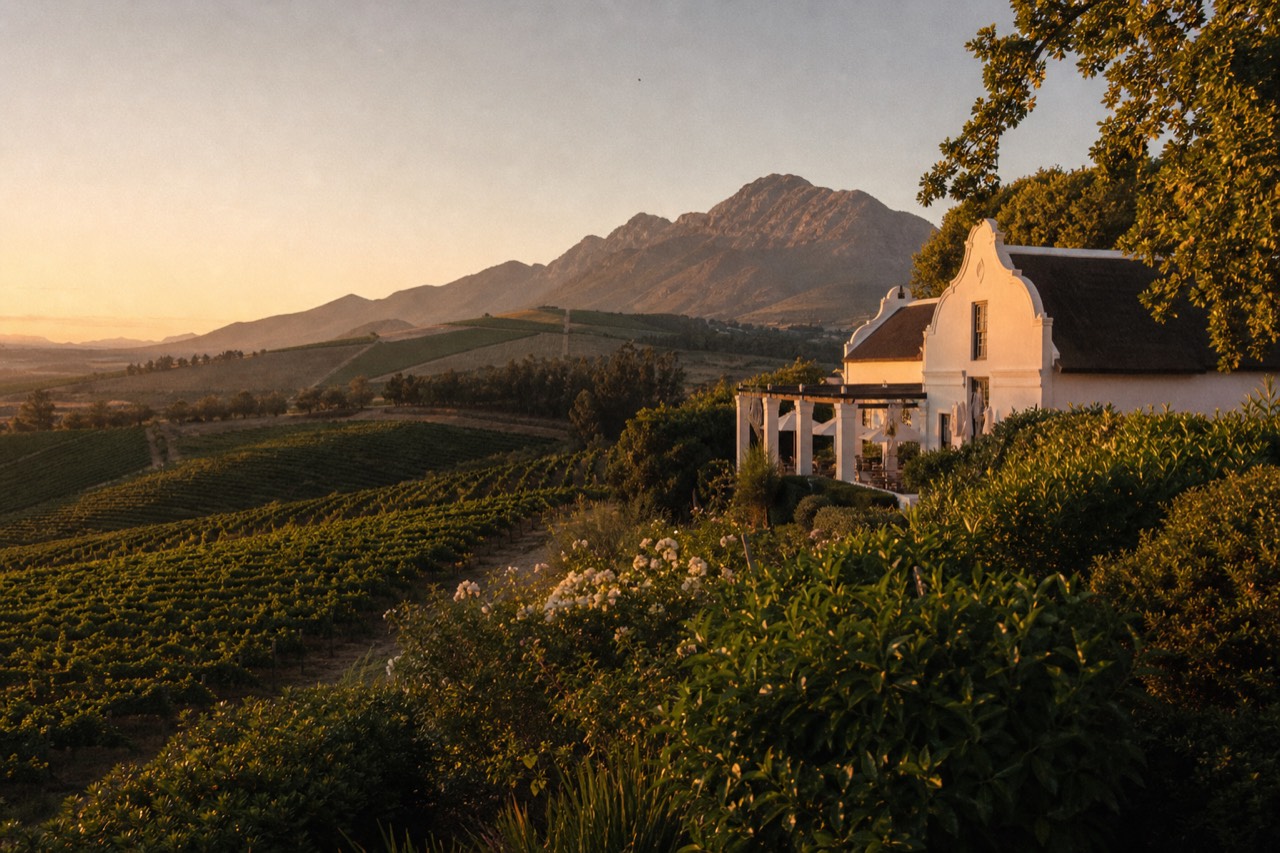
The Cape Winelands is known for being one of the world's great wine regions within an hour of a major city: Stellenbosch, Franschhoek, Paarl and Constantia together hold hundreds of estates, tasting rooms, cellar tours and restaurants, all set against mountain scenery. It is also known for the Franschhoek Wine Tram, a hop-on-hop-off vintage tram system, and for wines such as Chenin Blanc, Cabernet Sauvignon and Pinotage.
That is the short answer. The longer one starts with geography. The winelands is not a single town but a loose cluster of wine-producing valleys that begins, confusingly for first-time visitors, inside Cape Town itself. Constantia sits in the city's southern suburbs, roughly 20-25 minutes from the City Bowl via the M3. The other three anchor towns, Stellenbosch, Franschhoek and Paarl, sit further inland beyond the mountains, each reachable in under an hour from central Cape Town in normal traffic.
What makes the region unusual on a world scale is that combination of density and proximity. Stellenbosch alone has the highest concentration of wine estates of any town in South Africa, and the 2025 World's 50 Best Vineyards list placed two Stellenbosch estates, Tokara at #71 and Delaire Graff at #79, alongside Franschhoek's La Motte at #94. Constantia's Klein Constantia ranked even higher, at #6, and was named Best Vineyard in Africa when the list was announced in November 2025. Few wine regions anywhere can put four or five world-ranked vineyards within a single day's driving loop.
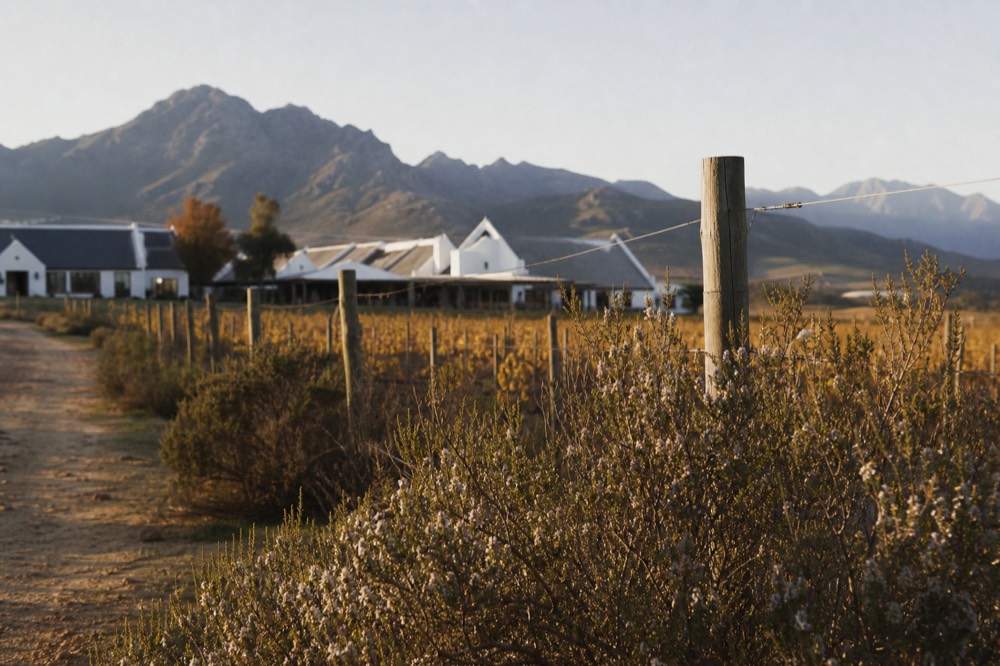
The second thing the region is known for is format variety. You can taste at a single estate all afternoon, hop between farms on a tram, join a guided group tour, or hire a private driver for the day. That range matters because it shapes what kind of trip you end up with, and we break down the trade-offs in our wine tram versus guided tour comparison.
What Are The Four Wine Regions Near Cape Town?
The four regions are Constantia, Stellenbosch, Franschhoek and Paarl. Constantia is the historic valley inside Cape Town's suburbs; Stellenbosch is the energetic university town with the most estates; Franschhoek is the food-driven gourmet village home to the Wine Tram; Paarl is the quieter, value-oriented agricultural town with bigger reds and fortified styles.
Constantia is the oldest of the four and the easiest to reach. Groot Constantia was granted to Simon van der Stel on 13 July 1685 and is widely described as South Africa's oldest wine-producing estate, with continuous production since then. Less famously, neighbouring Steenberg Farm predates it, granted in 1682 to Catharina Ras, the first recorded female landowner at the Cape. The valley is known today for cool-climate Sauvignon Blanc and for the historic dessert wine Grand Constance, which took a gold medal at the Muscats du Monde competition in Burgundy in July 2025.
Stellenbosch, about 50 km from central Cape Town, is South Africa's second-oldest town and the commercial heart of the winelands. It is known for oak-lined streets, a walkable centre, a large student population, and the densest cluster of estates in the country. Cabernet Sauvignon and Bordeaux-style blends are the regional signature, and the surrounding hills hold the bulk of the region's cellar doors. Our Stellenbosch wine tours from Cape Town guide covers it in detail.
Franschhoek, roughly 30 minutes further inland via the Helshoogte Pass, is the smallest and most polished of the four. French Huguenot settlers gave the valley its name and its food culture, and the town now functions as a compact gourmet village of boutiques, galleries and chef-driven restaurants. It is also the home of the Franschhoek Wine Tram, the hop-on-hop-off service that has become the single most recognisable winelands experience for international visitors.
Paarl, via the N1, is the largest by population and the least tourist-shaped. It is a working agricultural town with broader valleys, larger estates, shorter queues at tasting rooms and more value-oriented pricing, known particularly for bigger reds and fortified styles. If you want fewer crowds and lower tasting bills, it is the region to look at first.
How Far Are Wineries From Cape Town?
Constantia is the closest, roughly 20-25 minutes from the City Bowl via the M3. Stellenbosch is about 50 km and 45-55 minutes via the N2/R310, Paarl is 55-70 km and 50-60 minutes via the N1, and Franschhoek is the furthest at roughly 75 km and 60-70 minutes, about 30 minutes beyond Stellenbosch via the Helshoogte Pass.
Those drive times are the single most useful planning numbers for the whole region, because they determine how many areas you can realistically combine. Constantia works as a half-day add-on to a Cape Town itinerary without any long drive. Stellenbosch and Paarl are close enough that a relaxed day can pair one of them with a second stop. Franschhoek's extra half hour inland is the reason many travellers treat it as its own day trip rather than a bolt-on.
| Region | Distance from central Cape Town | Typical drive time | Route |
|---|---|---|---|
| Constantia | Within city limits | 20-25 minutes | M3 |
| Stellenbosch | ~50 km | 45-55 minutes | N2/R310 |
| Paarl | 55-70 km | 50-60 minutes | N1 |
| Franschhoek | ~75 km | 60-70 minutes | N1/N2, then Helshoogte or Franschhoek Pass |
Two practical notes sit behind the table. First, times are traffic-dependent: the N1 into Paarl and the N2 into Stellenbosch both slow badly at Cape Town rush hours, so a 9am departure and a 4pm departure can feel like different roads. Second, the distances between the towns matter as much as the distances from the city. Stellenbosch to Franschhoek is only about 30 minutes, which is why multi-region day tours can comfortably cover both.
How Do I Get From Cape Town To Winelands?
The main options are a guided group tour, a private driver, a self-drive rental, or a transfer plus hop-on-hop-off service. Guided and private tours collect you in Cape Town and handle the driving; self-driving gives full flexibility but puts you behind the wheel between tastings; transfers pair well with the Franschhoek Wine Tram, which runs a hop-on-hop-off ticket at R350 per adult.
The driving decision deserves real thought because of South Africa's drink-driving law. The National Road Traffic Act sets a blood-alcohol limit of 0.05 g per 100 ml for ordinary drivers, but a stricter 0.02 g per 100 ml for professional drivers, a category that covers most tour and shuttle drivers. In plain terms, the person driving your tour is legally held to a tighter standard than you would be driving yourself, and a zero-tolerance limit has been signed into law but is not yet in force. That asymmetry is a genuine argument for letting someone else drive on a tasting day.
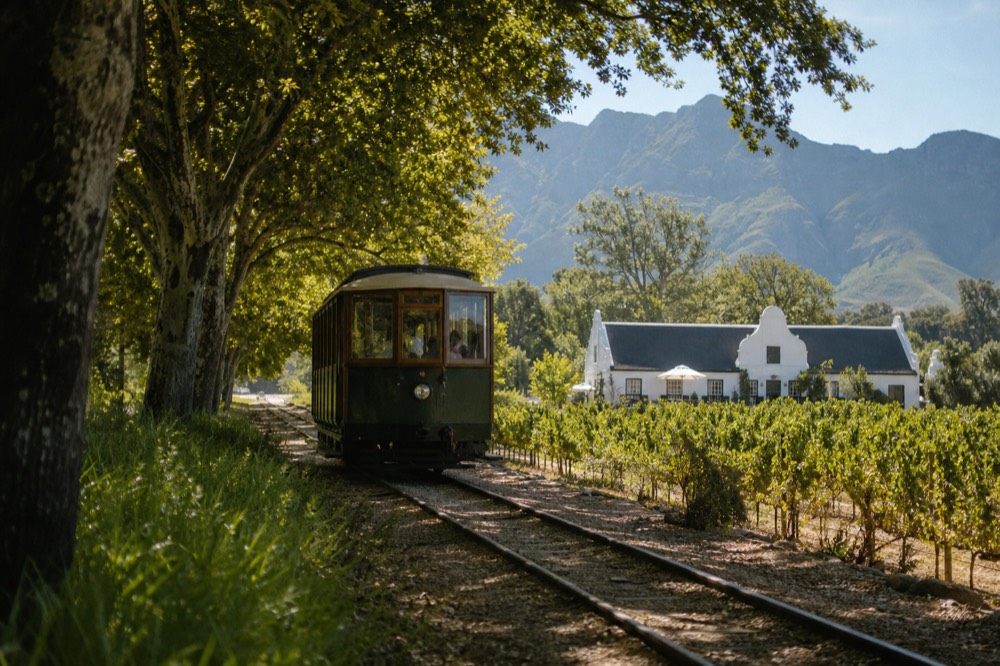
For the tram option, the mechanics are simple: the Franschhoek Wine Tram itself operates from Franschhoek village, roughly an hour's drive from central Cape Town, so you either drive to the valley, take a scheduled transfer, or book a package that combines round-trip transport from Cape Town with the tram ticket. The tram runs five colour-coded lines across roughly 30 estates using vintage-style trams and open-air tram-buses, with 7-9 estates per line, daily except major holidays such as 24-25 December and 31 December-1 January. Tastings and meals at the estates are extra, typically R60-R260 per person. Full details are on the operator's site at winetram.co.za.
What Wines And Tasting Formats Is The Region Known For?
The Cape Winelands is known for Chenin Blanc, Sauvignon Blanc, Cabernet Sauvignon, Bordeaux-style blends and Pinotage, South Africa's signature cross of Pinot Noir and Cinsault. The formats it is known for are estate tastings at R80-R250 per person, cellar tours, food and wine pairings, and hop-on-hop-off circuits like the Franschhoek Wine Tram.
Chenin Blanc deserves its own sentence: South Africa grows more of it than anywhere outside the Loire, and Stellenbosch producers took top honours in the 2025 Diners Club Winemaker of the Year awards, with a Stellenbosch Vineyards winemaker named Young Winemaker of the Year for a Chenin. Constantia's cool slopes lean toward Sauvignon Blanc and Semillon; Paarl toward structured reds and fortified wine; Franschhoek toward Méthode Cap Classique sparkling and elegant whites.
The tasting format itself is part of the appeal. A standard flight at most estates runs R80-R250 per person, commonly waived or refunded with a bottle purchase, and spitting buckets are standard and encouraged for anyone tasting across several farms. Booking ahead is wise at smaller boutique estates and during the November-March peak, while larger commercial estates often take walk-ins during published hours. Two other practical rules: the national drinking age is 18, tasting rooms are legally required to check ID for anyone who looks younger, so carry a passport or licence.
The seasonal rhythm is worth knowing too. Harvest, the crush, typically runs late January through April, and 2026 came early, with one Stellenbosch report noting first fruit arriving on 8 January and the regional harvest finishing nearly two weeks ahead of the long-term norm. Peak crowding is December through February; September-November and post-harvest March-April balance thinner crowds with pleasant weather, though the "Cape Doctor" south-easterly wind can gust through any day between September and March. The region's Mediterranean climate means hot dry summers and cool wet winters, so outdoor tasting terraces are at their best from late spring through autumn.
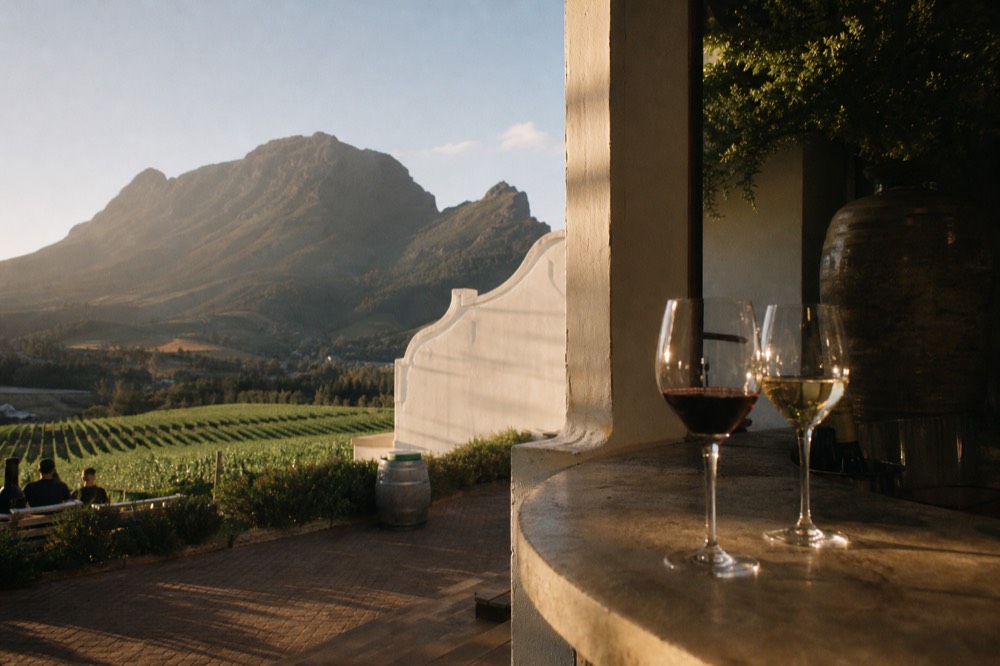
A guided tasting day combines the planned estate visits and transport; lunch may be included or paid separately, depending on the product.
A different way to see the same ground is a three-region circuit, which trades depth in any one valley for breadth across all of them. That suits first-time visitors who want to say they have seen Stellenbosch, Franschhoek and Paarl in a single trip, and who plan to return to whichever valley fit them best.
Putting the pieces together, the most efficient first visit pairs one valley per day with one anchor format per valley: estate flights in Stellenbosch, Méthode Cap Classique in Franschhoek, structured reds and fortified wine in Paarl, and, if time allows, a Sauvignon Blanc and Semillon stop on Constantia's cool slopes. Travellers chasing the region's signature grape can build a Chenin Blanc thread across several producers, since Stellenbosch's recent award wins suggest its bottlings travel well beyond the tasting room.
Timing that itinerary matters as much as the route. Outside the December-February peak, September through November and post-harvest March-April reward the same cellar doors with thinner crowds and terrace-friendly weather, though the "Cape Doctor" can gust through any of those days. If visiting between late January and April, ask cellar staff how the current crush compares with the norm, as 2026 showed harvest dates can shift by weeks. Budget R80-R250 per tasting, carry ID, book boutique estates ahead, and let a guided tour or hop-on-hop-off circuit handle the driving whenever the day spans more than two or three farms.
Which Region Should A First-Time Visitor Pick?
Pick Constantia if you have half a day or want the easiest trip, Stellenbosch if you want the most estates and a lively town, Franschhoek if food is the priority or you want the tram, and Paarl if you want value and fewer crowds. If you have one full day and no strong preference, a tour covering Stellenbosch and Franschhoek together is the classic first visit.
The honest framing is that there is no wrong answer among the four, only different trips. Constantia delivers 340 years of history without leaving the city. Stellenbosch delivers volume and energy. Franschhoek delivers polish and the region's best lunch tables. Paarl delivers space and quiet. The mistake first-timers actually make is trying to do all four in one day, which turns a wine trip into a driving trip. Two regions in a day is the comfortable maximum; three is possible with an early start and a driver who knows the roads.
If you are still weighing the head-to-head question most travellers ask, our Stellenbosch or Franschhoek comparison works through it in detail. For the tram specifically, the practical questions of lines, start times and value are covered in our Franschhoek Wine Tram guide. Whatever you decide, the region that Cape Town Wine Tours covers is small enough that a second day fixes any first-day regrets, and most visitors who come once end up planning a return trip before they have even left the valley.
The Cape Winelands is best understood as four distinct regions, Constantia, Stellenbosch, Franschhoek and Paarl, all within about an hour of Cape Town, known for world-ranked estates, Chenin Blanc and Pinotage, estate tastings and cellar tours, and the Franschhoek Wine Tram. The questions below cover the practical details travellers ask most: drive times, transport options, the best season to visit, and what tastings actually cost.
Common Questions About The Cape Winelands
What is cape winelands known for?
The Cape Winelands is known for its concentration of historic wine estates within about an hour of Cape Town, across four regions: Constantia, Stellenbosch, Franschhoek and Paarl. It is known for Chenin Blanc, Cabernet Sauvignon and Pinotage, for estate tastings and cellar tours, and for the Franschhoek Wine Tram hop-on-hop-off service.
How far are wineries from Cape Town?
Constantia is inside the city, about 20-25 minutes from the City Bowl. Stellenbosch is roughly 50 km and 45-55 minutes, Paarl is 55-70 km and 50-60 minutes, and Franschhoek is roughly 75 km and 60-70 minutes from central Cape Town.
How do I get from Cape Town to winelands?
By guided tour, private driver, rental car, or a transfer combined with the Franschhoek Wine Tram. Tours and drivers handle the driving, which matters because South Africa's drink-driving limit is 0.05 g per 100 ml for ordinary drivers and a stricter 0.02 g for professional drivers.
What is the best time of year to visit the Cape Winelands?
Harvest runs late January through April, which brings festive energy but also peak-season crowds from December to February. September-November and post-harvest March-April offer a good balance of weather, crowds and activity.
How much do wine tastings cost in the Cape Winelands?
A standard tasting flight typically costs R80-R250 per person, with premium tastings higher. Fees are commonly waived or refunded with a bottle purchase, and tastings are extra on hop-on-hop-off services like the Wine Tram.
Plan Your Wine Day
Starting recommendation. Adjust the choice below.
Three Regions And Three Wineries By Coach
Have a travel date in mind? Check it before arranging the rest of your day. Taste 15 wines across Paarl, Franschhoek and Stellenbosch with a guided coach day.
Full day, allow 8.5 hours; predefined Cape Town collection points. Tastings and pairings included; lunch extra. Shared coach.
Choose a date to see scheduled departures.
Published schedule, not confirmed seats. Availability and final price are confirmed on Viator.
Check Dates For Three Regions And Three Wineries By CoachCompare options and your costs
- Three Regions And Three Wineries By Coach
- Taste 15 wines across Paarl, Franschhoek and Stellenbosch with a guided coach day. Full day, allow 8.5 hours; predefined Cape Town collection points. Tastings and pairings included; lunch extra. Shared coach.
- Stellenbosch Half-Day Tastings And Pairings
- Combine two winery visits and food pairings with time in Stellenbosch. 5 hours; English, Cape Town hotel pickup and return. Tastings included; lunch extra. Confirm winery route and pickup.
- Private Wine Expert: Stellenbosch And Franschhoek
- Request your preferred Winelands focus and taste at four estates with a specialist wine guide. 8 hours; Cape Town pickup area. Four tastings included; lunch extra. Ages 18–80, minimum two adults. Confirm requested estates before booking; private group.
- Constantia Half-Day Tastings
- Visit Groot Constantia and another valley estate with tasting fees and city transport included. 5 hours; English guide and Cape Town pickup. Second estate may be Beau Constantia or Constantia Glen. Lunch extra.
This matches format and time, not personal suitability. Confirm the meeting point, language, ages and access arrangements for your party on the booking page.