What Is The Best Wine Tour In Cape Town?
An honest, fit-first answer to which Cape Town wine tour is best: the flagship multi-region day trip for first-timers, a premium full-day option for foodies, and Constantia for travelers short on time.
What Is The Best Wine Tour In Cape Town?
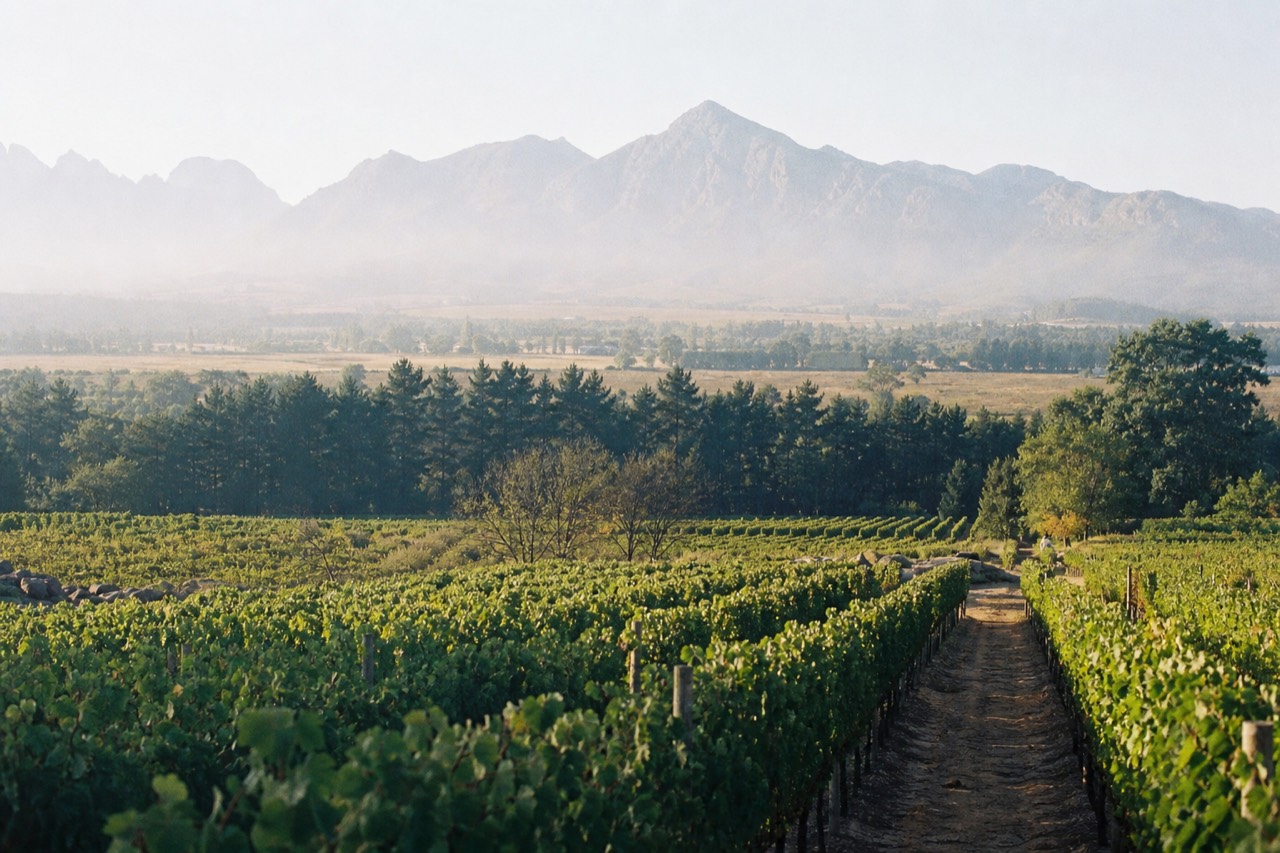
The honest answer is that no single tour wins for everyone. For most first-time visitors the best pick is a full-day multi-region tour covering Stellenbosch, Franschhoek and Paarl, because it shows the three main wine towns in one efficient day. Food-focused travelers tend to prefer a premium full-day tastings-and-food tour, and anyone short on time gets better value from a half-day in Constantia, 20-25 minutes from the city.
That answer frustrates people who want a single crowned winner, but it matches how the decision actually works. The three formats above solve different problems, and picking the wrong one for your situation is the most common way a wine day disappoints. A couple with one free afternoon in Cape Town may prefer a five-hour Constantia outing to a full-day three-region circuit. A group of friends celebrating something does not want a quick two-estate dash.
The practical differences are mostly logistics, and logistics is exactly how real travelers frame this on forums and in travel communities. Drive times set the hard constraints: Stellenbosch sits about 50 km and 45-55 minutes from central Cape Town via the N2/R310, Franschhoek roughly 75 km and 60-70 minutes, and Paarl about 55-70 km and 50-60 minutes via the N1. Constantia is not a winelands drive at all, it is inside the city's southern suburbs, 20-25 minutes from the City Bowl via the M3. Those numbers, not marketing copy, determine what fits your calendar.
Price is the second constraint. A hop-on-hop-off Wine Tram ticket covers valley transport; check current adult and child fares, and budget estate tastings separately. Guided full-day tours cost more upfront but bundle transport, a driver and usually several tastings, and the exact figures sit on each operator's live listing rather than in any fixed price list. A useful primer on where the money goes is how much Cape Town wine tours cost.
Which Winery In South Africa Is Considered The Best?
No official body crowns a single best winery, but the closest thing to an authoritative answer is the World's 50 Best Vineyards list. In its 2025 edition, announced in November 2025, Klein Constantia ranked number 6 in the world and was named Best Vineyard in Africa, which makes it the highest-placed South African winery on the most-cited global ranking.
That is a genuinely strong result, and it carries extra weight for Cape Town visitors because Klein Constantia is in Constantia, the valley inside the city's own southern suburbs. The estate is best known for Vin de Constance, the historic sweet wine, and the valley around it holds several of the country's oldest wine farms. Groot Constantia was granted to Simon van der Stel on 13 July 1685 and is widely described as South Africa's oldest wine-producing estate, though Steenberg Farm actually predates it, granted in 1682 to Catharina Ras, the first recorded female landowner at the Cape.
The 2025 rankings did not stop at Constantia. Stellenbosch placed two estates on the list, Tokara at number 71 and Delaire Graff at number 79, both re-entries, while Franschhoek's La Motte entered at number 94. The South African government's own media statement on the results is worth a read: Minister Steenhuisen's statement on South Africa's six world-class vineyards. Groot Constantia's Grand Constance also took a gold medal at the Muscats du Monde competition in Burgundy in July 2025, placing it among the world's top 10 Muscats.
If a particular ranked winery is your priority, check that exact estate against the booked itinerary. A general three-region tour does not automatically visit Klein Constantia, Tokara, Delaire Graff or La Motte.
What Are Some Good Wine Tours In South Africa?
Good wine tours cluster in the Cape Winelands, and from Cape Town the strongest options are a full-day three-region tour of Stellenbosch, Franschhoek and Paarl, a premium full-day tastings-and-food tour for people who want lunch and pairings built in, and the Franschhoek Wine Tram for independent travelers who like hopping between estates at their own pace.
The three-regions format is the workhorse. You leave the city in the morning, hit the oak-lined streets of Stellenbosch, South Africa's second-oldest town with the highest density of wine estates in the country, continue over Helshoogte Pass toward Franschhoek's French Huguenot village, and finish in Paarl's broader, quieter valleys. The featured shared three-region tours take about eight to eight and a half hours. They provide a practical introduction to all three areas from Cape Town, with less time at each stop than a focused single-region day. The featured option here is the three-regions wine tour, and its current price and rating are on the operator's live listing.
The premium full-day tastings-and-food tour plays a different role. Franschhoek in particular is a food-driven gourmet village, and the 2025 Eat Out Awards gave one-star mentions to several of its restaurants, including Chefs Warehouse at Maison, Le coin Français and Orangerie at Le Lude. A tour that pairs tastings with serious food suits travelers for whom lunch is the point, not a stop. Boschendal in the Franschhoek area also opened a new fire-focused restaurant, Arum, in its 1812 cellar in November 2025, adding to that side of the valley's pull.
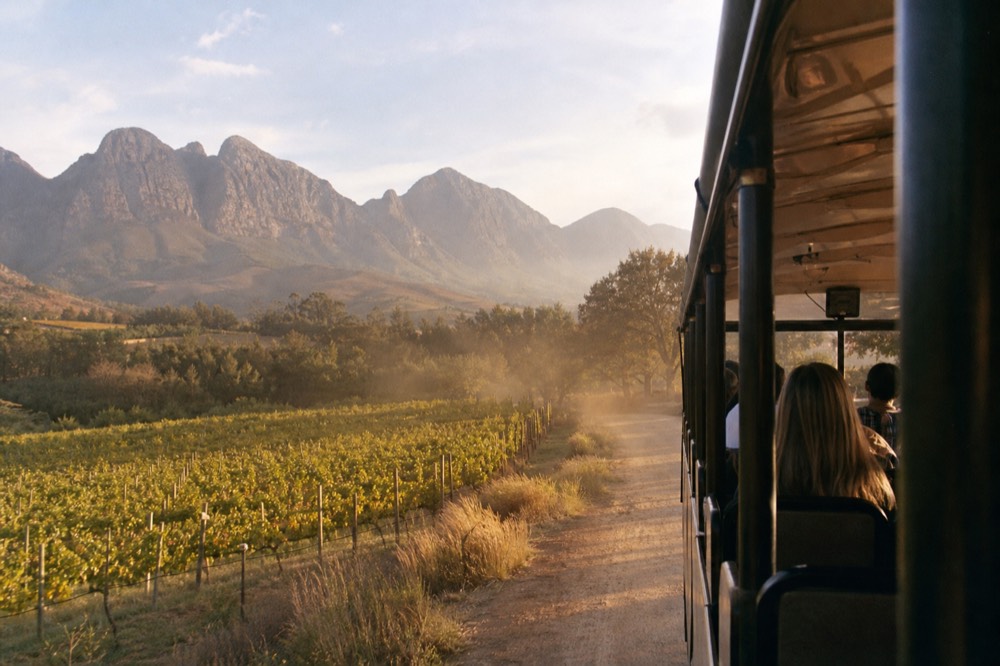
The Wine Tram suits a third traveler type. It runs five color-coded hop-on-hop-off lines through the Franschhoek Valley using vintage-style trams and open-air tram-buses, covering roughly 30 estates collectively, with 7-9 estates per line. Bought locally, the ticket covers tram transport and tastings are extra; the featured transfer-and-tram option bundles a round-trip Cape Town coach with the tram ticket. Check the quote for your selected date; tastings and meals remain extra. It runs daily except major holidays, pausing around 24-25 December and 31 December-1 January. The trade-off is simple: maximum freedom, minimum structure, and no guide interpreting what is in your glass. A structured tour gives you the interpretation and the logistics; the tram gives you the valley at your own pace, and which of those matters more is a personality question rather than a quality question.
What If You Only Have Half A Day?
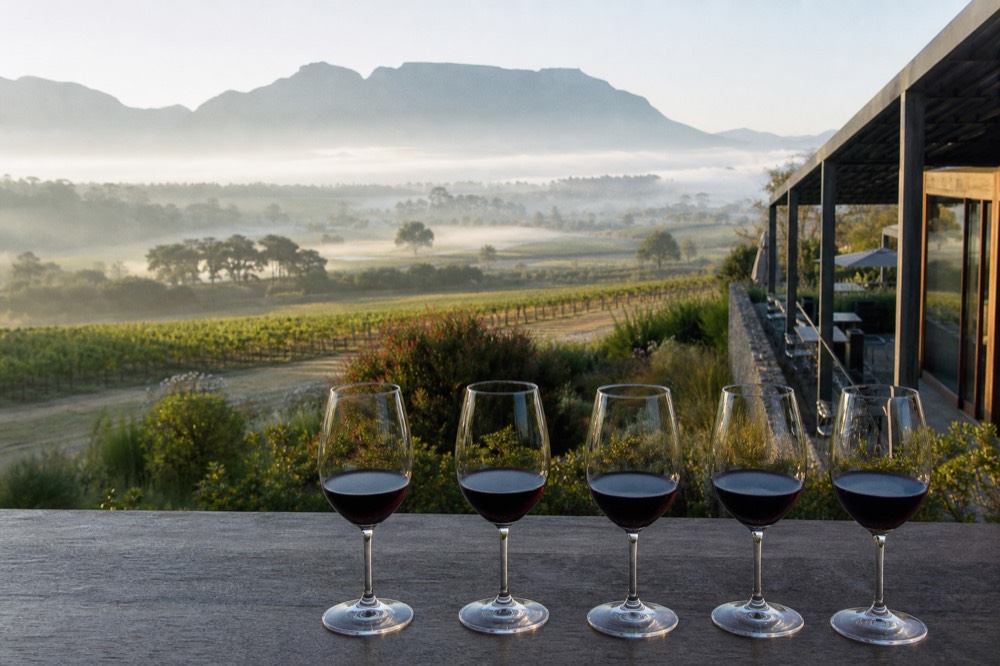
For a shorter outing, Constantia offers a five-hour wine tour within Cape Town; a five-hour Stellenbosch tasting tour is another option. It is inside Cape Town's southern suburbs, 20-25 minutes from the City Bowl via the M3, and it holds the highest-ranked vineyard in Africa plus several of the country's oldest estates, all without the hour-plus drive to Stellenbosch or Franschhoek.
This is the option people overlook because it does not have "winelands" in the name. Constantia is the oldest wine region in South Africa and, uniquely among the Cape's wine areas, it sits within a major city. Choose the estate and check its opening times and transfer arrangements. The featured five-hour Constantia tour lists a noon start, so it is an afternoon outing rather than a morning tour promising a late-lunch return. Groot Constantia alone is reported to receive over 450,000 visitors a year, so book tasting slots ahead where you can, especially from November through March when peak-season demand bites.
The half-day Constantia play also pairs well with a scheduled evening in the city, which is why it suits layovers, conference travelers and anyone whose partner does not share the wine obsession. In late October 2025 the valley even staged its first "Tastes of the Valley" event, a single afternoon of tastings and pairings from six Constantia estates, limited to 100 guests, which was a single-venue way to sample several producers; it does not make the valley’s separate estates walkable as one route. The valley's restaurants also drew recognition in the JHP Gourmet Guide 2026, so the food holds up its end of the half-day too.
How Much Should You Budget For A Wine Tour?
Budget from the actual quote for your date and party. Add estate tastings only when excluded, as on a transfer-and-tram package, and check whether lunch and city transport are covered. Ask the estate about any bottle-purchase credit before relying on it.
The fee structure is worth understanding before you book anything, because the sticker price of a tour rarely equals the day's full cost. Here is how the main line items typically break down:
| Cost item | Typical range | Notes |
|---|---|---|
| Wine Tram hop-on-hop-off ticket | Current dated fare | Confirm operating date and child policy |
| Estate tasting flight | Current estate menu | Add only if excluded from tour; confirm any purchase credit |
| Premium or paired tasting | Above standard flight | Chocolate, charcuterie and other pairings cost more |
| Guided full-day tour | Price on the operator's live listing | Usually bundles transport, driver and several tastings |
One cost that is easy to underestimate is the alternative: self-driving. Beyond car hire and fuel, South Africa runs a two-tier drink-driving limit under the National Road Traffic Act. Ordinary drivers are held to 0.05 g per 100 ml of blood, but professional drivers, the category covering many tour and shuttle drivers, are held to 0.02 g. A booked tour driver is legally required to stay further from the limit than you would be behind your own wheel, which quietly settles the designated-driver question for most groups.
What Should You Check Before Booking Any Tour?
Check four things: the itinerary's regions and estate count, whether tastings and lunch are included or paid on the day, the cancellation terms, and the departure point. Also confirm the drinking age applies to your group, since South Africa's minimum age for alcohol is 18 and tasting rooms must check ID for anyone who appears younger.
The inclusion question causes the most surprises. Some tours bundle every tasting, others leave fees to the estates, and the difference can add meaningful money per person across four or five stops. Cancellation terms matter too, because winelands weather and travel plans shift, and most featured tours here carry free cancellation, so confirm it on the listing before you pay. Departure point matters if you are staying outside the City Bowl or the V&A Waterfront area, where most full-day tours gather.
Advance booking at the estates themselves is the quieter variable. There is no uniform legal requirement, but smaller and boutique estates across Stellenbosch, Franschhoek, Paarl and Constantia often require or strongly recommend reservations, especially in peak season from roughly November to March. Larger estates accommodate walk-ins when capacity allows. A good guided tour handles this for you, which is a genuine, underrated reason to book one rather than improvising with ride-hailing apps.
For travelers weighing the tram specifically, the honest verdict, including its real weak points, is in is the Franschhoek Wine Tram worth it?. And if you are still deciding between the two headline towns rather than between tour formats, Stellenbosch or Franschhoek breaks that comparison down directly.
The Short Version
The best wine tour in Cape Town is the one matched to your trip, not to a trophy. First-timers with a full day get the most from a three-region day trip across Stellenbosch, Franschhoek and Paarl, food-led travelers do better with a premium tastings-and-food tour, independent types should ride the Wine Tram, and anyone short on time should taste in Constantia, home of the highest-ranked vineyard in Africa on the 2025 world list.
Each of those calls rests on the numbers in this article rather than on hype: drive times of 45-70 minutes to the winelands towns versus 20-25 minutes to Constantia, a tram ticket plus excluded estate tastings, and a two-tier drink-driving law that favors a professional driver over your own steering wheel. Whichever route you pick, Cape Town Wine Tours exists to help you make exactly this kind of call with real figures rather than marketing language.
If more than one of these fits you, the fair fight is usually between the multi-region day trip and the tram, since both cover Franschhoek. The day trip adds Stellenbosch and Paarl and removes all logistics; the tram adds freedom inside one valley. The decision tool after the questions compares those formats.
Common Questions About Choosing A Cape Town Wine Day
What is the best wine tour in Cape Town?
There is no single winner. For most first-time visitors a full-day multi-region tour of Stellenbosch, Franschhoek and Paarl is the best fit; food-focused travelers suit a premium tastings-and-food tour, and anyone short on time is better served by a half-day in Constantia, 20-25 minutes from the city centre.
Which winery in South Africa is considered the best?
Klein Constantia, ranked number 6 in the World's 50 Best Vineyards 2025 and named Best Vineyard in Africa, holds the highest global ranking of any South African winery on the most-cited list. Tokara, Delaire Graff and La Motte also placed in the 2025 list.
What are some good wine tours in South Africa?
The strongest options from Cape Town are a full-day three-region tour, a premium full-day tastings-and-food tour, and the Franschhoek Wine Tram hop-on-hop-off service. Each suits a different travel style, so match the format to your group, budget and available time.
How much does a wine tour in Cape Town cost?
A tram-only ticket leaves transport from Cape Town and estate tasting fees to budget separately. Check current fares and tasting menus; any bottle-purchase credit depends on the estate. Guided tour prices sit on each operator's live listing.
Can you do a wine tour without a full day?
Yes. Constantia lies inside Cape Town's southern suburbs, about 20-25 minutes from the City Bowl via the M3, so a half-day of tastings at estates like Klein Constantia, Groot Constantia and Steenberg is entirely practical without a winelands drive.
Do you need to book wineries in advance?
No law requires it, but smaller and boutique estates across the winelands often require or strongly recommend advance bookings, especially from November to March. Guided tours normally handle estate reservations for you.
Plan Your Wine Day
Starting recommendation. Adjust the choice below.
Three Regions And Three Wineries By Coach
Have a travel date in mind? Check it before arranging the rest of your day. Taste 15 wines across Paarl, Franschhoek and Stellenbosch with a guided coach day.
Full day, allow 8.5 hours; predefined Cape Town collection points. Tastings and pairings included; lunch extra. Shared coach.
Choose a date to see scheduled departures.
Published schedule, not confirmed seats. Availability and final price are confirmed on Viator.
Check Dates For Three Regions And Three Wineries By CoachCompare options and your costs
- Three Regions And Three Wineries By Coach
- Taste 15 wines across Paarl, Franschhoek and Stellenbosch with a guided coach day. Full day, allow 8.5 hours; predefined Cape Town collection points. Tastings and pairings included; lunch extra. Shared coach.
- Guided Winelands Tastings And Lunch
- Explore the Winelands with guided tastings, a cellar visit and vineyard lunch included. 9 hours; English guide, Cape Town pickup areas. Ages 18+; not wheelchair accessible. Pairings depend on availability.
- Cape Town Transfer And Franschhoek Wine Tram
- Choose estate stops on the operating tram route, with the return city coach included. 8.5 hours; predefined Cape Town pickup points. Tastings and lunch extra. Not a tram-only ticket.
- Constantia Half-Day Tastings
- Visit Groot Constantia and another valley estate with tasting fees and city transport included. 5 hours; English guide and Cape Town pickup. Second estate may be Beau Constantia or Constantia Glen. Lunch extra.
This matches format and time, not personal suitability. Confirm the meeting point, language, ages and access arrangements for your party on the booking page.